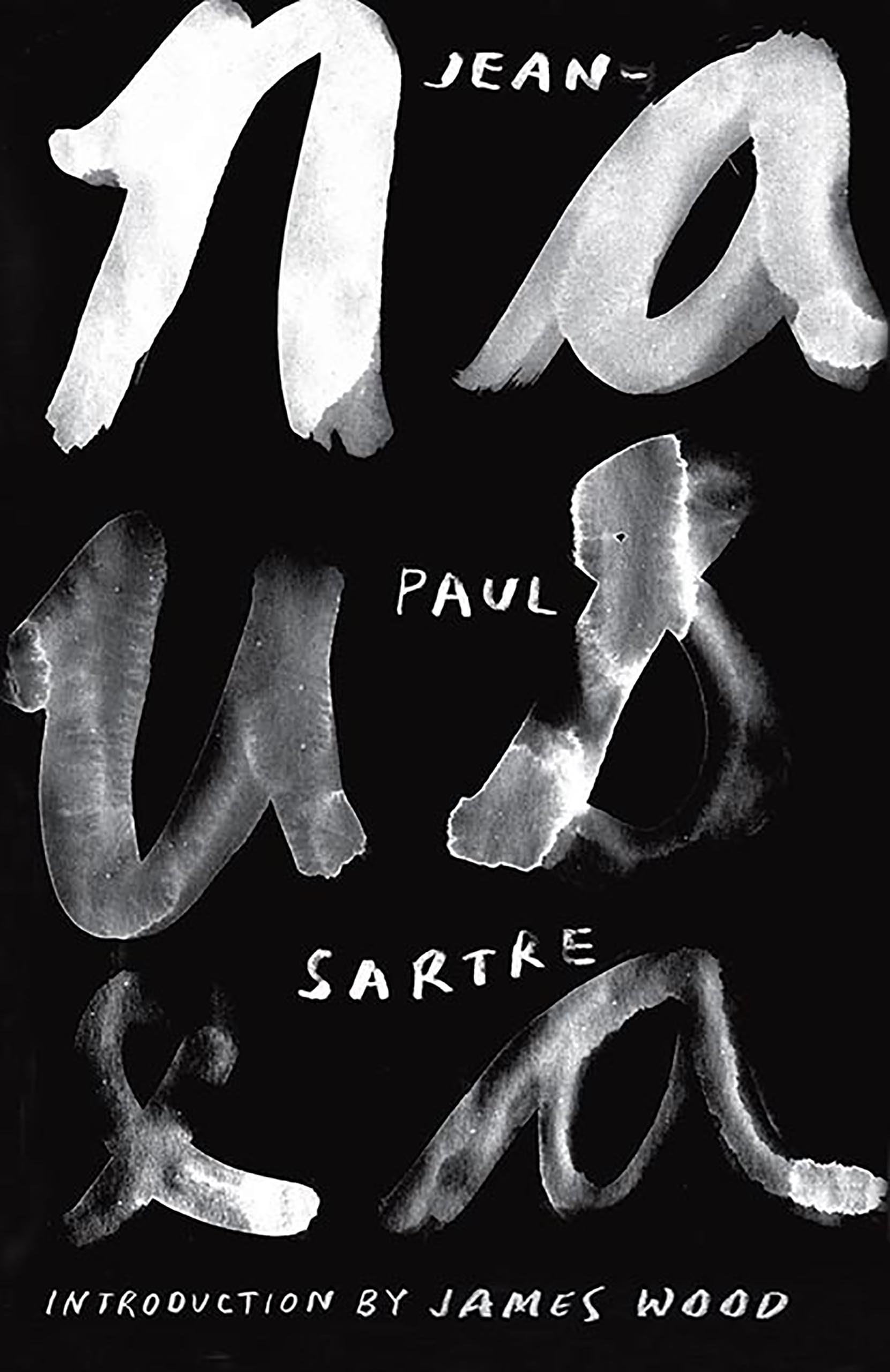
Nausea
Product ID: 107047440
Nausea - Kindle edition by Sartre, Jean-Paul, Richard Howard, Wood, James, Howard, Richard. Download it once and read it on your Kindle device, PC, phones or tablets. Use features like bookmarks, note taking and highlighting while reading Nausea. Review: truth about the human condition - “When the weekend becomes a bitter taste in the mouth.” I always experienced this in my working life on Sundays. Sartre had a way of collecting the thoughts we’ve all had and packaging them back to us in a way that feels relatable and deeply human. Review: Great book - The beginning gets yiu hooked if youre into journal like books, but overall its an interesting book it got me reading and im not a big reader
| ASIN | B00COG0EWC |
| Accessibility | Learn more |
| Best Sellers Rank | #85,609 in Kindle Store ( See Top 100 in Kindle Store ) #9 in Existentialist Philosophy #9 in Existentialism #28 in French Literature (Books) |
| Customer Reviews | 4.5 4.5 out of 5 stars (2,720) |
| Enhanced typesetting | Enabled |
| File size | 894 KB |
| ISBN-13 | 978-0811222525 |
| Language | English |
| Page Flip | Enabled |
| Print length | 254 pages |
| Publication date | May 15, 2013 |
| Publisher | New Directions |
| Screen Reader | Supported |
| Word Wise | Enabled |
| X-Ray | Not Enabled |
M**E
truth about the human condition
“When the weekend becomes a bitter taste in the mouth.” I always experienced this in my working life on Sundays. Sartre had a way of collecting the thoughts we’ve all had and packaging them back to us in a way that feels relatable and deeply human.
T**A
Great book
The beginning gets yiu hooked if youre into journal like books, but overall its an interesting book it got me reading and im not a big reader
S**P
A seminal work, and for good reason.
EDIT: Just wanted to clarify that it was Baudelaire who utilized the flaneur and not Baudrillard. That was an error in my typing. Also wanted to mention it's Bouvile and not Paris as a commenter, Francis, helpfully pointed out. Hey, I’m a pessimist. There, I said it. I’m already horrified at my existence. I don’t need anyone else doing it for me, but that’s exactly what Jean-Paul Sartre did in Nausea, the story of a writer (Anton Roquentin) who becomes horrified by his own existence while working on a novel about a historical figure. Over the course of the novel, in true existentialist fashion, Roquentin wonders about the purpose of his life, whether or not he really has free will, the idea of “adventure,” and what it all means. In other words, if you talk to me for more than ten minutes at a time, you’ll be hearing the gist of this novel. It’s not the kind of book you can breeze through. It’s heavy, both in subject matter and in density. I was actually surprised how much a French history course from my college days came up here. I instantly thought of the idea of the flaneur, which was essentially a person who walked, wandered around, and just observed. Roquentin spends a lot of time as a flaneur, wandering around Bouville and observing the lives of others. His perceived invisibility during his walks make him seem very much in the tradition of Baudelaire’s flaneur. These are the guys that stare at you when you’re out at the store. I’ll be honest–I read Nausea in tandem with the Sparknotes on the novel. The novel is under 200 pages, but there’s a lot to unpack in this novel, and there are a lot of cultural references that I wanted to be sure I wouldn’t miss. This is the type of novel that all novels should aspire to be--every detail is significant. Roquentin looks to the Marquis de Rollebon to try to figure out his own existence, but he struggles to find anything definitive about the past, so he is forced to turn to the present. Even Roquentin’s writings about Rollebon seem more like they’re based on his own life, so he’s also calling objectivity into question. Finally, by comparing his own life to that of the Marquis, Roquentin brings up the idea of a duality present in existentialism–the conscious self and the kind of internal “other” that observes that conscious self. To Roquentin, little seems to make sense. And this was only about 50 pages in. See what I mean?
T**R
Awesome hard to find book
Great book that was hard to find.
M**E
Get to the root! Of existence
Loved the thought provocation! Check out Beck’s Book Club podcast on apple after you read for an extra accompaniment!
A**R
First attempt at Sartre
I got to Sartre through Bukowski.More precisely a list of Bukowski’s favored authors. Nausea aims to be a philosophical novel, But it isn’t.It’s a collection of essays presented as someone’s diary.It’s Sartre’s earliest work, his arguments and thoughts are not systematized yet, they are all over the place.Every few pages you find a raw gem of insight. The book describes what is referred to as bouts of “Nausea”, Nausea being “Existential Crisis”, each bout of Nausea is a philosophical essay.It’s not an easy read,the essays are surrounded by fillers to link them together, and it’s hard to distill insights from what’s written. I suggest reading the introduction and forward first.It gives you an essential framework to stick to, and better understand what’s written. If you are after Sartre’s insights and not his writing ( i personally didn’t find him a good novelist) i think it’s better to read a book about his work , written by someone else, which would be more to the point. I’m going to give a few of his essays a try, before decided if i should give up on it or give Being and nothingness a try.
R**N
A Great Novelist
Sartre was a great novelist and NAUSEA is his masterpiece. As a philosopher, he was a major influence, but his vision was dubious, a "romantic rationalism", as Iris Murdoch characterized it. He does better fleshing out his ideas into fiction, especially in this modern classic (Penguin applies the term properly this time). I can't imagine any reader beginning this novel and not reading to the end. (Incidentally, the black woman singing the recording of "Some of These Days" is a figment of Sartre's imagination, unless he thought Sophie Tucker was black.) The translation by Robert Baldick is a vast improvement over the earlier version by Lloyd Alexander (which contains the famous mistranslation of the phrase "foret des vergers" as well a few other howlers). Too bad Sartre gave up the novel after his ROADS TO FREEDOM series, the first two volumes of which are quite good, if not the equal of NAUSEA. Of his later works only WORDS really rises to greatness, though his study of Baudelaire is worth looking up.
J**Z
A Detailed Narrative of a Character Stuck in the Mire of a Nauscous Existential Funk
Sartre, like his fellow French Existentialist proponent, Albert Camus, is always an enjoyable writer because his characters and the lives they live are primary examples of real human beings caught in a universe encased by an endless void of nothingness out of which every individual must create his or her own meaning while taking responsibility for their own choices and conduct. There is not another school of philosophy that describes twentieth and twenty-first century life so well with its propensity for war and evil human conduct that goes seemingly unpunished. Man may be alone, but he has been given the ability, along with others, to love and maintain his own self-created ethical standards as he remains stranded on his lonely island surrounded by an inescapable, endless sea.
K**L
pretty and inexpensive good introduction
E**A
Great book and a decent Edition. This is a really easy to read starter book for anyone trying to figure out what Sartre is about.
U**0
The book was delivered in good condition with no visible defects.
T**A
At first It took me some time getting used to the writing style. It was different, unlike anything I had ever read before. Written in the style of diary entries by a character named Antoine Roquentin, a writer who lives alone spending his time wandering the streets of Bouville, reflecting on his past times when he was an adventurer and had a wife named Anny. This Isn't one of those novels that you would pick up when you're bored or need something to pass time. To really appreciate it you have to read it slowly. Many of you will relate to Antoine deeply and if you're one of them then you'll be so very glad to have found this book. Sartre is able to express through words what we often think but struggle to verbalise. Each chapter is beautifully written, you may find yourself smiling or laughing at times at the brilliant use of satirical humour. I have to say that this is definitely my favourite book so far. Oh and if you have ever or do presently suffer with depression then you will either be thrilled to have discovered it or leave it incomplete. So anybody out there with depression, or other mood disorders, just to warn you, you may find this book triggering.
S**M
Kept me hooked through the whole book!
Trustpilot
5 days ago
1 month ago