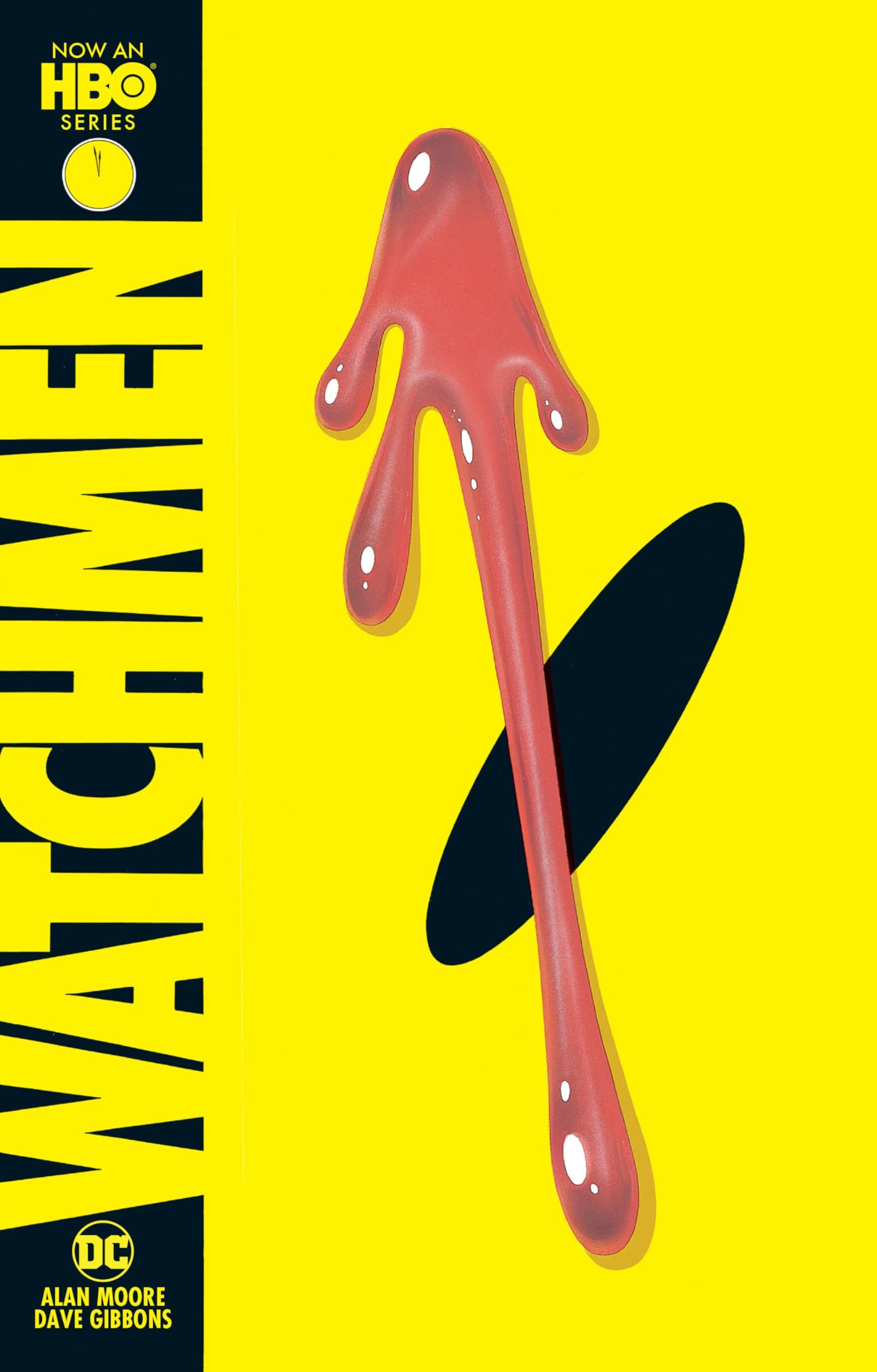
Watchmen (2019 Edition)
Product ID: 159767907
Buy anything from 5,000+ international stores. One checkout price. No surprise fees. Join 2M+ shoppers on Desertcart.
Desertcart purchases this item on your behalf and handles shipping, customs, and support to Thailand.
HUGO AWARD WINNER | A NEW YORK TIMES BESTSELLER In an alternate America, a murder mystery evolves into an ominous, planet-wide conspiracy in a world where superheroes shifted the course of history as we know it The paperback edition of the groundbreaking masterpiece from comics legends Alan Moore & Dave Gibbons that took apart the infallible superhero archetype, forever changing graphic storytelling It’s the 1980s—The United States has emerged victorious in the Vietnam War, Richard Nixon remains in office, and the Cold War rages on. Superheroes have been outlawed, with some going into retirement, some becoming government agents, and still others turning to vigilantism. And an unknown assassin is stalking a group of heroes who’ve fallen from grace, plagued by all-too-human failings. After this scattered team—Rorschach, Nite Owl, Silk Spectre, Dr. Manhattan, and Ozymandias—comes together to mourn a friend, they discover that the murder is part of a larger plot to upend the fragile geo-political balance and spread calamity across the world. This paperback edition of Watchmen contains all 12 of the issues from the original limited series run. “A landmark in the graphic novel medium.”— Time Magazine “ Watchmen is peerless.”— Rolling Stone Review: WATCHMEN: the best thing I've ever read - I have to say, this is just the best comic I have ever read. The art was just to die for, the characters were well thought out, and a brilliant plot was implemented into the comic. I have read many comics where the story seems jump around to useless side stories for no typical reason other than to show that the writers want to make a long ass story, but this was different. Sure the story jumped around a lot in this but there was some point to it; it helped me understand when, why, and how the heroes became who they are. For example, Jon a.k.a. Dr. Manhattan, was not always an immortal bipedal h-Bomb, he was once human. He had a life once before where he was human. He grew up a the son of a watch maker so he was always around time. Things changed and he became a scientist in Nuclear- Atomic- Atoms- whatchamacallit. He met his first love and he offered one day to fix her watch because someone stepped on it. He left it in his lab coat one day, and his lab coat was left inside a room where objects were de-atomized. He went to fetch the lab coat and an accident occurred, causing him to be trapped inside the room and he was De-Atomized. Thought to be dead, everyone tried to think as if it never happened. Then Jon appeared, living and well but had changed. He was glowing bright blue, his skin was like a blueberry threw up on him, and he now had abilities unlike anyone. He had become God, which he denied to every extent. But he was also fixated on how time flowed. He always knew what would happen before it would happen, and it made him quite a pain in the ass to be around since he seemed to never be impressed or seemed to care. However he at times does wish to be normal, but he blames three people for his transformation, but never could he choose the main person to blame. He blamed the man who stepped on the watch, he blamed his girlfriend who he offered to fix her watch, and he blamed himself for ever leaving his coat in the De-atomization chamber in the first place. Another example of a well thought out character (which is one of my favorite heroes of all time) is Walter Kovacs a.k.a. Rorschach (pronounced: Roar•Shack). Rorschach is more or less the character that actually knows when stuff is going on, and he knows how to get the information he wants. He doesn't need fancy gadgets (although he does have a Grapple Hook launcher), he doesn't need superpowers, he doesn't need the force, and he sure as hell doesn't need money. He used something called breaking limbs. It works to the very least, and that's how he found out about WW3 (which was about to happen but events at the end of the book caused the world to stop all war). He did find out about a plot to stop the war by interrogating a retired villain who was dragged into the whole mess. But how did Rorschach become like this? How did Walter Kovacs become the cold, paranoid vigilante that he is? Walter grew up in a broken home, raised by his whore of a mother that treated him like garbage and he was bullied by the other kids because his mother was a whore. At some point he grew tired of all of the worlds evils. He, when he became an adult, started working at some package-fashion store place, and a package with a dress that was specially made came in. The dress was an ink blot dress which meant that the dress design 'moves' via body heat reacting with ink in between special fabric. They were holding it for a celebrity who died before she could ever pick it up. The way she died caused Walter to break. The Celebrity had been raped and murdered, and bystanders watched as it happened. The cold injustice that happened to the lady created Walter Kovacs's alias. But, through a confusing explanation on how Rorschach truly began, he tells a doctor the birth of Rorschach and the death of Walter. According to Walter, Rorschach began the night he promised to find a kidnapped girl. He found the kidnapper, but no girl. The girl was dead, chopped to pieces and fed to dogs like kibble. He changed drastically, and instead of arresting the kidnapper, he killed him. As Walter said: "whatever was left of Walter died that night with little girl." He now kills those who dare to cause injustice. He even hates the politicians (for going on with war as the only answer) and prostitutes (because of his childhood). But to truly understand the story, YOU. MUST. READ. IT. You'll be sorry if you don't. I will cherish my copy and pass it down for future generations to experience an era of comics from before my time. Thanks for reading! Famous Quote from Rorschach: "Dead dog found in alley way, tire tread on burst stomach. This city is afraid of me, I have seen its true face. The streets are extended gutters, and the gutters are filled with blood until the drains finally scab over and all of the vermin will drown. The accumulated filth of their sex and murder will rise up around their waists, and they will look up and scream: Save us! And I will look down and reply: No." Review: Destroying the "god" myth through pulp... - After a long time of not reading this novel, and after reading the first 50 pages of Alan Moore and Dave Gibbons' "Watchmen," I immediately thought of another recent "superhero" story of sorts, "Hancock," and a quote Cherlize Theron said very matter-of-factly in the film - "(We've been called) gods, angels, and different cultures and different eras have called us many things - in this place and time we are called super heroes." Alan Moore's depressing and outright blasphmeous story of the "superhero" and their struggles with humanity, as they also deal with the after-effects of modern day god-worship, the ordinary people's eventual fear and hatred of them, etc. made me wonder if Alan himself didn't realize that he was showing us a mirror to ourselves and our blind worship of them, and for this I love his idea and the concept, stretched out originally over 12 "chapters," now all collected here for the first time together. This is not the story of a Super-man, or a Spider-man, who do not exist here in this world (except as minor comic book characters pasted on the wall as a sad reminder) and as we all know, these 'heroes' were created by an foreign & alien environment. This is a very real story of regular people who are dealing with their chosen fates - they have chosen stand up to the corruption of the world and to defend and protect the common citizen as they were once themselves, with the exception of the only one "true" superbeing of the bunch, Dr. Manhattan, who has problems of his own. They all had noble ideas and the spirit to try, but in the end are exiled, murdered or shuttered up and driven into the shadows by the very people they once defended. This story, set against the angry and unsettling backdrop of an alternate world of 1985, where Nixon (!) is still President, the Cold War is growing hotter and hotter by the page, Vietnam was won unconditionally by the U.S. (thanks in part to Dr. Manhattan and The Comedian), America invades Afghanistan against protective Russia, and the entire backdrop melts away and is boiled down to one main subject - this is a mystery novel wrapped up in a bloody American flag. Someone is killing off or trying to destroy the former members of "The Crimebusters," a group formed right before World War 2. One of the remaining active (and illegally practicing) members, Rorschach, is not only trying to solve the whodunit of who's ding it but is also trying to possibly get the remaining forced to retire members (due to 1977 government legislation outlawing them) to band together one last time to discover why it's happening. But there's a problem - some of them are just too afraid to try any more. Once revered, they hide in shadows, living boring and uninteresting lives or shilling their once-fame to sell action figures of themselves. Along the way there are flashbacks, using a manuscript from a 'tell-all' book revealing the ugly truths about some of the members written by one of them ("Under the Hood") and very very strange and hidden clues along the way, the story gets more and more negative and paranoid. In this universe there are instances of out-and-out murders of characters, attempted rape, racism, horrible forms of gung-ho vigilantism, homophobia and xenophobia and so much more depravity unheard of in comic books seen in any form like this until this was written. The comic was drawn by Dave Gibbons in a classic style, using a fictional comic book ("Tales of the Black Freighter") to tell an even more horrible story, strange newspaper headlines and interviews to propel the story to it's hard and stunning climax. However, it's the story by Alan Moore who debunks the myth by prying open the ugly dark side of the "superhero." In each chapter each former member has a moment to shine, to see and hear their story, and then the rest of the world comes crashing down on them again. I don't want to keep droning on and on about too much more, as I don't want to give anything away and besides, any comic reader worth his salt has already read it, or if you haven't, you should. Every preconceived notion you've ever had about "superheroes" will be torn away from you, every backstory you think you've ever read that you thought was fascinating about a "superhero" will wither and dissipate against the weight of this. I first read this back in 1986 when it first came out and I was a whopping 22 years old, and I was shocked and angry at the way Alan rattled the cages, but now, looking back in retrospect, I applaud him as he taken strands of different stories like this that were laying around (parts of this comic made me think of an earlier attempt to "tug on Superman's cape" titled "Superfolks" from 1977 - look for it, it's hard to find) and laced together the greatest of all comic novels. I'll even go so far as to say it's better in scope and feel than "The Dark Knight Returns." This series pulls you in and won't let you go, and every time I've read it since, I still get those pangs of anger and uneasiness from knowing that comic books, originally designed for kids, doesn't mean that they'll understand subtlety or violence in it's own context. To understand this novel is to get the whole idea of the new comic book as they had a re-birth in the late 80s - they're not just all "wham" and "bam" anymore. We go behind the masks into the very soul of the hero, and to say he or she is not flawed at all is the same as saying we aren't, either. These heroes bleed, they have real problems, they use drinking and drugs to blur it out, they fight amongst themselves (as most of humanity does in most instances), yet pull it together just long enough to save the world. Or in the case of "Watchmen", do they? This is essential reading for anyone who wants to go beyond the flashy costumes and the garish colors to feel what our modern-day gods are feeling as they kill for their view of righteousness, and this is as close you'll ever get to that.


| Best Sellers Rank | #5,674 in Books ( See Top 100 in Books ) #4 in Historical & Biographical Fiction Graphic Novels #6 in Mystery Graphic Novels #13 in Media Tie-In Graphic Novels |
| Customer Reviews | 4.7 out of 5 stars 10,725 Reviews |
S**E
WATCHMEN: the best thing I've ever read
I have to say, this is just the best comic I have ever read. The art was just to die for, the characters were well thought out, and a brilliant plot was implemented into the comic. I have read many comics where the story seems jump around to useless side stories for no typical reason other than to show that the writers want to make a long ass story, but this was different. Sure the story jumped around a lot in this but there was some point to it; it helped me understand when, why, and how the heroes became who they are. For example, Jon a.k.a. Dr. Manhattan, was not always an immortal bipedal h-Bomb, he was once human. He had a life once before where he was human. He grew up a the son of a watch maker so he was always around time. Things changed and he became a scientist in Nuclear- Atomic- Atoms- whatchamacallit. He met his first love and he offered one day to fix her watch because someone stepped on it. He left it in his lab coat one day, and his lab coat was left inside a room where objects were de-atomized. He went to fetch the lab coat and an accident occurred, causing him to be trapped inside the room and he was De-Atomized. Thought to be dead, everyone tried to think as if it never happened. Then Jon appeared, living and well but had changed. He was glowing bright blue, his skin was like a blueberry threw up on him, and he now had abilities unlike anyone. He had become God, which he denied to every extent. But he was also fixated on how time flowed. He always knew what would happen before it would happen, and it made him quite a pain in the ass to be around since he seemed to never be impressed or seemed to care. However he at times does wish to be normal, but he blames three people for his transformation, but never could he choose the main person to blame. He blamed the man who stepped on the watch, he blamed his girlfriend who he offered to fix her watch, and he blamed himself for ever leaving his coat in the De-atomization chamber in the first place. Another example of a well thought out character (which is one of my favorite heroes of all time) is Walter Kovacs a.k.a. Rorschach (pronounced: Roar•Shack). Rorschach is more or less the character that actually knows when stuff is going on, and he knows how to get the information he wants. He doesn't need fancy gadgets (although he does have a Grapple Hook launcher), he doesn't need superpowers, he doesn't need the force, and he sure as hell doesn't need money. He used something called breaking limbs. It works to the very least, and that's how he found out about WW3 (which was about to happen but events at the end of the book caused the world to stop all war). He did find out about a plot to stop the war by interrogating a retired villain who was dragged into the whole mess. But how did Rorschach become like this? How did Walter Kovacs become the cold, paranoid vigilante that he is? Walter grew up in a broken home, raised by his whore of a mother that treated him like garbage and he was bullied by the other kids because his mother was a whore. At some point he grew tired of all of the worlds evils. He, when he became an adult, started working at some package-fashion store place, and a package with a dress that was specially made came in. The dress was an ink blot dress which meant that the dress design 'moves' via body heat reacting with ink in between special fabric. They were holding it for a celebrity who died before she could ever pick it up. The way she died caused Walter to break. The Celebrity had been raped and murdered, and bystanders watched as it happened. The cold injustice that happened to the lady created Walter Kovacs's alias. But, through a confusing explanation on how Rorschach truly began, he tells a doctor the birth of Rorschach and the death of Walter. According to Walter, Rorschach began the night he promised to find a kidnapped girl. He found the kidnapper, but no girl. The girl was dead, chopped to pieces and fed to dogs like kibble. He changed drastically, and instead of arresting the kidnapper, he killed him. As Walter said: "whatever was left of Walter died that night with little girl." He now kills those who dare to cause injustice. He even hates the politicians (for going on with war as the only answer) and prostitutes (because of his childhood). But to truly understand the story, YOU. MUST. READ. IT. You'll be sorry if you don't. I will cherish my copy and pass it down for future generations to experience an era of comics from before my time. Thanks for reading! Famous Quote from Rorschach: "Dead dog found in alley way, tire tread on burst stomach. This city is afraid of me, I have seen its true face. The streets are extended gutters, and the gutters are filled with blood until the drains finally scab over and all of the vermin will drown. The accumulated filth of their sex and murder will rise up around their waists, and they will look up and scream: Save us! And I will look down and reply: No."
J**Z
Destroying the "god" myth through pulp...
After a long time of not reading this novel, and after reading the first 50 pages of Alan Moore and Dave Gibbons' "Watchmen," I immediately thought of another recent "superhero" story of sorts, "Hancock," and a quote Cherlize Theron said very matter-of-factly in the film - "(We've been called) gods, angels, and different cultures and different eras have called us many things - in this place and time we are called super heroes." Alan Moore's depressing and outright blasphmeous story of the "superhero" and their struggles with humanity, as they also deal with the after-effects of modern day god-worship, the ordinary people's eventual fear and hatred of them, etc. made me wonder if Alan himself didn't realize that he was showing us a mirror to ourselves and our blind worship of them, and for this I love his idea and the concept, stretched out originally over 12 "chapters," now all collected here for the first time together. This is not the story of a Super-man, or a Spider-man, who do not exist here in this world (except as minor comic book characters pasted on the wall as a sad reminder) and as we all know, these 'heroes' were created by an foreign & alien environment. This is a very real story of regular people who are dealing with their chosen fates - they have chosen stand up to the corruption of the world and to defend and protect the common citizen as they were once themselves, with the exception of the only one "true" superbeing of the bunch, Dr. Manhattan, who has problems of his own. They all had noble ideas and the spirit to try, but in the end are exiled, murdered or shuttered up and driven into the shadows by the very people they once defended. This story, set against the angry and unsettling backdrop of an alternate world of 1985, where Nixon (!) is still President, the Cold War is growing hotter and hotter by the page, Vietnam was won unconditionally by the U.S. (thanks in part to Dr. Manhattan and The Comedian), America invades Afghanistan against protective Russia, and the entire backdrop melts away and is boiled down to one main subject - this is a mystery novel wrapped up in a bloody American flag. Someone is killing off or trying to destroy the former members of "The Crimebusters," a group formed right before World War 2. One of the remaining active (and illegally practicing) members, Rorschach, is not only trying to solve the whodunit of who's ding it but is also trying to possibly get the remaining forced to retire members (due to 1977 government legislation outlawing them) to band together one last time to discover why it's happening. But there's a problem - some of them are just too afraid to try any more. Once revered, they hide in shadows, living boring and uninteresting lives or shilling their once-fame to sell action figures of themselves. Along the way there are flashbacks, using a manuscript from a 'tell-all' book revealing the ugly truths about some of the members written by one of them ("Under the Hood") and very very strange and hidden clues along the way, the story gets more and more negative and paranoid. In this universe there are instances of out-and-out murders of characters, attempted rape, racism, horrible forms of gung-ho vigilantism, homophobia and xenophobia and so much more depravity unheard of in comic books seen in any form like this until this was written. The comic was drawn by Dave Gibbons in a classic style, using a fictional comic book ("Tales of the Black Freighter") to tell an even more horrible story, strange newspaper headlines and interviews to propel the story to it's hard and stunning climax. However, it's the story by Alan Moore who debunks the myth by prying open the ugly dark side of the "superhero." In each chapter each former member has a moment to shine, to see and hear their story, and then the rest of the world comes crashing down on them again. I don't want to keep droning on and on about too much more, as I don't want to give anything away and besides, any comic reader worth his salt has already read it, or if you haven't, you should. Every preconceived notion you've ever had about "superheroes" will be torn away from you, every backstory you think you've ever read that you thought was fascinating about a "superhero" will wither and dissipate against the weight of this. I first read this back in 1986 when it first came out and I was a whopping 22 years old, and I was shocked and angry at the way Alan rattled the cages, but now, looking back in retrospect, I applaud him as he taken strands of different stories like this that were laying around (parts of this comic made me think of an earlier attempt to "tug on Superman's cape" titled "Superfolks" from 1977 - look for it, it's hard to find) and laced together the greatest of all comic novels. I'll even go so far as to say it's better in scope and feel than "The Dark Knight Returns." This series pulls you in and won't let you go, and every time I've read it since, I still get those pangs of anger and uneasiness from knowing that comic books, originally designed for kids, doesn't mean that they'll understand subtlety or violence in it's own context. To understand this novel is to get the whole idea of the new comic book as they had a re-birth in the late 80s - they're not just all "wham" and "bam" anymore. We go behind the masks into the very soul of the hero, and to say he or she is not flawed at all is the same as saying we aren't, either. These heroes bleed, they have real problems, they use drinking and drugs to blur it out, they fight amongst themselves (as most of humanity does in most instances), yet pull it together just long enough to save the world. Or in the case of "Watchmen", do they? This is essential reading for anyone who wants to go beyond the flashy costumes and the garish colors to feel what our modern-day gods are feeling as they kill for their view of righteousness, and this is as close you'll ever get to that.
M**L
Best graphic novel ever?
It's always dangerous to speak in absolutes, but, in my opinion, Watchmen (by Alan Moore and Dave Gibbons) is the greatest graphic novel ever. I don't think I'm alone in this. Besides the fact that it won the Hugo Award, it has also made a number of top 100 (or whatever number) lists for Best Novel. In other words, Watchmen is good enough to actually be in the same class as all-text books. In a way, Watchmen is a superhero story, but that is actually only superficially true. Particularly, only one character has superpowers; the rest are merely people that dress in costumes and fight crimes. In the Watchmen world, most of these heroes have been retired, though a few remain active. In particular, the amoral Comedian continues to do covert operations for the government and the god-like Dr. Manhattan acts as a major deterrent to nuclear war (the story takes place in the mid-1980's, in which the Cold War is close to turning hot and Richard Nixon is still president). Although only the Comedian and Dr. Manhattan are government-sanctioned, there is also Rorschach, a half-crazed vigilante who has no qualms about killing those who need killing. In full retirement are the gadget-using Nite Owl, the beautiful Silk Spectre (Dr. Manhattan's lover) and the genius, Ozymandias. The story begins with the Comedian's murder. Rorschach - who is probably the closest Watchmen has to a main character - begins to suspect a conspiracy to take out other masked men (and women), especially when Dr. Manhattan is forced into exile. There is indeed something going on, and the majority of the book deals with finding out who is responsible and what he or she is trying to accomplish. In one paragraph, that is the plot, but the narrative is far more complex than can be described in an Amazon review. There are lots of subplots (even a comic book story within the story involving pirates) and non-linear storytelling that goes back into the past to explain the origins of most of the heroes. The characters are also complex (far more than most superheroes at the time this was written): many have big problems and few are truly heroic. In addition, of the twelve chapters, the first eleven all have supplemental materials such as fictional book or magazine excerpts that give extra insight into this world. Although these are not familiar superheroes, they are based on certain characters from Charlton Comics and later moved to the DC Universe (it should be noted that this is a DC book). For example, Rorschach is based on the Question, Nite Owl on the Blue Beetle and Dr. Manhattan on Captain Atom. And despite the fact that many superhero stories of its era were child-friendly, Watchmen is not: besides its subject matter, it's complex narrative style may be off-putting to younger readers. But for adults, this book is a real treat that can be enjoyed multiple times. In fact, every time you read Watchmen, you will get more out of it; the story has that much depth. Watchmen is not only the graphic novel at its peak, it is novel writing at its best as well.
H**Y
loved this book
best graphic novel i have read in a while
C**R
Hugo Winning Novel -- & Its Movie Adaptation!
Watchmen - The Novel! First off, I did not like the movie. Don't be a squealing 12 year old 'Twilight' girl and get over it! I will start with a jumping off point: The movie adaptation by director Zack Snyder. There were several film reviews I've read that I think fit the bill. I go to Roger Ebert as I like his reviews and most of his opinions jive with mine. The other is Entertainment Weekly which looks at films from the entertainment industry professional view (IMHO). Ebert says: "Another bold exercise in the liberation of the superhero movie. It's a compelling visceral film -- sound, images and characters combined into a decidedly odd visual experience that evokes the feel of a graphic novel. It seems charged from within by its power as a fable; we sense it's not interested in a plot so much as with the dilemma of functioning in a world losing hope." -- Roger Ebert, Chicago Sun-Times And Entertainment Weekly says: "Even 'Watchmen' fanatics may be doomed to a disappointment that results from trying to stay this faithful to a comic book. The opening-credit sequence has a marvelous audacity ... [but] once the film proper begins, Snyder, who did such a terrific job of adapting the solemn Olympian war porn of '300,' treats each image with the same stuffy hermetic reverence. He doesn't move the camera or let the scenes breathe. He crams the film with bits and pieces, trapping his actors like bugs wriggling in the frame." -- Owen Gleiberman, Entertainment Weekly Now is it possible they could both be right? Is this an odd visual experience? Or is Snyder so reverent to the original novel that he does not let the "scenes breathe"? Ah, the book! Watchmen is a Hugo Award winner and one of Time Magazine's best 100 novels list. Alan Moore, author of such classics as V for Vendetta and The Killing Joke (both books of which I loved) churned out The Watchmen, a 12 issue miniseries by DC Comics back in the 1980s. I won't rehash the entire plot here, just to say it's an anti-hero story; heroes who started out great and then came to their end under the suppressive thumb of the US government run by Nixon and the Cold War with the USSR is an ongoing background problem. The art by Gibbons is freshly done; character's bodies are not overly done; the blood & guts is not too graphic, but just enough for you to feel the horror of the moment. The child murderer who gets his dogs mutilated by Rorschach is such a scene: Red on red, man screams, cannot say anything else but "Oh God, Oh God!" Quite a scene. The articles between the scenes adds depth to the story that you cannot get from the film. Not at all. Excerpts from "Under the Hood" where Hollis Madison discusses "the trauma of the 1950s and the emergence of the new super-heroes." Hector Godfrey's article from The New Frontiersman gives us some radical writing with such subcaptions as "Coked-Out Commie Cowards"! Articles like this give the reader the mood, the suspense and then we dive into the characters and their travails in this unabiding world. And finally, probing into the character's lives really brought them to life and made them real for me. The "Probe Profile" on Sally Jupiter as she discusses her rape from The Comedian. The psych file from the Rorschach. The origin story of Dr. Manhattan. The book gets a solid four stars from me. It's entertaining, great art and writing and the articles between the issues gives greater depth than what one normally sees in the typical comic book. League of Extraordinary Gentlemen, another vehicle by Moore, attempts this too, but not to as successful degree. Read them up! Check these items on Amazon: Watching the Watchmen: The Definitive Companion to the Ultimate Graphic Novel Watchmen Doomsday Clock Black T-Shirt Adult Watchmen (Director's Cut + BD-Live) [Blu-ray ] Watchmen: Tales of the Black Freighter & Under the Hood
G**A
Amazing
What to say about this excellent work that hasn't been said before? This book covers so many layers of humanity and issues- it is THE comic book to read. Still, after reading alot of the discussions on this site about the book, I gravitated towards the negative reviews to see why people would not appreciate the work, because in my opinion this is a piece of work. Rather than detract or defend the criticism, I feel like tossing my own two-cents into the mix over analysis and deconstruction, seeming as this is pretty much the point of Watchmen, and stating in my humble opinion why I feel that this book deserves the praise and adulations. First and foremost, the point-of-view of the book is Moores; and this seems to be the point of reference for contention that most people have by way of the novels nihilistic construction. Through Moores vision is the world constructed, and this in and of itself is why the novel is good from its start- good storytellers are able to infuse in their works with their views, and create an atmosphere that resonates completely within the scope of that outlook. In this, the entirety of the series does, whether you appreciate the atmosphere, bleak and seemingly apocalyptic, or not. Still, the point of this entire series is a question.The basic question presented by Moore is Why do we, and should we venerate the concept of Hero[ yet 'Hero' here is more broadly to be taken than simply superhero, indeed it is all 'authoritarian' or even, 'moral' personas]? It would have been boilerplate material if an author had chosen to present a single hero, or superhero, doing daring-do's and who in secret committed acts that questions the outcomes of his actions. What Moore did was to dissect the concept of hero into discrete, manageable constructs- that is, different characters, each possessing different driving forces as to their vocation of superheroing. The extremes of each of these characters are the glaring extremes of the traits and qualities of heroes- courageous, loyal, champion, etc. However, by way of these various characters, he was also able to seep into each the reasons behind these virtuous markers- the dual natures of and driving factors of these lauded traits. For example, the vigilante, who can and is romanticized as a rule-breaker to set things right, is himself a victim of wrongs, poisoning all his actions with the question of redemption. So too are the characters who possess great insight into logic and rationalization- to what extremes of logic and analysis should and do we choose to accept? Or even the more humble, thrill-seeking, adventurous, and amorous natures that drive a hero towards gadgetry and costume capering- these affairs of passion and chivalry are at their core poisoned by the very natures of what it means to be human and the need to break the mold of the ordinary and mundane. Yet, in each character, mundane and commonplace seems to be the eternal web from which they are all caught in, and as humans, they will inevitably remain. It is this, the breakdown of the motivations of characters, of the worship of supposed heroes', and veneration of traits seemingly extraordinary that Moore begs us to question. What's more, each character is infused with different aspects of macro-societal concepts as well. Whether it is the death of bravado and a steady decline of a nation, or the emergence of the worship of science, and its subsequent susceptibility to indifference, or its longing for simpler ways, or attempts to stare into the abyss, despite the chaos that may commence- all of it is harmonized and told against a critique of society with such concepts as state, science, and the individual. In this then, each character is fighting a battle both on a personal level, and a societal level. As for the artwork, it blends well with the story itself, gritty and straightforward. I don't necessarily agree with all that Moore posits about the nature of humanity and the brutal outlook of action, and pathos that he paints. The ending itself however, I believe is Moores attempt at recognizing this fact; that in the end, each decision and outlook, is driven not by factors which we are 100% in sync with, and have control over- that is life. Still, like any other work of fiction, the point is to raise questions about our understanding of our own motivations and perspectives. In this Moore achieves resounding success. As to the fact that this was not a standard spandex-daring-do "comic-book"- there is no question. To compare it to any such work is similar to comparing a coloring book to a photography book. Same design, completely different purpose. If you had expected that and were disappointed to find something much different, that is a shame, however, there are plenty of other such story's like that out there.
W**N
As good as I was led to believe
Even casual observers such as myself know Alan Moore and Dave Gibbons's Watchmen is generally reputed to be THE graphic novel, or at the very least on the short list of the best and most influential in the whole medium, as well as one of the works that brought respectability to the form. I'm too young to personally remember the effect Watchmen had on the comic genre, but my brother was in middle school at the time of its release, and when he saw me reading the book recently he said the reaction to it back then was, "Like, holy cow." And it's not hard to see why. Moore's V for Vendetta was certainly a great book, but this one is so far ahead of its predecessor in terms of complexity, detail, and psychological depth it makes V look like, well, a comic book. Like V, Watchmen has heavy doses of sociopolitical ponderings mixed in with its more traditional action and interpersonal drama, but in Watchmen Moore creates a whole universe of frequently morally ambiguous characters, telling his story on an infinitely grander and more nuanced scale than before. This is a true novel, incorporating multiple plot strands and backstories, with as much emphasis on ideas as on the fast-paced narrative and lavishly colored and detailed artwork. Ironically, Moore creates a world where comic-book-styled crimefighters are (or were) very real, and very human, and uses it to explore issues that go well beyond the purview of anything that could've been dreamed up in the early days of superhero myths. The world of Watchmen is an ugly one, filled with violence, social decay, and general depravity, where decent people strive to make a difference only to question whether anyone can, and where characters who face the darkness and insanity that surround them are defined by their reactions to it. The book's overarching plot expertly exploits the fear and paranoia of the Cold War era, along with any society's ever-present tensions between order and liberty, as an apparent scheme to knock off former costumed crimefighters (The Watchmen of the book's title) intersects with escalating hostilities between the U.S. and the Soviet Union as the threat of nuclear holocaust hangs eternally overhead. And at the risk of overdoing the V for Vendetta comparisons, much like that book this one doesn't ask the reader to take sides: there are plenty of competing philosophies and worldviews on display in Watchmen, and while none of them are exactly idealized, all are at least explained. Really, though, it's the embellishments that make Watchmen near-mandatory reading. I've read some novels that were pretty out-there in my time(Infinite Jest and House of Leaves, to name a couple of the more prominent), and while this one isn't quite as dense and narratively complicated as those two, it's up there. Interspersed between each chapter is an addendum of some sort, usually an excerpt of text, that sheds light on the characters and the world they inhabit. Even beyond that, the book is filled with little asides and interruptions that give it an almost stream-of-consciousness feel. Watchmen doesn't just show a guy sitting at a newsstand reading a chilling comic called The Black Freighter; it overlays passges from the book into the main narrative and throws in a biography of its creator for good measure. We don't just see a militantly right-wing newspaper editor thundering his philosophy at a hapless underling; we get to read one of his editorials for ourselves. Watchmen isn't just action or intrigue for its own sake; everything has its context. Much as I hate to say it, the above review has been woefully inadequte, but there's just so much in here that's worth thinking and writing about that it's pretty much impossible to encapsulate it in a few paragraphs. Similarly, it's hard to digest everything in this book without some careful reading, but in the end it's more than worth it. Actually, if I had to come up with a complaint about Watchmen, it's that the ending is a bit of a letdown, but after the sustained brilliance that preceded it, that was practically inevitable. A great book all around.
E**N
Amazing read. Recommendations and my thoughts, no spoilers.
I bought this graphic novel back in 2016 when I started enjoying comic books but, for some reason, I didn’t pick it up until recently. I have to say, I was mistaken to let it sit there for so many years. I will begin with a few recommendations and follow that up with my thoughts. First of all, I recommend everyone who reads this to do so before they watch the movie or the new HBO show. I haven’t watched either but from past experiences, they tend to do no justice to the original content. Second, I recommend everyone to read about the history and what was happening in the 1950-1980s. This book contains a lot of historical information, and if you read it without any knowledge of what was going on in this period, you might not enjoy it as much. Third, take your time watching the Illustration. This was a different comic book era. Nowadays, they focus more on the picture than actual storytelling. I have read comics where a whole issue has less than 20 sentences. Watchmen was created in a more storytelling era and it is a heavy read sometimes. As an example, my girlfriend has been reading it at about the same pace as I was (I finished it last night), and sometimes when I ask for her reaction or her opinion of why the illustrator (Dave Gibbons) added [insert something I noticed here], she would say: “Oh, I didn’t notice that”. So read, but pay attention to the illustrations. this book has its fair share of foreshadowing and you are like me, you will feel ecstatic when you find them and later find out you were right. Now, as for my thoughts, this novel is definitely up there in my favorites. Needless to say, it is beautifully written and illustrated. Without giving spoilers, something I really enjoyed is the story within the story (you will know what I’m talking about). At first I had no idea why they had created this story, but as I kept reading, and paying more attention to the illustrations, the more I understood it. By the end, I not just understood it, but really appreciated it. It was beautiful by itself. The psychological aspect of this novel is another plus. At first, one is led to believe that just one character is “crazy,” but if you look close enough, there may be more than just the one who are battling their own anxieties, demons, or whatever name you want to call them. This adds to the realness of this novel. No one is perfect, even if you are led to believe so, just like in real life. Dedication. Alan Moore dedicated a lot of time to each character. This makes you feel like you know them. You know their strengths, their weaknesses, their personality, everything. While I don’t consider this the best comic I’ve read, Alan definitely displayed his characters the best I have seen anyone do it. You feel like you really know them. Even the newspaper guy. That’s how great of a job Alan Moore does. I feel like I can go on and on about this novel, but I’m going close with this: if you haven’t read it, what are you waiting for? Don’t be like me. It might not change your life, but you will definitely enjoy it.
M**M
Adaptation presque parfaite au Kindle 4
Ceux qui ont testé les comics, BD et autres mangas sur Kindle 4 (le premier prix de la série) savent combien il est quasi-impossible de lire quoi que ce soit dessus. La faute à la fonction zoom du Kindle, qui jusqu'alors mettait la page entière en un format proche du A5. Rendant les planches BD (A4) et Comics (A4-A5) proprement illisible. Il fallait donc se déplacer avec le curseur dans la page pour lire chaque bulle. Opération aussi rébarbative que destructrice pour l'immersion. Je dis jusqu'alors car depuis (peu), le Kindle 4 est capable de faire une lecture case par case. Ou plus exactement que les histoires graphiques correctement numerisées sont en lecture case par case. Kezako ? Simplement qu'une page classique est scindée en case, affichée chacune en plein écran. Dès lors, la lecture se fait de manière plus fluide et plus agréable. Détail intéressant pour les grandes cases, elles sont elles-mêmes scindées en plusieurs sous-cases, permettant ainsi un effet de mise en scène, révélant la scène globale comme un cinéaste le ferait avec sa caméra. Les gros walloftexts présents en fin de chapitre sont eux aussi parfaitement lisibles, puisque scindés en paragraphes courts pleine page. Toute cette explication pour dire que ce comics est très lisible sous Kindle 4 (et donc paperweight), ce qui en fait un achat obligatoire pour tous les fans d'art graphique. Particulièrement les anglophones. Un seul défaut néanmoins : chaque page est présentée dans sa taille totale, avant d'être présentée dans sa version "casée". Le résultat est que le lecteur est spoilé un bref instant (le temps de cliquer sur page suivante), ce qui gache un peu le flux narratif. Rien de bien méchant, mais un défaut assez agaçant pour qui veut profiter des surprises au fil de sa lecture. Pour le comics en lui-même, je lui préfère le film, notamment parce que le plan du big boss est nettement plus réaliste que celui du comics, encore trop dans son trip adolescent. Un bon point pour le comics reste la menace de plus en plus certaine d'une troisième guerre mondiale, quasi-absente du film. Et quelques personnages secondaires oubliés de l'adaptation filmique. On ne peut pas tout avoir.
デ**ン
perfection
the book was, of course, perfect and the comic was, of course, the best thing ever
C**E
Un classico del genere
"Watchmen" di Alan Moore e Dave Gibbons, pubblicato nel 1986-87, è un fumetto che ha rivoluzionato il genere dei supereroi, introducendo una narrazione complessa e una profonda riflessione sociopolitica. Ambientato in un'alternativa realtà degli anni '80, "Watchmen" segue un gruppo di vigilanti in pensione, mentre una misteriosa minaccia si profila all'orizzonte. La trama si snoda attorno all'omicidio di uno di loro, Edward Morgan Blake (il Comico), e alla scoperta di una cospirazione che potrebbe distruggere il mondo. Invece di eroi invincibili, i protagonisti sono esseri umani con debolezze e traumi, mostrando il lato oscuro della vigilanza e della giustizia. Il fumetto esplora temi complessi come la paura della guerra nucleare, il totalitarismo, e la moralità. La società è rappresentata come corrotta e inquieta, riflettendo una visione cinica del potere e della giustizia. Le illustrazioni di Dave Gibbons sono dettagliate e realistiche, utilizzando una griglia di nove pannelli per pagina che contribuisce a una narrazione densa e articolata. La storia è narrata attraverso flashback, racconti paralleli e documenti fittizi, creando una trama stratificata e ricca di dettagli. La narrazione si alterna tra i punti di vista dei vari personaggi, offrendo una visione sfumata delle loro motivazioni e conflitti. "Watchmen" è stato acclamato per la sua innovativa de-costruzione del mito del supereroe, la sua profondità tematica e la sua struttura narrativa complessa.
L**T
A classic
A great read, thought provoking content. It will be interesting to see how it was remade for Netflix in these times, 20 years after it was written.
C**N
Un requisito para quien sea que sepa leer
Está edición tiene un papel semi-glossy que halaga el arte de Dave Gibbons, y el material adicional provee datos muy interesantes acerca del proceso de escritura y planeación de la novela. En cuanto al contenixo, la escritura de Moore es sumamente sofisticada, tratando temas sociales relevantes con un acercamiento excéntrico y representativo del entorno socio-político de Estados Unidos de finales del Siglo XX, en conjunción con cuestionamientos filsofóficos representados con el contraste de personajes que son sumamente memorables y profundos. El arte de Gibbons, por su lado, expresivo y denso. Me parece especialmente genial cómo más allá de lo superficial hay mecánicas en cada capítulo que aprovechan al máximo el medio de la novela gráfica, como el Capítulo 5, en el que cada cuadro es un espejo de la página opuesta. Cómo un lector ávido de comics, puedo afirmar que este es el mejor que ha llegado a mis manos, y por un buen margen. Cada cuadro está lleno de contenido interpretativo, y los personajes junto a sus temas presentan la primera subversion importante del superhéroe y, en mi opinión, la mejor hasta ahora. No se tiene que ser un fan de cómics para poder leerlo. Es de las mejores novelas gráficas, pero también de las mejores novelas a secas. Eso no se puede debatir, y tampoco el hecho de que tienes que leerlo. Ojalá todos los libros fueran así, pero sólo este lo es.
Trustpilot
2 weeks ago
2 weeks ago