
Buy anything from 5,000+ international stores. One checkout price. No surprise fees. Join 2M+ shoppers on Desertcart.
Desertcart purchases this item on your behalf and handles shipping, customs, and support to Thailand.
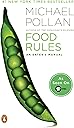
#1 New York Times Bestseller "A useful and funny purse-sized manual that could easily replace all the diet books on your bookshelf." —Tara Parker-Pope, The New York Times A definitive compendium of food wisdom Eating doesn’t have to be so complicated. In this age of ever-more elaborate diets and conflicting health advice, Food Rule s brings welcome simplicity to our daily decisions about food. Written with clarity, concision, and wit that has become bestselling author Michael Pollan’s trademark, this indispensable handbook lays out a set of straightforward, memorable rules for eating wisely, one per page, accompanied by a concise explanation. It’s an easy-to-use guide that draws from a variety of traditions, suggesting how different cultures through the ages have arrived at the same enduring wisdom about food. Whether at the supermarket or an all-you-can-eat buffet, this is the perfect guide for anyone who ever wondered, “What should I eat?” "In the more than four decades that I have been reading and writing about the findings of nutritional science, I have come across nothing more intelligent, sensible and simple to follow than the 64 principles outlined in a slender, easy-to-digest new book called Food Rules: An Eater’s Manual , by Michael Pollan." —Jane Brody, The New York Times "It doesn't get much easier than this. Each page has a simple rule, sometimes with a short explanation, sometimes without, that promotes Pollan's back-to-the-basics-of-food (and-food-enjoyment) philosophy." — The Los Angeles Times Review: Great layout and words of wisdom that is easy to remember - This was a short novel but I enjoyed all the little bits of information that was inside. The book’s sole purpose is to give you some guidelines for eating. The links between diet and health according to this novel is that individuals who eat a Western diet (lots of processed food, food with added sugar and fat, and lots of refined grains) will suffer from Western diseases such as obesity, Type 2 diabetes, cancer and cardio diseases. That totally makes sense to me but I didn’t know it was known as a Western diet. The second link is that if you eat a traditional diet (a lot of different varieties here) you will not suffer from these diseases. Which basically means, no one diet is perfect but as humans we have adapted to different diets to make them work for us. The Western diet, as it stands now, is the diet which makes everyone ill. Inside this novel, there are 64 rules to live by to eat a healthy diet. These rules are explained further with a brief explanation, if needed. Some of these rules I had heard about before but about half of them were new to me. There are three parts to the novel: What to eat? What kinds of food should I eat? And How should I eat? Each of these parts have different rules to follow. I liked that these rules are, for the most part, something I could memorize on my own and therefore, I could recall when need be. There is the rule about not eating food that you cannot say, rule about eating a variety of colors, and a rule about eating at a table, these are a few of the rules I already knew. Here are a few of the rules that I really enjoyed: Avoid food products containing ingredients that no ordinary human would keep in the pantry. So, cellulose, thiamine mononitrate is not something I would have on hand, therefore this product should not be in my house. Avoid food products that contain more than 5 ingredients. Wow, that would eliminate a lot of the processed foods I have on hand. Avoid food products that contain ingredients that a third-grader cannot pronounce. Again cellulose, thiamine mononitrate are out and I need to start thinking simple. Cook food that has only been cooked by humans. Again, lots of preservatives, added sugar, and other interesting items are added which we don’t need. Eat all the junk food you want as long as you cook it yourself. This one is a killer. I have literally cut down on the number of French fries I eat as I think this rule says it all. I’m not physically making French fries out of potatoes every time I want them, it’s too time consuming and too much work. The novel says there is nothing wrong with sweets, soda and other sweet snacks as long as you prepare them yourself. If I had to prepare potato chips, snack crackers, or cookies as much as I consume them, my consumption would really go down. Spend as much time enjoying your meal as it took to prepare it. Amen! I think this book has a lot to offer, things you might know and things that you should know. I like the short and sweet aspect of the novel, it’s not a wordy or a complex read, the author gives his readers just the facts in an easy way to think about them and how to apply them to their own lives. I’m ready to jump on board and I know it will take some time, strength and willpower to incorporate these rules but I know the benefits will be worth it. Review: Michael Pollan has emerged as a great leader in the locavore movement! - If you've been paying attention at all to the subject of diet and health over the past few years, then there's no doubt you've heard of the name Michael Pollan. A trained journalist, he's transitioned from reporting on the story to BECOMING the story with his highly-influential New York Times bestselling books The Omnivore's Dilemma: A Natural History of Four Meals and In Defense of Food: An Eater's Manifesto as well as a major appearance in the critically-acclaimed film on the state of our food supply in America called Food, Inc. . Yes, Pollan has been a busy man and he's doing great work educating the public about what healthy eating is all about. While most people tend to make their diet more complicated than it needs to be, the reality is it's rather elementary if you stick with a few basic principles to guide your daily decisions. That's the concept behind Pollan's latest offering called Food Rules: An Eater's Manual. An unassuming little 4.5×7-inch book, this is one power-packed punch of information you can use to make healthy decisions for you and your family. Broken up into three parts-"What Should I Eat?" "What Kind Of Food Should I Eat?" and "How Should I Eat?"-Pollan says it's all about eating real food, mostly plants, and not too much. If this theme sounds familiar, then it should if you've read any of Pollan's previous books on diet. But the bite-sized format of Food Rules may make this more compatible for the average person to consume and absorb all the lessons he's been conveying through his previous works. Maybe Gary Taubes and his publisher could put something together like this for his bestselling 2007 release Good Calories, Bad Calories: Fats, Carbs, and the Controversial Science of Diet and Health (Vintage) . People like simplicity when it's done right like this book is. I knew the book was going to start off well when I saw Pollan dedicate it to his mother who "always knew butter was better for you than margarine." YES! He proceeds to share how eating has become more of a chore these days because we needlessly rely on media pundits and so-called health "experts" to tell us what's right and wrong about what to put in our mouths. Food is no longer the sustenance of life, but rather something to be critically examined for its impact on health either negatively or positively. While I certainly see nothing wrong with being careful about what foods you choose to consume (and neither would Pollan), he's right about the obsession and it cuts both ways. You've got one group of consumers who absolutely don't give a rip about what they're eating as long as it tastes good to them. So they fill up their shopping carts at the supermarket with Cheetos, Hot Pockets, Twinkies, and Coca-Coca none the wiser that not a bit of that is real food. On the other hand, there's another set of consumers who are ardent about perfection in their diet. You can only eat fresh organic vegetables, grass-fed meats, and nothing artificial at all. They believe if you stray from this even a little that you are damning yourself to an unhealthy lifestyle. Both of these extremes are ludicrous and Pollan says there is a happy balance between the two. Pollan's mantra of "Eat food. Not too much. Mostly plants." that was basic premise of his book In Defense of Food is the underlying theme of Food Rules and it guides all of the information contained within these pages. I would only amend that statement to say "Eat real whole foods. Eat to satiety. Mostly grass-fed meats and organic vegetables." He does seem to be stuck a bit on conventional wisdom regarding the health halo of consuming vegetables, but Pollan is most of the way there with many of the 64 "rules" he shares within the 140 pages of this book. His goal with Food Rules is to help people make better choices when shopping for food and that's a very good thing. And he's starts off with a bang with Rule #1 to just "Eat Food." Sounds simple enough, but most people haven't got a clue what "food" really is. Pollan explains this concept which lays the groundwork for what he attempts to communicate for the rest of the book. Positive messages for people who are livin' la vida low-carb include "avoid food products that contain high-fructose corn syrup," "avoid foods that have some form of sugar (or sweetener) listed among the top three ingredients," "avoid food products with the wordoid `lite' or the terms `low-fat' or `nonfat' in their names," and "shop the peripheries of the supermarket and stay out of the middle." This is all sage advice that will serve you well when purchasing food for you and your family. The visualization that Pollan uses to get people to think about real food is remarkably effective. He educates people to think about food as something that is supposed to "eventually rot" and that you should be able to think about it growing in the "raw state." Mickey D's French fries and Twinkies never seem to spoil no matter how long they stay in your cabinet which is why you don't need to be putting them inside of your body. And too many people think food comes from supermarkets. Actually, real food comes from local farmers which is why Pollan is such a fan of farmer's markets where you can support the locavore movement while feeding your family the most nutritious and delicious foods possible. As for the kind of food to eat, Pollan acknowledges that there is such a thing as a "healthy" high-fat or low-fat diet. It's about choosing the plan that's right for you. He encourages eating the leaves of plants which falls right in line with the green, leafy veggies you consume on a healthy high-fat, moderate protein, low-carb lifestyle. But his insistence on treating meat like a "flavoring" or "special occasion food" is where I would part ways with him. He repeats the mantra that vegetarians are "generally healthier than carnivores" and that's just plain nonsense. While not identifying what he thinks is the exact blame for why meat is a poor choice on a regular basis, Pollan does hint that it could be the saturated fat, protein, or absence of veggies from the meals. But the latest science is showing saturated fat has no bearing on heart disease, protein should be limited to the amount that is adequate for the individual, and veggies can be combined with meat for a nutritious meal plan. This is the heartbeat of the low-carb lifestyle! I do appreciate that Pollan notes it's better to consume animals "that have themselves eaten well." This means avoiding the grain-fed factory farm meats in favor of those that have been grass-fed and treated humanely. It's not just good for you, but it's the right thing to do. He also says to mix it up and eating something new from time to time, including wild game that you hunt yourself. And that includes the "oily little fishes." Stocking up on this kind of quality meat is an important part of absorbing all of the lessons of Food Rules . One of my favorite rules is #37: "The white the bread, the sooner you'll be dead." HA! I like that and it's so true. Pollan explains that white flour is a health risk we've known about for ages and he notes that the body treats it "not much different from sugar." YES! He does tend to favor whole grains and I suppose they are better than the refined ones. But I tend to lean on the side of NO grains instead. Finally, on the subject of how to eat, Pollan was hoping to help people "foster a healthier relationship to food." That's always a good thing because our culture has so jaded us to the idea that food has to be dirt cheap to be worth it. But you'll learn that when you "pay more" you "eat less." I don't think calorie-restriction just for the sake of cutting calories is a smart idea. Yet if you are choosing more satisfying calories coming from fat and protein sources and less from carbohydrates, then you will consume the right amount of nutrition for your body. Pollan even notes to "stop eating before you're full" and "eat when you are hungry, not when you are bored." Although he's all about using smaller plates, taking smaller bites, and the like, I think his overall message in Food Rules is solid: get back to real, whole foods, avoid the artificial garbage that you've become addicted to, and make this a permanent and healthy lifestyle change you can live with and enjoy for the rest of your life! Despite my disagreements with a few of his positions on what all of that entails, I do think Michael Pollan has emerged as a great leader in the movement to bringing real food back to the forefront of American culture. If we are going to get a handle on obesity and chronic diseases of modern man under control, then we need a lot more people like him out there carrying the torch and leading the way.


| Best Sellers Rank | #16,621 in Books ( See Top 100 in Books ) #2 in Caffeine #13 in Heart Healthy Cooking (Books) #68 in Other Diet Books |
| Customer Reviews | 4.4 out of 5 stars 4,929 Reviews |
L**E
Great layout and words of wisdom that is easy to remember
This was a short novel but I enjoyed all the little bits of information that was inside. The book’s sole purpose is to give you some guidelines for eating. The links between diet and health according to this novel is that individuals who eat a Western diet (lots of processed food, food with added sugar and fat, and lots of refined grains) will suffer from Western diseases such as obesity, Type 2 diabetes, cancer and cardio diseases. That totally makes sense to me but I didn’t know it was known as a Western diet. The second link is that if you eat a traditional diet (a lot of different varieties here) you will not suffer from these diseases. Which basically means, no one diet is perfect but as humans we have adapted to different diets to make them work for us. The Western diet, as it stands now, is the diet which makes everyone ill. Inside this novel, there are 64 rules to live by to eat a healthy diet. These rules are explained further with a brief explanation, if needed. Some of these rules I had heard about before but about half of them were new to me. There are three parts to the novel: What to eat? What kinds of food should I eat? And How should I eat? Each of these parts have different rules to follow. I liked that these rules are, for the most part, something I could memorize on my own and therefore, I could recall when need be. There is the rule about not eating food that you cannot say, rule about eating a variety of colors, and a rule about eating at a table, these are a few of the rules I already knew. Here are a few of the rules that I really enjoyed: Avoid food products containing ingredients that no ordinary human would keep in the pantry. So, cellulose, thiamine mononitrate is not something I would have on hand, therefore this product should not be in my house. Avoid food products that contain more than 5 ingredients. Wow, that would eliminate a lot of the processed foods I have on hand. Avoid food products that contain ingredients that a third-grader cannot pronounce. Again cellulose, thiamine mononitrate are out and I need to start thinking simple. Cook food that has only been cooked by humans. Again, lots of preservatives, added sugar, and other interesting items are added which we don’t need. Eat all the junk food you want as long as you cook it yourself. This one is a killer. I have literally cut down on the number of French fries I eat as I think this rule says it all. I’m not physically making French fries out of potatoes every time I want them, it’s too time consuming and too much work. The novel says there is nothing wrong with sweets, soda and other sweet snacks as long as you prepare them yourself. If I had to prepare potato chips, snack crackers, or cookies as much as I consume them, my consumption would really go down. Spend as much time enjoying your meal as it took to prepare it. Amen! I think this book has a lot to offer, things you might know and things that you should know. I like the short and sweet aspect of the novel, it’s not a wordy or a complex read, the author gives his readers just the facts in an easy way to think about them and how to apply them to their own lives. I’m ready to jump on board and I know it will take some time, strength and willpower to incorporate these rules but I know the benefits will be worth it.
J**B
Michael Pollan has emerged as a great leader in the locavore movement!
If you've been paying attention at all to the subject of diet and health over the past few years, then there's no doubt you've heard of the name Michael Pollan. A trained journalist, he's transitioned from reporting on the story to BECOMING the story with his highly-influential New York Times bestselling books The Omnivore's Dilemma: A Natural History of Four Meals and In Defense of Food: An Eater's Manifesto as well as a major appearance in the critically-acclaimed film on the state of our food supply in America called Food, Inc. . Yes, Pollan has been a busy man and he's doing great work educating the public about what healthy eating is all about. While most people tend to make their diet more complicated than it needs to be, the reality is it's rather elementary if you stick with a few basic principles to guide your daily decisions. That's the concept behind Pollan's latest offering called Food Rules: An Eater's Manual. An unassuming little 4.5×7-inch book, this is one power-packed punch of information you can use to make healthy decisions for you and your family. Broken up into three parts-"What Should I Eat?" "What Kind Of Food Should I Eat?" and "How Should I Eat?"-Pollan says it's all about eating real food, mostly plants, and not too much. If this theme sounds familiar, then it should if you've read any of Pollan's previous books on diet. But the bite-sized format of Food Rules may make this more compatible for the average person to consume and absorb all the lessons he's been conveying through his previous works. Maybe Gary Taubes and his publisher could put something together like this for his bestselling 2007 release Good Calories, Bad Calories: Fats, Carbs, and the Controversial Science of Diet and Health (Vintage) . People like simplicity when it's done right like this book is. I knew the book was going to start off well when I saw Pollan dedicate it to his mother who "always knew butter was better for you than margarine." YES! He proceeds to share how eating has become more of a chore these days because we needlessly rely on media pundits and so-called health "experts" to tell us what's right and wrong about what to put in our mouths. Food is no longer the sustenance of life, but rather something to be critically examined for its impact on health either negatively or positively. While I certainly see nothing wrong with being careful about what foods you choose to consume (and neither would Pollan), he's right about the obsession and it cuts both ways. You've got one group of consumers who absolutely don't give a rip about what they're eating as long as it tastes good to them. So they fill up their shopping carts at the supermarket with Cheetos, Hot Pockets, Twinkies, and Coca-Coca none the wiser that not a bit of that is real food. On the other hand, there's another set of consumers who are ardent about perfection in their diet. You can only eat fresh organic vegetables, grass-fed meats, and nothing artificial at all. They believe if you stray from this even a little that you are damning yourself to an unhealthy lifestyle. Both of these extremes are ludicrous and Pollan says there is a happy balance between the two. Pollan's mantra of "Eat food. Not too much. Mostly plants." that was basic premise of his book In Defense of Food is the underlying theme of Food Rules and it guides all of the information contained within these pages. I would only amend that statement to say "Eat real whole foods. Eat to satiety. Mostly grass-fed meats and organic vegetables." He does seem to be stuck a bit on conventional wisdom regarding the health halo of consuming vegetables, but Pollan is most of the way there with many of the 64 "rules" he shares within the 140 pages of this book. His goal with Food Rules is to help people make better choices when shopping for food and that's a very good thing. And he's starts off with a bang with Rule #1 to just "Eat Food." Sounds simple enough, but most people haven't got a clue what "food" really is. Pollan explains this concept which lays the groundwork for what he attempts to communicate for the rest of the book. Positive messages for people who are livin' la vida low-carb include "avoid food products that contain high-fructose corn syrup," "avoid foods that have some form of sugar (or sweetener) listed among the top three ingredients," "avoid food products with the wordoid `lite' or the terms `low-fat' or `nonfat' in their names," and "shop the peripheries of the supermarket and stay out of the middle." This is all sage advice that will serve you well when purchasing food for you and your family. The visualization that Pollan uses to get people to think about real food is remarkably effective. He educates people to think about food as something that is supposed to "eventually rot" and that you should be able to think about it growing in the "raw state." Mickey D's French fries and Twinkies never seem to spoil no matter how long they stay in your cabinet which is why you don't need to be putting them inside of your body. And too many people think food comes from supermarkets. Actually, real food comes from local farmers which is why Pollan is such a fan of farmer's markets where you can support the locavore movement while feeding your family the most nutritious and delicious foods possible. As for the kind of food to eat, Pollan acknowledges that there is such a thing as a "healthy" high-fat or low-fat diet. It's about choosing the plan that's right for you. He encourages eating the leaves of plants which falls right in line with the green, leafy veggies you consume on a healthy high-fat, moderate protein, low-carb lifestyle. But his insistence on treating meat like a "flavoring" or "special occasion food" is where I would part ways with him. He repeats the mantra that vegetarians are "generally healthier than carnivores" and that's just plain nonsense. While not identifying what he thinks is the exact blame for why meat is a poor choice on a regular basis, Pollan does hint that it could be the saturated fat, protein, or absence of veggies from the meals. But the latest science is showing saturated fat has no bearing on heart disease, protein should be limited to the amount that is adequate for the individual, and veggies can be combined with meat for a nutritious meal plan. This is the heartbeat of the low-carb lifestyle! I do appreciate that Pollan notes it's better to consume animals "that have themselves eaten well." This means avoiding the grain-fed factory farm meats in favor of those that have been grass-fed and treated humanely. It's not just good for you, but it's the right thing to do. He also says to mix it up and eating something new from time to time, including wild game that you hunt yourself. And that includes the "oily little fishes." Stocking up on this kind of quality meat is an important part of absorbing all of the lessons of Food Rules . One of my favorite rules is #37: "The white the bread, the sooner you'll be dead." HA! I like that and it's so true. Pollan explains that white flour is a health risk we've known about for ages and he notes that the body treats it "not much different from sugar." YES! He does tend to favor whole grains and I suppose they are better than the refined ones. But I tend to lean on the side of NO grains instead. Finally, on the subject of how to eat, Pollan was hoping to help people "foster a healthier relationship to food." That's always a good thing because our culture has so jaded us to the idea that food has to be dirt cheap to be worth it. But you'll learn that when you "pay more" you "eat less." I don't think calorie-restriction just for the sake of cutting calories is a smart idea. Yet if you are choosing more satisfying calories coming from fat and protein sources and less from carbohydrates, then you will consume the right amount of nutrition for your body. Pollan even notes to "stop eating before you're full" and "eat when you are hungry, not when you are bored." Although he's all about using smaller plates, taking smaller bites, and the like, I think his overall message in Food Rules is solid: get back to real, whole foods, avoid the artificial garbage that you've become addicted to, and make this a permanent and healthy lifestyle change you can live with and enjoy for the rest of your life! Despite my disagreements with a few of his positions on what all of that entails, I do think Michael Pollan has emerged as a great leader in the movement to bringing real food back to the forefront of American culture. If we are going to get a handle on obesity and chronic diseases of modern man under control, then we need a lot more people like him out there carrying the torch and leading the way.
M**D
Great, easy to read book about food choices
This is a great easy to read book to help determine if I think the item in my grocery cart is my wisest option I can then make an informed decision as to whether or not I still want it. I recommend it and will be getting more for Christmas gifts.
K**R
Great Place to Start Learning about Food and Health
Michael Pollan's "Food Rules" offers an excellent reference to begin learning about the relationship between food and health. Not just a beginner's guide, this book also serves as a nice (and brief) compendium of Pollan's writing across a number of his other publications. There is a great deal of practical wisdom and advice in this short and easy-to-digest book. Pollan offers 64 "rules" for eating. He breaks these rules into three major themes: (1) What should I eat?, (2) What kind of food should I eat?, and (3) How should I eat?. Written in a balanced and easy-to-understand style, this is a great place to start learning about the complex relationship between food and health. The topic of food in general is a touchy one. As the author Jonathan Safran Foer said in a CNN interview*: "Even the most political people, the most thoughtful and engaged, tend not to "go there." And for good reason. Going there can be extremely uncomfortable. Food is not just what we put in our mouths to fill up; it is culture and identity. Reason plays some role in our decisions about food, but it's rarely driving the car." Pollan points out two important facts in the book's Introduction that "are not in dispute" related to the links between diet and health: "(1) Populations that eat a so-called Western diet -- generally defined as a diet consisting of lots of processed foods and meat, lots of added fat and sugar, lots of refined grains, lots of everything except vegetables, fruits and whole grains -- invariably suffer from high rates of the so-called Western diseases: obesity, type 2 diabetes, cardiovascular disease, and cancer. Virtually all of the obesity and type 2 diabetes, 80 percent of the cardiovascular disease, and more than a third of all cancers can be linked to this diet. (2) Populations eating a remarkably wide range of traditional diets generally don't suffer from these chronic diseases." Pollan notes that these two facts are agreed upon by all the contending parties in the nutrition wars. Moreover, he notes that these facts are "sturdy enough that we can build a sensible diet upon them." This, I think, is a good context with which to explore the relationship between food and health. I strongly recommend this book to all readers. It is a useful addition to two of Pollan's other books, The Omnivore's Dilemma: A Natural History of Four Meals and In Defense of Food: An Eater's Manifesto , and to two books related to other aspects of food and health, Fast Food Nation and Sugar Shock!: How Sweets and Simple Carbs Can Derail Your Life-- and How YouCan Get Back on Track . * [...]
P**E
A collection of cliches
This isn't a science-based breakdown of nutritional requirements and caloric considerations. It's a very short read that basically collects all that exhausted advice like: eat mostly plants, avoid processed foods, and don't eat at the gas station. It also offers simple suggestions like buying smaller plates and cups which seems like someone was trying to fill out a novel for publication. It's a simple, breezy read that might offer more if you are completely clueless about where to begin a diet program. If you are one of the many people I see lining up at the Wawa during lunchtime, then I would recommend this. The words are small and simple, and that stuff in Wawa isn't food. Overall, the length and ease of the read made me not regret the purchase. The best I can say about it is that it really does get most of those simple things we've all heard into one place with a brief explanation as to why they actually help. At the time of this review, the price for the Kindle version of this was $10.00. For me, it didn't provide much new information, and insulted me by taking ten dollars to tell me to buy smaller plates. But, it is a nice collection of all those dumb adages that can give you a good foundation of understanding before you go on to the more detailed nutritional advice books.
N**N
Simple
I've read all of Michael Pollan's books, and this by far was the easiest to follow and finish. It is short and easy to read with fact supported information that actually inspired me to eat healthier. I had skipped this book in the past because it was so short, and always labeled with the "diet" books. Not being interested, I left it on the shelf. After polishing off a few slices of sausage, pepper and mushroom topped pizza one night, and feeling particularly bad about it, I looked up a different book that a girlfriend had told me about while she was trying to talk me into becoming a vegan. Needless to say, I skipped the suggested read, and picked up Food Rules: An Eater's Manual. After finishing the 64 "rules" I felt that I had a better understanding of what I should be eating, with the backing evidence and facts to encourage me to eat the right thing. Everything in moderation, eating things that will go bad, eat the special occasion foods on special occasions - all of the rules seem pretty reasonable. I've tried to incorporate a few of them into my shopping and eating habits, and hope to add more each month. Overall, Food Rules is a good read. Easy to follow, keeps your interest, and gives hope for those of us who hate the idea of dieting, but can deal with mindful eating.
B**B
what to eat and not to.
learn what to eat how to eat and what not to eat, very well done. good read.
S**N
One Tasty Tome
Very rarely do I finish a book on the same day I start it, but this particular one was devoured and digested in one delicious sitting. Michael Pollan sets the table with simplicity and clarity, guiding the reader through a three course meal which expands upon the three main sentences that are the premise of the book: “Eat food. Mostly plants. Not too much.” Never have I encountered nutritional advice so concise. These rules make sense. Pollan’s deliberate avoidance of complicated science, chemistry, and biology allows these rules to be immediately understood by experts and nonexperts alike. Advice that states to “Eat only foods that will eventually rot” (Rule 13) is immediately understandable. You are already familiar with these kinds of foods and can separate them from what Pollan succinctly denotes as “edible foodlike substances.” Some rules are more specific yet profoundly creative, such as Rule 24: “Eating what stands on one leg [mushrooms and plant foods] is better than eating what stands on two legs [fowl], which is better than eating what stands on four legs [cows, pigs, and other mammals].” Other rules may tell you that which you already know, but it’s possible that only by reading them will you realize that you already knew them. At the end of the day, as we finish our last meal, we are reminded that it’s okay to “break the rules once in a while” (Rule 64). While it’s fantastic to have these rules with us, “cultivating a relaxed attitude toward food is important.” Don’t be too strict or hard on yourself. This is the first work by Pollan that I’ve read, and it certainly won’t be the last. I’m hungry for more, so I’ll be back for seconds. I recommend this book to anyone who eats food.
K**I
Short and succinct - but very useful
I feel the book condenses a lot of confusing advice into short, clear, 'do this' kind of sentences that stuck to my mind. I now feel I don't have to bother as much about the exact nutritional content of some food - as much as noticing how close to the source that food is. Definitely recommend this book to anyone looking at some simple, irrefutable, and quick rules to eat healthily minus the jargon.
M**S
Very informative
I heard of this book while taking a course offered online through Stanford University. It's very informative and helpful for living a healthy lifestyle.
K**I
More food for though
Not just rules but topics to think about our day by day relationship with the universe of food. Not a diet, an adjust of our path.
H**S
Simple et précis
Ce livre était super. Il est écrit d'une manière simple et précise en listant des notions vraiment importantes de comment manger sainement. J'ai vraiment apprécié les infos du livre qui sont logiques en plus mais qu'on a besoin d'entendre et re entendre pour que ça rentre. C'est vrai que c'est dur de manger sainement dans la société dans laquelle on vit aujourd'hui avec tous les fast food, tout le sucre et sel cacher dans notre nourriture. Je souhaite m'impliquer plus dans tout ce qui est santé et bien être donc si quelqu'un a des recommendations ou suggestions de nouvelle lecture ou autre oeuvre dans le même genre, envoyez moi un mail que je continue ma croissance personnelle :) - [email protected]
L**.
Una pequeña gran obra
Me ha encantado este libro, lo he leído del tirón y lo podría releer mil veces! Es absolutamente adictivo. Como bien dice el título, es un manual para una alimentación saludable y natural, con sus respectivas explicaciones y argumentos para cada pauta. El humor mordaz y el sentido de la ironía de Pollan no dejan indiferente a nadie. Un libro que se disfruta desde la primera página hasta la última y, además, proporciona trucos prácticos y fáciles de aplicar para mejorar la forma de alimentar nuestro organismo. 100% recomendable para cualquiera con un mínimo interés en la nutrición.
Trustpilot
1 week ago
3 weeks ago