
Buy anything from 5,000+ international stores. One checkout price. No surprise fees. Join 2M+ shoppers on Desertcart.
Desertcart purchases this item on your behalf and handles shipping, customs, and support to Thailand.
📖 Dive into the literary event that everyone’s talking about — don’t miss out on The Road!
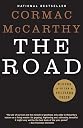
The Road by Cormac McCarthy is a critically acclaimed post-apocalyptic novel featured in Oprah’s Book Club. It chronicles a harrowing journey of a father and son through a bleak, ash-covered world, exploring themes of survival, love, and humanity. Praised for its sparse, powerful prose and emotional depth, it ranks among the top contemporary literary fiction bestsellers with over 36,000 reviews and a 4.4-star rating.


| Best Sellers Rank | #790 in Books ( See Top 100 in Books ) #10 in Contemporary Literature & Fiction #61 in Literary Fiction (Books) #61 in Reference (Books) |
| Customer Reviews | 4.4 out of 5 stars 37,461 Reviews |
D**L
perhaps the greatest work of art I've ever encountered
Art is different from entertainment because art changes you, and this book affected me more deeply than any piece of art I've ever encountered. Not that I think it's perfect -- I see many flaws. But they don't matter. It accomplished its mission. Cormac McCarthy has written the definitive literary depiction of the power of love. Although they were cold, dirty, starving, frightened, I was surprised to find myself at one point envying them, for they were nurtured from within by the power of love. Especially the father, as it's the nature of the parent-child relationship that the parent gives and the child receives. CM is saying, that when all hope is gone, love remains. And he's done it so convincingly that during the days I was reading this book, when I had occasion to throw away some food, I found myself thinking "I wish I could give it to them." In some part of my mind, I felt convinced that these people really existed. That was how completely I entered into their world. Caution: spoilers ahead!! I have never cried so hard at any death in a movie or book. It started with the line: "when he lay down he knew that he could go no further and that this was the place where he would die. The boy sat watching him, his eyes welling. Oh Papa, he said." I'm crying for the loss to the man, who showed so much courage, self-denial, sheer grit, and boundless love. We want to see that kind of all-out effort succeed and be rewarded, but life isn't like that. We know the horror the man must feel in leaving his son alone in that world, with nothing but a half a tin of peaches to sustain him. In his final gesture of love, the man declines the peaches and tells his son to save them for him -- for tomorrow, when he knows he'll be gone. I'm crying for the loss to the skinny, starving boy, who has lost his smart, determined, vigilant and tender father -- the only thing standing between him and a horrific future as a catamite or cannibal's dinner. And I'm crying for the loss to myself of the most inspiring character in the fiction world: a man with the strength to keep going, keep walking, keep searching, when almost all others have given up (like his wife) or given in to their basest instincts (the roadagents). "The Road" left me knowing that love is all that matters, and determined to live my life out of that knowledge. I want to give up living from my mind and start living from my heart. Perhaps I will adopt a child. The story is more powerful than a thousand sermons. Cormac McCarthy strips away all the superfluous stuff that has nothing to do with love. We don't know whether the man preferred to go out for sushi or steak, jazz music or country. Was he a lawyer, salesman or mechanic? None of that is essential to who he is. We don't need him to crack jokes or say profound things. All we know of him is what he does, and that's plenty. We see him putting his son's welfare first, over and over again. When they are hiding from the cannibals, he considers running to draw them away from the boy. That he himself will end up in that basement doesn't even figure in his decision not to do it -- only that he doesn't think it will work. His own pain weighs nothing when compared to his motivation to save the boy. As for those who fault the man for not helping strangers -- I don't agree. Any morsel of food given to strangers is taken from the mouth of his son, or lessens his own chance to stay alive long enough to get his son south. He had to choose and he chose his son. So the story had a deep emotional impact on me. But in addition, it is a story of ideas. How low can man go? What darkness beats in the heart of men, only thinly veiled by our (currently) abundant society? At what point is life no longer worth living? At what point should the strong drive for self-preservation be ignored, if it means committing atrocities on others? And lastly, to what extent am I taking life's current luxuries and comforts for granted? I'm sure many a reader of "The Road" has collapsed into bed after a night of reading and felt immense gratitude for their cozy bedroom, their clean sheets, their fridge and a tasty midnight snack. Things that troubled me about the story: I wanted them to stay longer at the bunker. At least to make full use of those provisions and take the time to fatten up and rest before heading on. They could've hauled a load of groceries off a mile or two and pigged out for a few weeks before coming back for more. The more weight they put on, the less crucial it would be to find fresh provisions when they finally did leave. I wanted to see him make a major effort to find a way to disguise the trap-door to the bunker. It had gone undiscovered for almost ten years, if it was well hidden perhaps it could go undiscovered for at least a few more months. Setting off the flare gun was irresponsible. They wasted a flare and announced their position, perhaps drawing the thief. But those are minor quibbles. After finishing "The Road," I felt profoundly blessed, and cleansed from within from the tears shed. I knew I was in the presence of greatness. Cormac McCarthy has given mankind an immense gift, for which I paid only $7.99. Thank for Cormac McCarthy.
H**7
My Review
'The Road' by Cormac McCarthy is a haunting yet profoundly moving narrative set in a post-apocalyptic world. The story follows a father and his son navigating a desolate and bleak landscape, a world devoid of hope. Their journey to the coast is fraught with dangers, where survival is a constant battle against lawless bands and the unforgiving environment. McCarthy's eloquent prose captivates the reader, painting a vivid picture of a world in ruins, where the only constants are the bitter cold, ash-laden winds, and unrelenting darkness. The palpable desolation in the narrative grips you, evoking a sense of the dire circumstances faced by the protagonists. What truly shines in this tale is the poignant relationship between the father and his son. The unwavering love and reliance they have on each other in the face of despair and devastation is both heartrending and uplifting. Their bond serves as a guiding light in a world where darkness prevails, showcasing the resilience of the human spirit. McCarthy's unflinching portrayal of human nature - encompassing both its destructive and tender aspects - is deeply thought-provoking. The contrast between ultimate destructiveness and the enduring tenderness that sustains these two individuals in a world of ruin is both compelling and reflective. This novel is an emotionally charged odyssey that lingers in the mind long after the last page is turned. Though the subject matter is grim, McCarthy's storytelling prowess and the depth of the human connection depicted within the narrative make it a compelling read. The exploration of themes like love, survival, and the human condition makes 'The Road' a book that leaves an indelible mark. While the book is a powerful, emotional journey, it's not for the faint of heart due to its dark and at times, distressing themes. However, for those willing to delve into the depths of human endurance and the unbreakable bond between a father and his son, 'The Road' is an evocative and unforgettable experience. As a fan of Cormac McCarthy's writing, 'The Road' lived up to his legacy, though it is undeniably an intense and gripping read. This book deserves high praise for its exceptional storytelling and exploration of the human spirit in the face of adversity. Therefore, I rate it four stars for its evocative narrative and powerful emotional depth.
C**S
An American Literary Masterpiece
This is the first Cormac McCarthy book I have read. I had heard from so many people that I would love him as a writer and this book was a good indication that they were correct. The book, which won the Pulitzer Prize for Literature last year, is a bleak narrative of a father and son's journey through the post-apocalyptic South. A non-specific, but apparently human-caused catastrophe has destroyed most of the earth and killed almost all human life. People survive on leftover non-perishable food (the cataclysm happened a number of years earlier so these items are almost non-existent) and cannibalism. It is a desolate and dangerous world for a father and young son to walk through and walking seems to be the one universal activity in this world. And it's a dangerous activity because both "the good guys" and "the bad guys" are on the move, scavenging for scraps of food and instruments of survival. Houses have been vacated and left to rot, everyone is the road, on the move. The few houses which are still inhabited are places of unimaginable horror, which McCarthy uses to illustrate the animalistic evil which thrives in this dismal environment. This flourishing of evil is one of the main themes McCarthy wrestles with throughout the book: what will men do once there is nothing left to live for and little to live on? (In this way, the book is similar to another apocalyptic book I have reviewed here, Children of Men and revisits themes of William Golding's The Lord of the Flies.) There is not much in the way of plot or denouement. There are few clues as to what event has destroyed life and hope. There are no chapter divisions, mirroring it would seem, the endless march of the unnamed characters. And there are only a handful of geographic markers (though the one I liked was the barn that read, "See Rock City"). Yet, even devoid of these traditional literary markers, the narrative is utterly gripping. I had a difficult time stopping reading and was I not in the middle of visiting family with my four children I probably would have simply sat and read to the end without pausing. The book is simply a narrative of events, observations, and pain. But the writing is so beautifully descriptive, both of the landscape and the human condition, that the spare plot line is absolutely spell-binding. At the end of "the road", you will have gotten to know the two main characters with a familiarity that lesser writers usually need 600 pages to convey (this book is less than 300.) You will feel like their aspirations and their despair are somehow yours to bear as well. And, even though you don't know their names, you will likely care very deeply about them, as I did. The fact that McCarthy invites the reader to care so deeply about the main characters, and because the father and son are just like many fathers and sons we all know, he is able to make this grotesque world seem less outlandish and implausible. As I read, I began to visualize myself in the circumstances of the book and ask, "what would I do?" or "how would I fare?" And, though his characters primary concern is their immediate survival, they ask those questions that arise in any human situation, prosperous or desperate: "Am I a good person?", "Are we some of the good guys?" (Those that are left.) At one point in the book, the father suggests to one of the travelers that they meet that his young son is a "god", and in this apparently god-forsaken world, it is a poignant image. Though the boy is a dependent on the father and not the other way around, he is also the father's only source of joy and comfort, and is his moral compass, reminding him that as one of the "good guys", they should help others, even if it puts them in greater danger. This book is beautiful and gut-wrenching, it's a serious work of literature and a page-turner. I highly recommend it and I look forward to reading more of McCarthy's work. (I also recommend keeping a dictionary handy while you're reading it.)
K**R
Literary Horror in the Oprah Winfrey Book Club???
It was right there, in the description of the item in my Amazon cart; it was in parenthesis: (The Oprah Winfrey Book Club)--and, after a few clicks and an innocuous transfer of some money-numbers on a computer screen, the book was mine and it was on its way. Over the next couple of days, as I awaited the book's arrival, I had to wonder what I'd done. Was I actually going to like this book or was I going soft, like a piece of fruit being tossed (and dropped a few times) around the library by a couple of bored high-school kids that don't understand why anyone would read the book when you can just watch the movie? I'd been told to check out Cormac McCarthy several times over the past few years and I'd been putting it off. I like stories of the macabre, I told myself. I'm not mainstream. I don't like the sort of books that populate the shelves of Barnes and Noble. (Although I couldn't quite stifle that voice in the back of my head that kept whispering: What about King, you idiot. How much more mainstream can you get, you hypocritical bastard.) I thought that if Oprah liked it, the woman adored by so many middle-aged woman across America, it probably wasn't for me. When the book arrived, sure enough, there it was: that great big gleaming O sticker, stuck to the front of my new book like a tumor, a mark that, to me, was as glaring and hideous as a scarlet A. I took the book to work with me, shamefully hiding the Oprah Book Club sticker with my fingers, and I read the first 50 pages or so. I read some more at lunch. I was intrigued; I was curious; I was drawn into the world of the book. I hadn't imagined a place so perversely dark and hopeless, so vague and yet so very real--so very human. I forgot about that little sticker on the front cover and I finished the book in a day and I immediately looked up Oprah's Book Club--what other kinds of things were on that list? What was I missing? "The Road" by Cormac McCarthy is a very good book. Its subject matter is most decidedly horror, but its style and restraint are the qualities of good literature. It chronicles the journey of a man (never named) and his young son as they travel through a world after some sort of apocalyptic disaster (never explained). All we know is that it's cold, food is extremely scarce, and everything is in ruins, covered in ash and falling to pieces. McCarthy's sparse writing style works perfectly to convey the desperate numbness of humanity reduced to a state of aimless survivalist. People are kept locked in basements like cattle to be eaten by other people; a woman gives birth to a baby and roasts it on a spit for dinner with her male companions; all the plants and birds and everything is dead. It is a bleak world and a bleak story, but with a lot of heart and much to say about the nature of altruism and the human spirit. Now, I've looked through Oprah's list of books from the past few years and most of what's listed there are not of much interest to someone like me who loves the horror genre and loves subversive fiction (besides a few works of Faulkner), but I have to say it is a solid list of 'literary' pieces of writing that I'm sure are important and powerful in the canon. I must say, my respect for Oprah has jumped considerably after looking over her list of books and knowing that she actually reads and encourages others to read--in a society that is becoming more and more illiterate and loosing its historical memory, anyone totting the value of the written word is a commendable and upstanding member of the human race in my eyes. Read "The Road." It is a wonderful piece of literary horror fiction.
J**J
Great reading, but it is NOT unabridged!
Warning: This recording is not unabridged (as stated in the website description)! I happened to find several sections that had been cut from the text. That is because some transitions were so awkward and abrupt that I suspected the author wasn't responsible. When I checked the printed book, sure enough, paragraphs had been cut from the reading. There are undoubtedly other passages that were cut that I did not discover. The reader himself does a fabulous job. It is truly a shame that someone decided to spoil a brilliant reading and a fabulous book by hacking out sections. It's even worse that this is misrepresented on the website.
S**.
My second McCarthy read
Cormac McCarthy’s The Road is one of the most hauntingly beautiful novels I have ever read, and it deserves every bit of five stars. After Blood Meridian, I needed another. On the surface, it’s a post-apocalyptic survival story, but beneath that, it is something much greater: a meditation on love, hope, despair, and the unbreakable bond between father and son. McCarthy’s writing is stripped bare, almost skeletal, yet it carries immense weight. His prose mirrors the barren landscapes of the novel, sparse, cold, and unforgiving, but within that starkness, he manages to capture breathtaking moments of tenderness. Every word feels deliberate, every silence intentional, creating a rhythm that keeps you both unsettled and deeply invested. The father and son’s journey is nothing short of heartbreaking. Their struggle against hunger, cold, and the lurking dangers of other survivors paints a grim picture of humanity’s collapse. Yet what shines through the darkness is their devotion to each other. The boy becomes the embodiment of innocence and goodness in a world that has forgotten such things, while the father’s relentless will to protect his child becomes both heroic and tragic. Their relationship is the glowing ember at the heart of the book, the “fire” they carry through the ashes of the world. What elevates The Road beyond other dystopian tales is its spiritual weight. It feels biblical in scope, as though McCarthy has written a modern lamentation or scripture of loss and endurance. The imagery is desolate but poetic, pulling you into the gray ruins of a world that is both alien and eerily believable. It lingers long after you’ve finished, not just as a story, but as a reflection on what it means to love, to sacrifice, and to endure in the face of nothingness. The Road is not an easy read, it is bleak, unrelenting, and at times devastating, but it is also one of the most powerful works of literature I have encountered. Few books manage to capture the raw core of the human spirit the way this one does. For me, it is not just a masterpiece of the genre, but a masterpiece of storytelling itself.
H**N
Haunted
I've liked post-apocalyptic fiction since junior high. When I was fifteen, I saw "The Omega Man" twelve times. (Yeah, I thought Rosalind Cash was hot, but that only had a little to do with it.) I would sometimes reflect on why I enjoyed the genre so. Was it because I enjoyed the idea of the human race being nearly wiped out? Nah. I like people, for the most part. I suppose what attracted me most to the stuff was much the same as what attracts folks to westerns: the rugged individual prevails against overwhelming odds, and preserves hope for his town, his country, or humanity itself. It was the adventure element of the genre, and the underdog standing of the typical post-apocalypse protagonist, that lured me. But then, I always wondered: Why doesn't the end or near end of humanity bother me, even in a fictional context? Am I secretly anti-social? Or, am I simply a mean dude wrapped in a veneer of civility? I harbored a mild conflict between enjoyment and vague guilt when reading or watching the end of the world, but I suppose that conflict only added spice to the allure. There was, and is, another element: the need to face my fears, especially fears that lurked in shadow. I grew up in a time when nuclear conflict between the U.S. and the Soviet Union was an all-too-real possibility. I remember the drills in elementary school, and I remember the thoughts that would come to me as I sat beneath my school desk. They were thoughts like, "If this was for real, I might never see my mom, dad, sister, or dog again." How much did those years emotionally brand folks of my generation? What lingers in the heart and the guts? I don't know. But I do know that I feel sorrow that we had to spend our childhoods with an awareness that we could be incinerated before the day ended. How very sad. Our biggest worry should have been whether we'd get grounded for some misdeed upon returning home from school. Anyway, I came upon "The Road" while browsing post-apocalypse novels on Amazon. Now, I'm a bit of a contrary son-of-a-gun. I've never rushed out to buy a book upon learning it was awarded any prize, and I don't like it when Oprah tells me what to do. But sheesh, a post-apocalypse novel winning the Pulitzer Prize? How does that happen? I ordered the book. I didn't know much about McCarthy before buying "The Road." So, I was distracted by his tendency to avoid punctuation, flaunt basic rules of grammar, and leave out quotation marks in dialogue. My thought was, "Sheesh, I guess I'm really lacking in sophistication. This guy is held up as a 'modern master,' but to me, he comes across as lazy. For cryin' out loud, is it really that much harder to type CAN'T instead of CANT?" What carried me along, though, were contrasting elements of the story. The man and boy struggle to survive in a grey, desolate world, where the only food available is what can be scavenged. They're heading south, because the man knows that he and his son cannot survive another winter in the north. The world seems utterly without hope. And yet, hope lives, tenaciously, in the love between father and son. The brutal, horrific portrayals of the world and its remaining inhabitants only serve to spotlight the connection between the boy and his dad. McCarthy writes, "Then they set out along the blacktop in the gunmetal light, shuffling through the ash, each the other's world entire." Then ending of the novel, safe to say, ain't stock Hollywood. I finished the novel with conflicting feelings. The story was compelling, and yet I had some regret that I'd even started it. Through much of the book, the writer's disregard of grammar rules and conventions was distracting, and yet somehow added to the bleak tone of the book, to the sense of utter desolation. McCarthy wasn't motivated to make this an easy read, especially in an emotional sense. The reader never gets off the hook. Escapist fare, it isn't. Truth be told, for much of the novel, I tended to side more with the two and three-star reviewers on Amazon than those who gushed over the novel. But time has changed my perspective. Early in the novel, it was a glass half-empty. Now, days after finishing it, it's a glass half-full. Is "The Road" a good book? Do I recommend it? I don't know. I really can't say. It's haunted me too much to be objective about it. Since I've read it, I think often about when my son was a newborn. He was born healthy and robust, but suddenly, I became hyper-aware of how much I had to lose. Worries of SIDS and other agents of the Grim Reaper circled about in my mind, like vultures with blood-soaked beaks. He slept with us as an infant, and I would often sit awake at night and watch his little chest rise and fall, all the while thinking, "Please, God, just let him keep breathing." I've been cursing "The Road" since I finished it. But last night, I started reading it again. I'm thinking that if I re-read it, I might chase away the shadows it's left in my heart.
S**B
Bleak -- Depressing -- Excellent
Let’s walk along "The Road" by Cormac McCarthy, which my oldest daughter read at her lit teacher’s suggestion. It looked intriguing, there on the “return” pile by the back door, yet when I picked it up she said, “It’s just so depressing!” That it is. “The Road” tells about “the man” and his son, “the boy.” No names, but that’s the least of their problems. They live in America after some huge disaster. We’re not talking your standard terrorist attack or anything. No, in this world the daylight is gray. Corpses litter the landscape. The few trees you might see are burning. There are no animals, except for the stray mutant creature. By day the banished sun circles the earth like a grieving mother with a lamp. We’re never told exactly what happened, but we do know that the man did live most of his life when things were “normal.” The boy was born, and the mother apparently couldn’t handle things to come and did away with herself. So it’s just the man and the boy, walking along the road in an attempt to get to the coast. Why, it isn’t exactly clear — once they reach the coast, things don’t seem much rosier. And along the way, they are in fear of “bad guys” who sometimes appear in truly terrifying ways, but mostly they don’t run into anyone at all. When they do, the man wants to get away from them as quickly as possible. The boy, who truly seems too good for the world he’s landed in, always does want to help the others. The writing in this book is usually spare, but there are a whole slew of “big words” scattered throughout too (like catamite, which I looked up and then wished I hadn’t). Punctuation is scattered — no quotation marks, and most contractions dont have apostrophes. However, almost immediately this seemed okay: in a world where pretty much everything has fallen apart, who cares if you’re using the proper writing conventions? So, although the setting is pretty much pure desolation, I thought this was an excellent book and I’m glad I read it. The writing is really good; good in a way that makes me want to give up writing anything: He thought that in the history of the world it might even be that there was more punishment than crime but he took small comfort from it. Or this exchange between the man and the boy: Do you wish you would die? No. But I might wish I had died. When you’re alive you’ve always got that ahead of you. Or you might wish you’d never been born. Well. Beggars cant be choosers. You think that would be asking too much. What’s done is done. Anyway, it’s foolish to ask for luxuries in times like these. I guess so. Nobody wants to be here and nobody wants to leave. And I loved this description: Still there was something perverse in his searching. Like exhausting the least likely places first when looking for something lost. See, McCarthy described a feeling so well. I can totally relate to that. Love when an author does that. The Road: bleak. Depressing. Excellent.
R**K
Overlevingsroman van hoge orde
In een vernietigende zwarte kou doolt een vader naar het zuiden met als enige motivatie zijn zoon. We volgen dit tweetal in een post-apocalyptische wereld van as en onmenselijkheid door zo helder beschreven vernietiging dat de adem stokt. Er is geen hoop, maar de lezer denkt het te kunnen vinden.
B**N
رائع
جميل
O**A
Amazing Story, Unforgettable.
Amazing book. People say it's incredibly depressing and a window into what desperation turns people into, but to me, despite having to stop a couple of times as realizations hit me like trucks, it felt a lot more like a amazing story of what a father will do for his child, how his innocence and sweetness keep him going. I would recommend it in spite of how depressing it can get. Thanks to it I was also able to get into McCarthy's literary style, which is also very much appreciated.
F**N
The Road
Brilliant read, loved it. Fast, free delivery from Amazon
M**A
Spietato, visionario e toccante
Scritto in ma ieri quasi asettica, in alcune parti ripetitivo, quasi a suggerire il nuovo corso delle vicende umane dopo una misteriosa catastrofe che resta percepibile solo attraverso le tracce che lascia. Ci sono due visioni quasi contrastanti. Un padre che lotta per la sopravvivenza e un figlio che prima accetta qualsiasi nefandezza come qualcosa di indiscusso, e poi, crescendo, inizia a sviluppare una sua personale coscienza. E' un grido forte all'umanità, alla riconquista di valori perduti. Storia che lascia tantissime emozioni e che merita di essere letta tutta di un fiato.
Trustpilot
1 month ago
2 weeks ago