
Buy anything from 5,000+ international stores. One checkout price. No surprise fees. Join 2M+ shoppers on Desertcart.
Desertcart purchases this item on your behalf and handles shipping, customs, and support to Thailand.
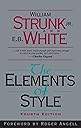
You know the authors' names. You recognize the title. You've probably used this book yourself. This is The Elements of Style, the classic style manual, now in a fourth edition. A new Foreword by Roger Angell reminds readers that the advice of Strunk & White is as valuable today as when it was first offered. This book's unique tone, wit and charm have conveyed the principles of English style to millions of readers. Use the fourth edition of "the little book" to make a big impact with writing. Review: A Classic of English Usage - Attention high school students about to graduate, job applicants, aspiring attorneys and diplomats, or anyone who has written a love letter: the struggle for accurate expression can be a bittersweet challenge, but it must be taken up. All of society depends on it. Written expression is the oil in social machinery. Failure to make a coherent point can be devastating to purpose. To sum it up succinctly: language matters. The Elements of Style, by Strunk and White, is the standard volume for linguistic clarification. Short, comprehensive, and indispensable, it is the definitive source for its subject. The greater your understanding and use of language, the greater your power to define terms and control events. Language mimics a living organism. Language has character and identity. Though its rules can be vague and full of contradictions, language should be effectively understood to be knowledgeably used. Somewhat magically, The Elements of Style directly answers most questions of usage. Improper usage is painful to see written, and lands with a dull thud when heard in the ear of the knowledgeable. For example, a common mistake in usage, is to say “Between he and I.” The word “between” is a preposition, and therefore takes a third person pronoun. Properly stated, the phrase is “Between him and me.” The proper use of that and which, and further and farther is swiftly explained, as well as the accurate use of punctuation when using parentheses. This small compendium is divided into five parts: Elementary Rules of Usage, Elementary Rules of Composition, A Few Matters of Form, Words and Expressions Commonly Misused, and An Approach to Style (with a list of reminders). The authors offer practical advice but acknowledge that writing well is a mysterious process. First rate writers are rarely satisfied with their work. Norman Mailer wrote, “Good writing is not an act to inspire confidence because it is good, but anguish because it is not better.” This may be because variables are infinite and good style eludes definition. Writers express genius and craft in varying degrees. Craft can be taught; genius is innate and cannot be taught. The authors offer modest avowal: “There is no infallible guide to good writing, no assurance that a person who thinks clearly will be able to write clearly…writers will often find themselves steering by stars that are disturbingly in motion.” For the majority of the ungifted, which is to say most of us, The Elements of Style, by Strunk and White, is an indispensable volume, and should be, like a dictionary, within arm’s reach. —Tom Casey Review: (4.75) Get rescued out of writing trouble. And, learn how to write with vigor and clarity. - This classic style manuscript is only a few dollars but is worth its weight in gold. Why is that? Because it teaches you how to use words to form proper sentences. The result is writing that communicates a clear, robust and precise message. Good writing never leaves the reader bewildered. Instead, good writing arouses and holds the reader’s attention; it calls up mental pictures whose size exceeds the writing itself. Accordingly, Elements of Style equips the writer with greater technical skill and is overflowing with best practices. It also benefits your reader, who will no longer flounder in the sea of ambiguity. After reading this book, I now realize how bankrupt modern writing is; this includes my own writing. Elements has five parts: (I) Elementary Rules of Usage (II) Elementary Principles of Compositions (III) A Few Matters of Form (IV) Misused Words and Expressions (V) An Approach to Style. Parts I-IV deal with the science of writing. Part V deals with the art of writing. It is in parts I and II that you will find the famous “22 Rules.” These commandments provide timeless lessons such as (#16) “Use definite, specific, concrete language” and (#17) “Omit needless words.” Under each heading, the author gives a few examples of sentences that can be improved by application of the rule along with a one-page summary. As a bonus, the author has a style of writing that is sharp and witty. This creates a read that is both informative and entertaining. Overall, this small book can be finished quickly, but you will likely return to mine nuggets of literary wisdom many times. For any writer, this book is the type that you buy and keep in a permanent spot in your library.
| Best Sellers Rank | #2,009 in Books ( See Top 100 in Books ) #1 in Grammar Reference (Books) #4 in Writing Skill Reference (Books) #5 in Fiction Writing Reference (Books) |
| Customer Reviews | 4.7 out of 5 stars 7,224 Reviews |
T**Y
A Classic of English Usage
Attention high school students about to graduate, job applicants, aspiring attorneys and diplomats, or anyone who has written a love letter: the struggle for accurate expression can be a bittersweet challenge, but it must be taken up. All of society depends on it. Written expression is the oil in social machinery. Failure to make a coherent point can be devastating to purpose. To sum it up succinctly: language matters. The Elements of Style, by Strunk and White, is the standard volume for linguistic clarification. Short, comprehensive, and indispensable, it is the definitive source for its subject. The greater your understanding and use of language, the greater your power to define terms and control events. Language mimics a living organism. Language has character and identity. Though its rules can be vague and full of contradictions, language should be effectively understood to be knowledgeably used. Somewhat magically, The Elements of Style directly answers most questions of usage. Improper usage is painful to see written, and lands with a dull thud when heard in the ear of the knowledgeable. For example, a common mistake in usage, is to say “Between he and I.” The word “between” is a preposition, and therefore takes a third person pronoun. Properly stated, the phrase is “Between him and me.” The proper use of that and which, and further and farther is swiftly explained, as well as the accurate use of punctuation when using parentheses. This small compendium is divided into five parts: Elementary Rules of Usage, Elementary Rules of Composition, A Few Matters of Form, Words and Expressions Commonly Misused, and An Approach to Style (with a list of reminders). The authors offer practical advice but acknowledge that writing well is a mysterious process. First rate writers are rarely satisfied with their work. Norman Mailer wrote, “Good writing is not an act to inspire confidence because it is good, but anguish because it is not better.” This may be because variables are infinite and good style eludes definition. Writers express genius and craft in varying degrees. Craft can be taught; genius is innate and cannot be taught. The authors offer modest avowal: “There is no infallible guide to good writing, no assurance that a person who thinks clearly will be able to write clearly…writers will often find themselves steering by stars that are disturbingly in motion.” For the majority of the ungifted, which is to say most of us, The Elements of Style, by Strunk and White, is an indispensable volume, and should be, like a dictionary, within arm’s reach. —Tom Casey
D**L
(4.75) Get rescued out of writing trouble. And, learn how to write with vigor and clarity.
This classic style manuscript is only a few dollars but is worth its weight in gold. Why is that? Because it teaches you how to use words to form proper sentences. The result is writing that communicates a clear, robust and precise message. Good writing never leaves the reader bewildered. Instead, good writing arouses and holds the reader’s attention; it calls up mental pictures whose size exceeds the writing itself. Accordingly, Elements of Style equips the writer with greater technical skill and is overflowing with best practices. It also benefits your reader, who will no longer flounder in the sea of ambiguity. After reading this book, I now realize how bankrupt modern writing is; this includes my own writing. Elements has five parts: (I) Elementary Rules of Usage (II) Elementary Principles of Compositions (III) A Few Matters of Form (IV) Misused Words and Expressions (V) An Approach to Style. Parts I-IV deal with the science of writing. Part V deals with the art of writing. It is in parts I and II that you will find the famous “22 Rules.” These commandments provide timeless lessons such as (#16) “Use definite, specific, concrete language” and (#17) “Omit needless words.” Under each heading, the author gives a few examples of sentences that can be improved by application of the rule along with a one-page summary. As a bonus, the author has a style of writing that is sharp and witty. This creates a read that is both informative and entertaining. Overall, this small book can be finished quickly, but you will likely return to mine nuggets of literary wisdom many times. For any writer, this book is the type that you buy and keep in a permanent spot in your library.
V**H
EOS taught me valuable lessons about what makes good writing. Good writing caused my career to take ...
I've been forced to lighten my book load over 23 household moves across several decades, but I'll never get rid of my vintage copy of EOS. I write and edit for a living, but even if I didn’t, I wouldn't donate this life-changing book. I don't use that adjective lightly. EOS taught me valuable lessons about what makes good writing. Good writing caused my career to take off. So yes, it changed my life. It's a small book, 85 pages. No words are wasted. Contents are divided into well-defined areas: Elementary Rules of Usage, Elementary Principles of Composition, A Few Matters of Form, Words and Expressions Commonly Misused, and An Approach to Style. This last helped me the most. As an English major many years ago, I understood the rules of language such as grammar, sentence structure, etc., but long after I left graduate school I was still developing a sense for style. It's best not to leave style to the fickleness of your creative muse. Authors William Strunk Jr. and E.B. White revealed to me why certain ways of writing irritate the reader, something I had known all along, but only in the back of my mind. Their assertions brought these irritants to the forefront, and oh how my writing improved when I scrubbed them from my pages. EOS is well titled: "Elements," meaning it focuses on the basic, discrete parts of writing, the foundation of any composition. If you get these wrong, everything is wrong; therefore EOS is an ideal book if you are just starting as a writer. Writing instructors know this. EOS is required reading in many entry-level college composition classes. For easy reference it contains an index and is written in simple language. It’s designed for newbies. You need this book whether you write professionally or limit your essays to arguing with strangers on Facebook. I highly recommend that everyone read it annually. I do.
J**N
Classic and felicitous grammar/composition refresher, other than the outdated section four
My review of this classic is not seminal or necessary. The Elements of Style is the most frequently assigned text in the Open Syllabus Project’s index of seven million US academic syllabi. Time Magazine and The Guardian have both numbered it among the most influential nonfiction books of the last century. It has sold over ten million copies in its various editions since 1959 and is strongly endorsed by some of the greatest writers of our time, including Stephen King. However, in the words of E.B. White himself, “the true writer always plays to an audience of one.” This is for me. This handbook began as professor Strunk’s “attempt to cut the vast tangle of English rhetoric down to size and write its rules and principles on the head of a pin.” He privately published his pocket-sized list of grammar and composition rules for use at Cornell in 1919, and even after a century of additions and revisions, it remains skeletal and presumptive like a polished crib sheet. Reading it is like running up a hill: arduous ... yet rewarding. And read it we must, if it is to be any use as a reference, because it lacks the visual navigation aids of a true crib sheet. Its discerning wisdom is buried in the text and must be methodically unearthed. Critics cavil at its anachronistic prescriptions (“zombie rules”) such as “do not contact people; get in touch with them,” “avoid starting a sentence with however,” and ”The word people is best not used with words of number, in place of persons” (e.g. “10 persons” not “10 people”). Some even point out with relish that Strunk himself originally used which to introduce a restrictive relative clause within the same handbook proscribing the practice. Indeed, these anachronisms (mainly contained in part four - “Misused Words and Expressions”) demonstrate the book’s inadequacy as an introductory text of grammar and composition. However (wink), as a burgeoning writer seeking a grammar refresher, I found it felicitous. While it lacked the humor and wit of Patricia O’Conner’s Woe is I, it compensated with logical rationale, simplicity, and true insight. After all, “There is no satisfactory explanation of style, no infallible guide to good writing.” ”As you become proficient in the use of language, your style will emerge, because you yourself will emerge, and when this happens you will find it increasingly easy to break through the barriers that separate you from other minds, other hearts - which is, of course, the purpose of writing, as well as its principal reward.”
N**T
Still the best volume of Strunk & White
This is the Strunk and White edition, not just the Strunk Edition. I have that one too because I'm (among other things) a book editor. But if you want to know the elements of a clean, clear writing style, and you're willing to invest your time in a thin little book that says it all, this is the one you want, in the edition you want. Long after Professor Strunk had passed on, White (writer of children's books so good they were made into movies) and something of a word maven, this is well-organized, comprehensive and a whole lot more fun than the Chicago or AP or even Oxford Style Guides - my wife and I have all three, because, like I said, we are book editors. It really is a classic that has stood the test of time. I especially like the beginning, where they explain that the English language evolves, and there is no one body that regulates what or how English should look or work - and though the original is 110 years old this year, the Strunk & White edition is, IMO, the best of the bunch. Inexpensive and comprehensive, and very easy to follow, get this book if you're a writer or want to became one. Going without this volume is like being an epic novelist without having at least pretended to read Joseph Campbell's The Hero's Journey or The Hero with a Thousand Faces. All the great stories, from the Illiad to Star Wars, follows Campbell's pattern closely, because it's worked for at least 4,000 years (depending on the first-published date of Gilgamesh, the first Epic Poem (or first epic novel). At least he had a good idea - strive for immortality.
B**O
A must for any writer, or anyone who has to write
Almost everyone has to write things sometimes--reports, memos, term papers, a number of things. Writing is an essential part of professional (or student) life. This book is a must for anyone wanting to write well--not just for professional or aspiring writers. The book is less than 100 pages, yet it is so packed with useful information and advice that it will drastically change the way you look at writing. The central theme of the book is "Edit!" The first sections deal with the need to omit needless words, to trim and cut your writing to the bare essentials. After reading these sections, you will find yourself ruthlessly attacking your own writing, striking needless words, phrases, and paragraphs, and significantly improving your technique. There is also a section on the misuse of words--ways we typically use words out of context. There are many examples, and I don't doubt that even the best writer will find himself guilty of quite a few of them. All these sections were written by William Strunk. They were later edited by E.B. White (a student of his), who then added the fifth and final section of this book. White's is perhaps the most useful advice. He gives us a list of "reminders," rules to help us improve our writing. He counsels us to avoid clutter, avoid using too many big words, eliminate "qualifiers," and be clear, to name a few. This is wonderful advice, and an able conclusion to an already fascinating book. This work is absolutely indispensable to the writer, and extremely useful to anyone else wanting to write well. As Charles Osgood aptly put it, this book is "small enough and important enough to carry in your pocket, as I carry mine." Don't miss this one.
J**R
A classic and useful book
This book changed how I write and think about writing. It is less content focused but is invaluable as a writer for considering execution.
I**H
Perfect guide
Would recommend for any writer of any skill level
F**O
Very slim and very usefull
This is a very useful book. Have many practical advise to writ in such way that people understand what you want to say without suffering
L**N
Necessary reading!
Since studying at university and graduating, I have kept this book in arms reach on my work desk since! I’m not the best with grammar, and it’s so reassuring to be able to just quickly check something over if your unsure, particularly when writing papers or minutes in a professional capacity. It’s also really small and light, so could be kept in a handbag at all times! I think anyone studying in the English language should have a copy of this, from as young as possible, so they have the confidence to use grammar correctly, and to be able to define their writing style.
F**O
Un classico
Un libretto di poche decine di pagine pieno di ottimi consigli per scrivere bene, cioè con efficacia, stile e correttezza. Da tenere come testo di consultazione assieme agli altri bei libri sulla scrittura efficace: "On Writing" di S. King, "Writing Tools" di R.P.Clark, "Scrivere bene" di W. Zinsser. E' disponibile anche la traduzione italiana, ma l'originale rimane insuperabile.
C**A
Great learning experience
Great reading. Very helpful!
P**T
Great little booky-wooky!
Great little booky-wooky. Even if it is written by Americans! We won't hold that against them though, despite their insistence that "which" can only be used in a non-restrictive clause! Silly yanks, but we love them anyway!
Trustpilot
1 week ago
1 month ago