We remain fully operational. Our teams are working around the clock to ensure your deliveries continue safely.

DOWNLOAD THE APP


Customer Services
Copyright © 2025 Desertcart Holdings Limited
DOWNLOAD THE APP
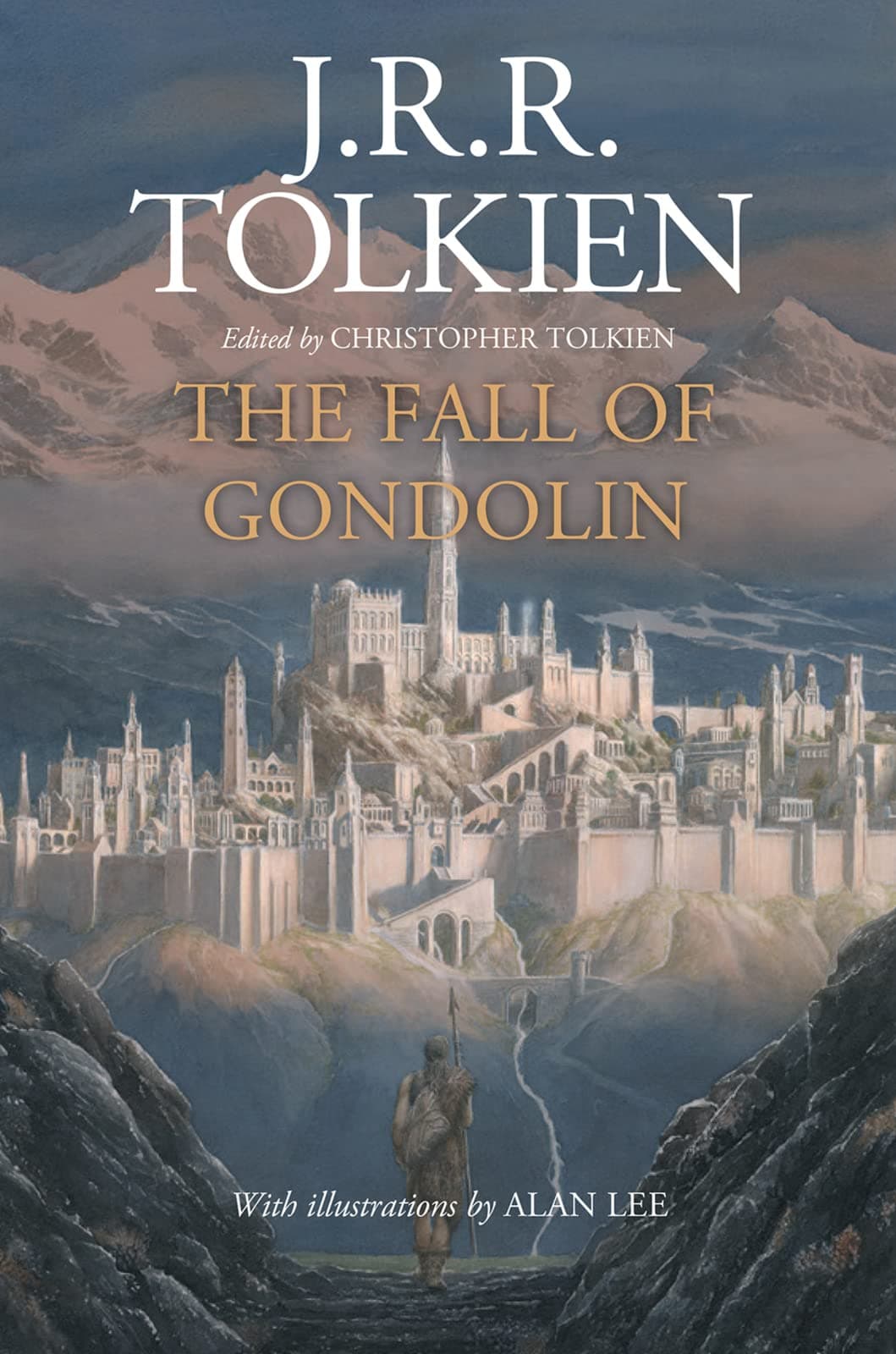

The Fall of Gondolin : Tolkien, J R R: desertcart.ae: Books Review: Beautiful - Beautiful book with stunning illustrations Review: Beautiful illustrations, not smyth-sewn, poor paper quality - This review refers to The Fall of Gondolin published by HarperCollins (ISBN: 9780008302757). I purchased this item along with The Hobbit & The Lord of the Rings Boxed Set also published by HarperCollins (ISBN: 9780008376109). I was very happy to find quality paper and smyth-sewn binding in all four volumes. They open well and lay flat. However, with this particular volume of The Fall of Gondolin, the paper is noticeably worse and is sadly glue binding. It doesn't open well and the spine struggles with sounds of cracking. An odd choice for an edition that was published with a focus on the illustrations. Disappointing.


| Best Sellers Rank | #99 in Dragons & Mythical Creatures Fantasy #267 in Sword & Sorcery Fantasy #359 in Mythology & Folk Tales |
| Customer reviews | 4.8 4.8 out of 5 stars (3,696) |
| Dimensions | 13.97 x 2.67 x 20.96 cm |
| Edition | Illustrated |
| ISBN-10 | 1328613046 |
| ISBN-13 | 978-1328613042 |
| Item weight | 454 g |
| Language | English |
| Print length | 304 pages |
| Publication date | 30 August 2018 |
| Publisher | William Morrow & Company |
A**H
Beautiful
Beautiful book with stunning illustrations
T**G
Beautiful illustrations, not smyth-sewn, poor paper quality
This review refers to The Fall of Gondolin published by HarperCollins (ISBN: 9780008302757). I purchased this item along with The Hobbit & The Lord of the Rings Boxed Set also published by HarperCollins (ISBN: 9780008376109). I was very happy to find quality paper and smyth-sewn binding in all four volumes. They open well and lay flat. However, with this particular volume of The Fall of Gondolin, the paper is noticeably worse and is sadly glue binding. It doesn't open well and the spine struggles with sounds of cracking. An odd choice for an edition that was published with a focus on the illustrations. Disappointing.
B**T
The book is beautiful with its Illustrations. I am a big Tolkien Fan. Quick delivery.
タ**様
Anar kaluva tielyanna! The sun will shine upon your path!
G**G
Gondolin is a city created by elves, hidden away in the mountains, the last outpost of light in the First Age of Middle-earth, when the evil forces of Morgoth have conquered almost everything else. Morgoth knows this city must exist, and he regularly sends search parties of orcs to find it. Its end is almost inevitable, and the story of that end is told in “The Fall of Gondolin,” the last of the unpublished tales of J.R.R. Tolkien. Opposing Morgoth is Ulmo, the god of the sea, who raises up Tuor of the race of men. Tuor undertakes three great journeys in his life. The first is his journey from his own homeland toward the sea, subconsciously hearing the call of Ulmo. The second is his journey to Gondolin, where he comes to live and marry Idril, the daughter and only child of the elvish king. Tuor and Idril have a son, Earendil, who, outside the arc of this story, will have a son named Elrond of Rivendell, a main character of “The Lord of the Rings.” Tuor’s third great journey will be to lead his family and a small remnant of the elves of Gondolin to safety, after the destruction of the city. And thus ends one of the great publishing stories of modern times, a story that began in 1937 with “The Hobbit,” crested in the 1950s with “The Lord of the Rings” trilogy, and then continued after Tolkien’s death with the publication of “The Silmarillion” in 1977, the 12 volumes of “The History of Middle-earth” (1983-1996), and the three stories of the First Age – “The Children of Hurin” (2007), “Beren and Luthien” (2017), and now “The Fall of Gondolin,” just published August 30. That we have all of these stories since “The Lord of the Rings” is due to Tolkien’s son and literary executor Christopher Tolkien, who has served as editor for all of his father’s publications since Tolkien’s death in 1973. Christopher also edited his father’s non-Middle-earth stories, poems, and translations, including “The Legend of Sigurd and Gudrun” (2009), “The Fall of Arthur” (2013), and “Beowulf: A Translation” (2014). What Christopher, now 94, has accomplished is no small feat; all of these posthumous works have required extensive editing, research, and text comparisons. Christopher Tolkien says that his father began to write “The Fall of Gondolin” in 1916 or 1917, during World War I. The text version he uses for this publication was written longhand by his father in 1925 and typed by his mother, Edith. But to publish it properly required comparison of texts, versions, notes, and other materials, and Christopher describes it the book (the story itself is 57 of the 304 pages). The edition includes eight plates of illustrations by artist Alan Lee, which are both true to the spirit of Tolkien and his artwork and a profound reinterpretation. “The Fall of Gondolin” includes trademark Tolkien themes and devices. We see the unleashing of dragons, balrogs, and orcs against the city of the elves. We watch the treachery of the king’s nephew. We read the great battle scenes at which Tolkien excelled. And we experience the sorrow and determination of the hero, in this case the man Tuor, leading the few survivors to safety. (Tolkien always managed to save a remnant, a pointed reminder that, in the long run, superior numbers are not always decisive.) It’s a heart-stirring story. It’s also evidence, as if we needed more, of what one man’s imagination produced.
J**N
Het was niet nieuw en heeft geen plasticfolie
D**E
Tolkien at his best
Trustpilot
4 days ago
2 weeks ago