![The Explosive Child [Sixth Edition]: A New Approach for Understanding and Parenting Easily Frustrated, Chronically Inflexible Children](https://m.media-amazon.com/images/I/7148uFt7XbL._AC_SL3840_.jpg)
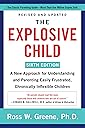
The Explosive Child [Sixth Edition]: A New Approach for Understanding and Parenting Easily Frustrated, Chronically Inflexible Children
Product ID: 314811414
Buy anything from 5,000+ international stores. One checkout price. No surprise fees. Join 2M+ shoppers on Desertcart.
Desertcart purchases this item on your behalf and handles shipping, customs, and support to Thailand.
THE CLASSIC PARENTING GUIDE -- MORE THAN ONE MILLION COPIES SOLD A revised and updated 6th edition of the groundbreaking, research-based guide to understanding and parenting challenging children who frequently exhibit severe fits of temper, from a distinguished clinician and pioneer in the field. What’s an explosive child? A child who responds to routine problems with extreme frustration—crying, screaming, swearing, kicking, hitting, biting, spitting, destroying property, and worse. A child whose frequent, severe outbursts leave his or her parents feeling frustrated, scared, worried, and desperate for help. Most of these parents have tried everything for effective child behavior management—reasoning, explaining, punishing, sticker charts, therapy, medication—but to no avail. They can’t figure out why their child acts the way he or she does; they wonder why the strategies that work for other kids don’t work for theirs; and they don’t know what to do instead. Dr. Ross Greene, a distinguished clinician and pioneer in the treatment of kids with social, emotional, and behavioral challenges, has worked with thousands of explosive children, and he has good news: these kids aren’t attention-seeking, manipulative, or unmotivated, and their parents aren’t passive, permissive pushovers. Rather, explosive kids are lacking some crucial skills in the domains of flexibility/adaptability, frustration tolerance, and problem solving, and they require a different approach to parenting. Throughout this compassionate, insightful, and practical book, Dr. Greene provides a new conceptual framework for understanding their difficulties, based on research in the neurosciences. He explains why traditional parenting and treatment often don’t work with these children, and he describes what to do instead. Instead of relying on rewarding and punishing, Dr. Greene’s Collaborative & Proactive Solutions model provides a form of non-punitive discipline that promotes working with explosive children to solve the problems that precipitate explosive episodes, and teaching these kids the skills they lack. This compassionate and practical guide provides a new path forward for families. Inside, you’ll discover how to: Identify Lagging Skills: Learn why explosive kids lack crucial skills in flexibility, frustration tolerance, and problem-solving, and how this understanding changes everything about your approach. Solve Problems Collaboratively: Master the parent-proven process of working with your child to solve the problems that precipitate explosive episodes, instead of just managing the behavior. Implement Evidence-Based Parenting Strategies: Apply Dr. Greene's research-backed model to nurture your child's development and reduce conflict, without resorting to punishments that don’t work. Transform Family Dynamics: Move from a state of constant crisis to one of connection and mutual understanding, helping your child feel heard and restoring peace to your household. Review: Game Changer - This book was enthusiastically recommended to me (along with Motivational Interviewing) when I was struggling with a teenage foster son. It has been a game changer with my elementary schooler, who is generally well-behaved but sometimes oppositional. The book teaches a simple recipe for working WITH a child to troubleshoot issues, called Collaborative Problem Solving (CPS). The focus is working with children who are oppositional, reactive, or stubborn to brainstorm and implement solutions that will satisfy both the child and the adult. Over time, CPS can help the child meet expectations, improve the overall climate of the relationship, and help the child develop better executive function. It's simple enough that even I can remember the steps, haha. I would make one observation: TBRI is a prerequisite for CPS; they complement each other. When a child is empowered through feeling safe and calm and having basic needs met, and is primed to learn through playful connection, then the door is wide open for CPS. And CPS will reinforce TBRI; it’s a corrective approach that will also further empower and connect the child. A great way to learn TBRI is to read The Connected Child or to watch the Karyn Purvis Institute videos. Watch the teen TBRI videos if that's your age group. Review: Amazing book - I recommend to everyone I know who works with children or has children.


| Best Sellers Rank | #1,873 in Books ( See Top 100 in Books ) #1 in Behavioral Disorders in Special Ed. #3 in School-Age Children Parenting #7 in Popular Child Psychology |
| Customer Reviews | 4.6 out of 5 stars 3,251 Reviews |
J**R
Game Changer
This book was enthusiastically recommended to me (along with Motivational Interviewing) when I was struggling with a teenage foster son. It has been a game changer with my elementary schooler, who is generally well-behaved but sometimes oppositional. The book teaches a simple recipe for working WITH a child to troubleshoot issues, called Collaborative Problem Solving (CPS). The focus is working with children who are oppositional, reactive, or stubborn to brainstorm and implement solutions that will satisfy both the child and the adult. Over time, CPS can help the child meet expectations, improve the overall climate of the relationship, and help the child develop better executive function. It's simple enough that even I can remember the steps, haha. I would make one observation: TBRI is a prerequisite for CPS; they complement each other. When a child is empowered through feeling safe and calm and having basic needs met, and is primed to learn through playful connection, then the door is wide open for CPS. And CPS will reinforce TBRI; it’s a corrective approach that will also further empower and connect the child. A great way to learn TBRI is to read The Connected Child or to watch the Karyn Purvis Institute videos. Watch the teen TBRI videos if that's your age group.
A**L
Amazing book
I recommend to everyone I know who works with children or has children.
N**E
learning how to relate to an explosive child
I cannot say enough good about this book. We adopted 2 boys, both having FASD, one presenting very explosive behaviors. Most times we wouldn’t know what provoked him. He was in therapy with a Dr for 7 years (he’s 10 now). We finally pulled him out of the useless therapy. Public schools gave up on him. (Actually a good thing). He was admitted to a therapeutic day school. The entire staff are therapists, and trained in behavior therapy. AMAZING. But after reading this book and implementing plan B, the improvement we saw at home has been amazing. We are now seeing behavioral issues way less often. I highly recommend everyone, parents and foster parents to read this book. It brings everything into perspective. Your family will be so stress free, just by not walking on eggshells constantly
D**.
Good not great
Not what I thought it would be but it had some good points. We have a child with severe Autism and I feel as though not everything would be fitting to the diagnosis situation. It’s worth the read I believe if you have a child struggling with behavioral issues/authority. Perhaps a head strong toddler?
B**P
The most important book parents, teachers, and anyone who works with kids should read!!!!!
Seven years ago I found the earlier version of this book and have been using it in my practice as a mental health counselor ever since. It is, by far, the most important book in my library and I urge all the parents of the kids I work with to purchase, read, and use the CPS method. I also urge teachers and school administrators to read the two book Dr. Ross Greene has written specifically for use in schools to eliminate corporal punishment, detentions, in-school suspensions, and out of school suspensions. If you want to stop behavior problems, READ THIS BOOK AND USE THE METHOD!
A**L
Don't be distracted by the title.
The title seems a bit jarring but ultimately this book is about learning to recognize patterns of disruption for your child, and learning ways to proactively avoid stressful situations when you can...and tools for discussions when you cant. Highly recommend!
K**L
A Must Read!
I was so excited to learn that Dr, Ross Green updated the book to include updated information. This book has helped us look at behaviors in a different way to support our kiddos better. It should be a required reading for educators, families supporting loved ones with intellectual differences that exhibit challenging behaviors. My favorite takeaway from the book, “Children will do well IF they can,” a good reminder that children do not give us a hard time, they are having a hard time. This book doesn’t just highlight the struggles families or care givers might experience, it validates your feelings about them, let’s you know you are not alone, and the best part gives some strategies to try and see if you can work with kiddos to provide them with more tools so they can do well!
C**L
⭐⭐⭐ — A Starting Point, But Not the Whole Answer
The framework is interesting. The follow-through left me wanting more. I picked up The Explosive Child after hitting a wall with my kid — the meltdowns, the defiance, the exhaustion of feeling like nothing was working. Ross Greene’s Collaborative Problem Solving approach genuinely reframed how I think about why my child behaves the way he does, and for that alone, the book has value. The core idea — that kids do well if they can, not that they’re choosing to be difficult — was worth sitting with. That said, once I got past the philosophy, I kept waiting for the book to shift into more concrete, actionable territory. It never quite did, at least not in the way I needed. A lot of the guidance felt circular, and the case study examples, while illustrative, started to feel repetitive rather than instructive. If you’re brand new to the ADHD/ODD space, this is a reasonable first read — it’ll expand your perspective. But if you’re already deep in the trenches and came here looking for a real playbook, you may close it feeling like you got a solid why with a pretty thin how. Good book. Not a great book. A 3-star read that I’m glad I didn’t skip, but one I’ve already started supplementing with other resources.
N**Y
Good book
Good book to understand the child's problem
A**R
Great book for parents!
This was an easy read! If you’re navigating how to parent a child who is sensitive to feedback or emotionally elevated, this has a simple process for how to communicate. It’s written with a story narrative to help apply concepts. I enjoyed reading.
J**S
Useful info for any struggling parent
Very helpful I wish have found it earlier in my motherhood journey If you have pre teen or a teen it will be great to read this. I loved the book and the idea of lacking skills did help us at home.
O**A
Bien explicado
He hecho el plan b de emergencia, mi hijo tiene 4 y en realidad el no intervino tanto en el plan pero me dió más paciencia y encontrar la raíz del problema en el paso de empatía. Pienso que este libro es útil, seguro lo involucraré más conforme crezca.
C**A
Recomendo a todos
Chegou em excelentes condições e ajudou-me imenso a perceber e lidar com o meu filho de quatro anos, que é muito explosivo. As dicas do autor deram-me ferramentas para gerir melhor as frustrações do meu filho e acho que se aplicam a qualquer idade. Recomendo
Trustpilot
1 month ago
3 weeks ago