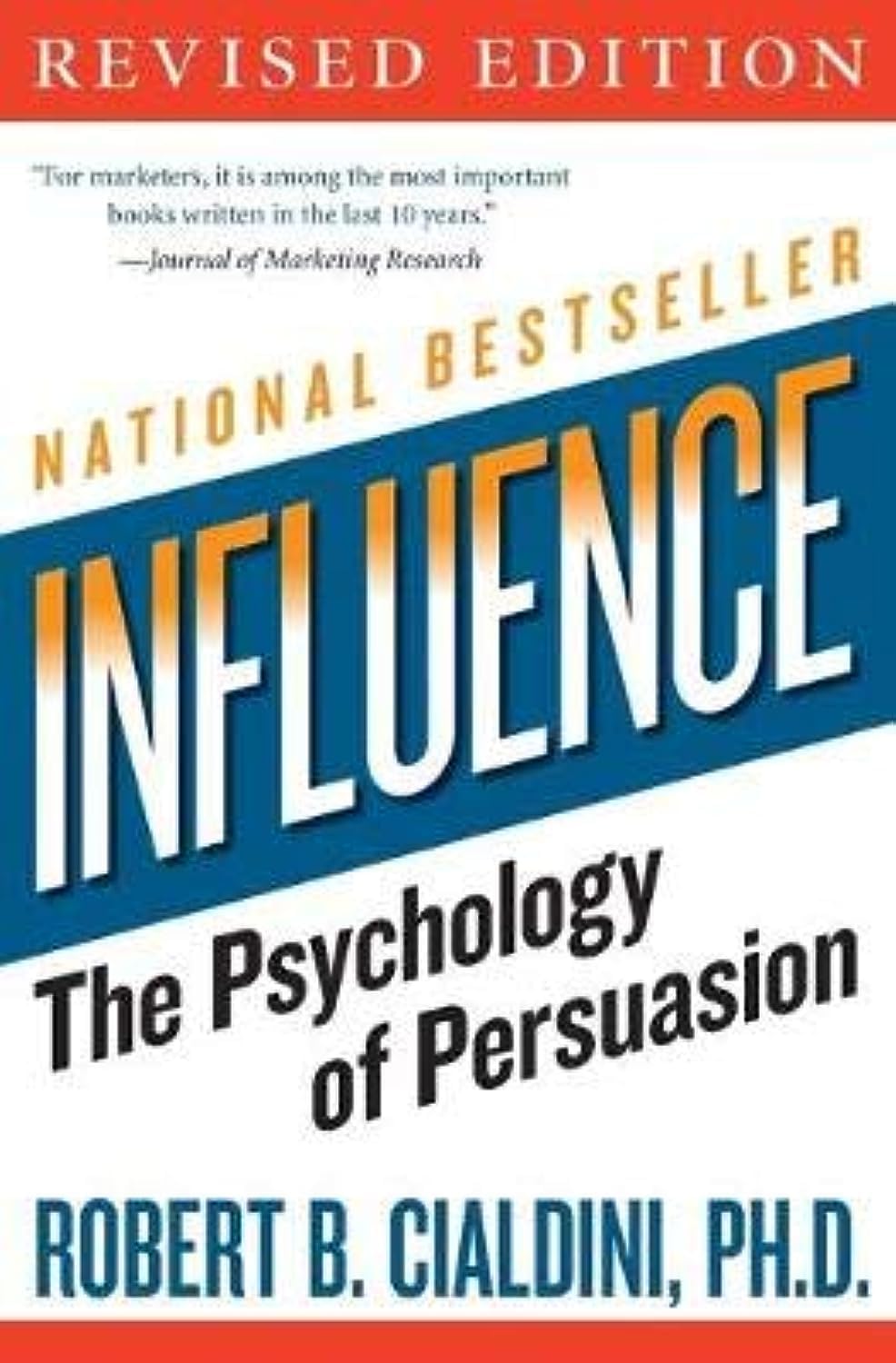
Influence: The Psychology of Persuasion
Product ID: 48776853
Buy anything from 5,000+ international stores. One checkout price. No surprise fees. Join 2M+ shoppers on Desertcart.
Desertcart purchases this item on your behalf and handles shipping, customs, and support to Thailand.
The widely adopted, now classic book on influence and persuasion—a major national and international bestseller with more than four million copies sold! In this highly acclaimed New York Times bestseller, Dr. Robert B. Cialdini—the seminal expert in the field of influence and persuasion—explains the psychology of why people say yes and how to apply these principles ethically in business and everyday situations. You’ll learn the six universal principles of influence and how to use them to become a skilled persuader—and, just as importantly, how to defend yourself against dishonest influence attempts: Reciprocation : The internal pull to repay what another person has provided us. Commitment and Consistency: Once we make a choice or take a stand, we work to behave consistently with that commitment in order to justify our decisions. Social Proof: When we are unsure, we look to similar others to provide us with the correct actions to take. And the more, people undertaking that action, the more we consider that action correct. Liking: The propensity to agree with people we like and, just as important, the propensity for others to agree with us, if we like them. Authority: We are more likely to say “yes” to others who are authorities, who carry greater knowledge, experience or expertise. Scarcity: We want more of what is less available or dwindling in availability. Understanding and applying the six principles ethically is cost-free and deceptively easy. Backed by Dr. Cialdini’s 35 years of evidence-based, peer-reviewed scientific research—as well as by a three-year field study on what moves people to change behavior— Influence is a comprehensive guide to using these principles effectively to amplify your ability to change the behavior of others. Review: If you haven't read it, then you should. - Summary: This book can’t be summarized. It can only be very, very strongly recommended. Recommended? YES. Buy it now if you haven’t read it. Table of contents: 1 Weapons of Influence 2 Reciprocation: The Old Give and Take…and Take 3 Commitment and Consistency: Hobgoblins of the Mind 4 Social Proof: Truths Are Us 5 Liking: The Friendly Thief 6 Authority: Directed Deference 7 Scarcity: The Rule of the Few Notes: Below are my key takeaways and some interesting points, but I’m telling you. Buy it. Read it. Trust me. * Expensive implies quality. Example: gems in a jewel case that weren’t selling were marked up and then sold at a “discount” to the markup (a price higher than the original price), and they sold like hotcakes. * Power of contrast. Example: If you go into a men’s store they’ll try and sell you an expensive suit before the sell you the expensive jumper because the contrast makes the sweater appear more affordable. * Reciprocity. Example: If someone buys you something (say, a Coke), you’re more likely to buy something from them (say, raffle tickets). * Concession. Example: If someone tries to sell you something and you pass (say $5 of $1 raffle tickets), they’ll try and sell you something less, that you’ll end up buying because you feel bad (1 $1 raffle ticket). Another term used here is “reject then retreat.” * Commitment leads to consistency leads to collaboration. Example: During the Korean war, the Chinese got American soldiers to make public commitments of various things. Then they made those commitments even more public, which the American soldiers had to stand by to be consistent. That consistency then led them down a path of minor forms of collaboration – without them really thinking about it as such. * Writing something down, even privately, strengthens your commitment to something. * People like and believe in commitment because their image and reputation are on the line (i.e. the Chinese concentration camp example above). * People like more what they struggle to get, even if it’s not that good. Example: frats (hey, it’s in the book, don’t hate the messenger). * People like to feel they have control over a decision – even if they really don’t. * The power of social proof, or the idea that if others do it it’s good. Example: introverted pre-schoolers who saw introverted kids become social in a movie were more inclined to go play. Another example: cults. People follow the crowd because they believe in the “wisdom” of the crowd. * Convince and you shall be convinced. Example: cults, where people who convince or convert others become more convinced (that’s why so many are evangelical). * Assign responsibility if you want things done. Example: a stabbing that took place over many minutes had 38 witnesses…it happened cause everyone figured someone else would call the police. * The power of copycats that’ll play on social proof. Example: if you find a wallet of someone like you and you’re more likely to return it (it’s true). Another (scary) example: more suicides when the press publicizes a suicide…more fatal “accidents” too. * Liking is an important part of influence. Attractiveness, similarity (identity and context), compliments, contact & cooperation all can make someone more influential. * The reason good cop/bad cop works is because the subject feels someone is on their side. * Associations are powerful. Bearers of good news get treated well, and bad news get treated poorly. Examples: weathermen (or Roman messengers reporting lost battles!) * People tend to defer to authority/experts. Examples: experiments involving shock therapy where people listened to a guy in a lab coat to inflict pain on another human being (incredible how strong this is). * The power of connotations and context over content, and how it can imply authority. Titles and clothing do this. * Gaining trust. Example: a waiter who advises against a more expensive item early in the meal will gain the trust of everyone at the table, and then he can suggest more expensive items and more items through the course of the meal. * Scarcity is powerful. There’s a psychological reaction…people don’t want to lose their freedom and don’t want to lose. This plays to a second point: competition. Invite 3 used car buyers at the same time and you’ll sell the car faster. A cookie is more attractive if there are two of them than if there are 10 of them. (Always as yourself when something is scarce: will the cookie taste as good if there are 10 of them?). Plus, if you saw that the number went from 10 to 2, you want it even more. It can even lead to revolt…when something is given and then taken away, people get mad; if something is never given at all, they don’t know what they’re missing. * “It appears that commitments are most effective in changing a person’s self-image and future behaviour when they are active, public, and effortful.” * “The most influential leaders are those who know how to arrange group conditions to allow the principle of social proof to work maximally in their favour.” * “Social proof is most powerful for those who feel unfamiliar or unsure of a specific situation and who, consequently, must look outside of themselves for evidence of how to best behave there.” Review: Very enlightening and insightful - If, like me, you are fascinated by human psychology then you will definitely enjoy this book. Robert Cialdini brings to life the wealth of academic research into the psychology of persuasion in a very engaging book. He outlines six principles that when employed correctly generate almost automatic compliance (what he calls "click-whirr" - like pressing play on a cassette) in the other person: - Reciprocation - Commitment and consistency - Social Proof - Likeability - Authority - Scarcity Each principle is explained in detail and illustrated with real examples from both academic research as well as everyday life. Cialdini is very engaging and makes each chapter into a compelling story. A few of the examples may be well known to the reader, such as the famous shock experiment in the 60s into the effect of authority on compliance, but the author uses his examples perfectly, and it is his skill as a writer that makes the book so fascinating and the subject matter so vivid. I particularly enjoyed the chapter on Commitment and Consistency, which was a real eye-opener, especially some of the research examples. You can't help thinking how on earth are people so easily swayed into making big commitments purely by agreeing to almost trivial commitments first? But now I'm aware of the principle I have noticed it myself first hand. So why only four stars? My only niggle with the book is the author's somewhat negative or defensive stance on the subject. I bought the book hoping to learn how to be a better, more influential leader and manager, and in many respects the book met my expectations. But Cialdini's stance is very much that each principle of persuasion is a "weapon of influence" to be defended against by the unsuspecting victim. The epilogue certainly emphasises this view, and each chapter contains a section on how to recognise and defend against that compliance tactic. I can certainly see why this might be useful. There are plenty of unscrupulous tricksters out there trying to dupe us one way or another, and it is definitely wise to be vigilant to their tactics. But in general I felt that these are the minority of cases and that Cialdini projects a slightly too negative tone at times. Instead I would have liked him to explain how the majority of leaders employ the principles of persuasion for good. That minor point aside, "Influence" is an excellent book and well worth reading.
| Best Sellers Rank | 37,199 in Books ( See Top 100 in Books ) 192 in Sales & Marketing 351 in Business Careers (Books) 652 in Applied Psychology (Books) |
| Customer Reviews | 4.4 out of 5 stars 12,691 Reviews |
S**H
If you haven't read it, then you should.
Summary: This book can’t be summarized. It can only be very, very strongly recommended. Recommended? YES. Buy it now if you haven’t read it. Table of contents: 1 Weapons of Influence 2 Reciprocation: The Old Give and Take…and Take 3 Commitment and Consistency: Hobgoblins of the Mind 4 Social Proof: Truths Are Us 5 Liking: The Friendly Thief 6 Authority: Directed Deference 7 Scarcity: The Rule of the Few Notes: Below are my key takeaways and some interesting points, but I’m telling you. Buy it. Read it. Trust me. * Expensive implies quality. Example: gems in a jewel case that weren’t selling were marked up and then sold at a “discount” to the markup (a price higher than the original price), and they sold like hotcakes. * Power of contrast. Example: If you go into a men’s store they’ll try and sell you an expensive suit before the sell you the expensive jumper because the contrast makes the sweater appear more affordable. * Reciprocity. Example: If someone buys you something (say, a Coke), you’re more likely to buy something from them (say, raffle tickets). * Concession. Example: If someone tries to sell you something and you pass (say $5 of $1 raffle tickets), they’ll try and sell you something less, that you’ll end up buying because you feel bad (1 $1 raffle ticket). Another term used here is “reject then retreat.” * Commitment leads to consistency leads to collaboration. Example: During the Korean war, the Chinese got American soldiers to make public commitments of various things. Then they made those commitments even more public, which the American soldiers had to stand by to be consistent. That consistency then led them down a path of minor forms of collaboration – without them really thinking about it as such. * Writing something down, even privately, strengthens your commitment to something. * People like and believe in commitment because their image and reputation are on the line (i.e. the Chinese concentration camp example above). * People like more what they struggle to get, even if it’s not that good. Example: frats (hey, it’s in the book, don’t hate the messenger). * People like to feel they have control over a decision – even if they really don’t. * The power of social proof, or the idea that if others do it it’s good. Example: introverted pre-schoolers who saw introverted kids become social in a movie were more inclined to go play. Another example: cults. People follow the crowd because they believe in the “wisdom” of the crowd. * Convince and you shall be convinced. Example: cults, where people who convince or convert others become more convinced (that’s why so many are evangelical). * Assign responsibility if you want things done. Example: a stabbing that took place over many minutes had 38 witnesses…it happened cause everyone figured someone else would call the police. * The power of copycats that’ll play on social proof. Example: if you find a wallet of someone like you and you’re more likely to return it (it’s true). Another (scary) example: more suicides when the press publicizes a suicide…more fatal “accidents” too. * Liking is an important part of influence. Attractiveness, similarity (identity and context), compliments, contact & cooperation all can make someone more influential. * The reason good cop/bad cop works is because the subject feels someone is on their side. * Associations are powerful. Bearers of good news get treated well, and bad news get treated poorly. Examples: weathermen (or Roman messengers reporting lost battles!) * People tend to defer to authority/experts. Examples: experiments involving shock therapy where people listened to a guy in a lab coat to inflict pain on another human being (incredible how strong this is). * The power of connotations and context over content, and how it can imply authority. Titles and clothing do this. * Gaining trust. Example: a waiter who advises against a more expensive item early in the meal will gain the trust of everyone at the table, and then he can suggest more expensive items and more items through the course of the meal. * Scarcity is powerful. There’s a psychological reaction…people don’t want to lose their freedom and don’t want to lose. This plays to a second point: competition. Invite 3 used car buyers at the same time and you’ll sell the car faster. A cookie is more attractive if there are two of them than if there are 10 of them. (Always as yourself when something is scarce: will the cookie taste as good if there are 10 of them?). Plus, if you saw that the number went from 10 to 2, you want it even more. It can even lead to revolt…when something is given and then taken away, people get mad; if something is never given at all, they don’t know what they’re missing. * “It appears that commitments are most effective in changing a person’s self-image and future behaviour when they are active, public, and effortful.” * “The most influential leaders are those who know how to arrange group conditions to allow the principle of social proof to work maximally in their favour.” * “Social proof is most powerful for those who feel unfamiliar or unsure of a specific situation and who, consequently, must look outside of themselves for evidence of how to best behave there.”
P**Y
Very enlightening and insightful
If, like me, you are fascinated by human psychology then you will definitely enjoy this book. Robert Cialdini brings to life the wealth of academic research into the psychology of persuasion in a very engaging book. He outlines six principles that when employed correctly generate almost automatic compliance (what he calls "click-whirr" - like pressing play on a cassette) in the other person: - Reciprocation - Commitment and consistency - Social Proof - Likeability - Authority - Scarcity Each principle is explained in detail and illustrated with real examples from both academic research as well as everyday life. Cialdini is very engaging and makes each chapter into a compelling story. A few of the examples may be well known to the reader, such as the famous shock experiment in the 60s into the effect of authority on compliance, but the author uses his examples perfectly, and it is his skill as a writer that makes the book so fascinating and the subject matter so vivid. I particularly enjoyed the chapter on Commitment and Consistency, which was a real eye-opener, especially some of the research examples. You can't help thinking how on earth are people so easily swayed into making big commitments purely by agreeing to almost trivial commitments first? But now I'm aware of the principle I have noticed it myself first hand. So why only four stars? My only niggle with the book is the author's somewhat negative or defensive stance on the subject. I bought the book hoping to learn how to be a better, more influential leader and manager, and in many respects the book met my expectations. But Cialdini's stance is very much that each principle of persuasion is a "weapon of influence" to be defended against by the unsuspecting victim. The epilogue certainly emphasises this view, and each chapter contains a section on how to recognise and defend against that compliance tactic. I can certainly see why this might be useful. There are plenty of unscrupulous tricksters out there trying to dupe us one way or another, and it is definitely wise to be vigilant to their tactics. But in general I felt that these are the minority of cases and that Cialdini projects a slightly too negative tone at times. Instead I would have liked him to explain how the majority of leaders employ the principles of persuasion for good. That minor point aside, "Influence" is an excellent book and well worth reading.
P**T
Great fun from start to finish
If you are looking for a well-written, accessible book on how advertising and other media affect our decision-making, I can strongly recommend the general reader try this one. Cialdini is a professor of Psychology in the USA who feels a strong urge to let us, the general public, get an insight into the way our opinions are manipulated by "compliance professionals". This means not just advertisers and salesmen, but politicians, health experts, religions and many others - all the people whose job it is to persuade us to do what they want. "Influence" is written with a light touch and plenty of dry wit. Jargon is kept to a minimum but the author doesn't go in for that shallow "self-help book" style which insults the reader's intelligence. Instead, he often opens a subject with a tale told against himself; how falling for a ploy stimulated him to analyse and understand it. His route into the subject is through a common-sense psychology; there are no weird theories. Cialdini identifies a core of simple, easily recognised behavioural reflexes which evolved to bind social groups together, but which are utilised by those in the know to weasel round our natural resistance. For example, we experience an innate knee-jerk of gratitude when given a present, no matter how small or inappropriate. Cialdini shows us how salemen take advantage of this to nudge us towards a sale; but also identifies the way we soon see the trick, and experience a secondary reflex of resentment and irritation. He shows the reader how to separate and understand these responses, avoiding both the con and the unpleasant feelings of anger that contaminate our reaction. This is all told with humour and humanity - and without unnecessary theorising. Though this book will undoubtedly be useful to businessmen, it's aimed at the punter, and if you are one it will change your life for the better. It will help you resist manipulation and even to have an ironic laugh at the efforts expended by others. You'll enjoy the read and probably, like me, find yourself recommending it to everyone you know. An ideal present especially for a younger reader, but a fruitful book at any age. :-{]
S**R
I now understand the factors that influenced me to write this review.
The chapter list is a good way to understand this book: 1 Weapons of Influence (While a high price may suggest a good book, I bought this because it was cheap) 2 Reciprocation (If you comment on this review, I will probably be forced to reply) 3 Commitment and Consistency (Made me write this after writing a few other reviews on Amazon) 4 Social Proof (Influenced me to read this book and rate it five stars. Note the "National Bestseller" on the cover) 5 Liking (Encouraged me to write an interesting review) 6 Authority (Made me believe the author - PHD) 7 Scarcity (This review will self destruct in 5..4..3..) Seven chapters about seven things that influence us. Since they're spread out over 270 pages, one may expect to find a lot of waffle. Fortunately, each chapter contains lots of research, which kept me interested. I have read many psychology books, but this is the first one I've read specifically on influence, so I can't tell you how it relates to similar books. What I can tell you is that I do feel a bit more awake. I can now recall a few times that I have been manipulated by sales people, whereas before I would have considered my purchases to be made quite freely. Since much of what is discussed in the book is unethical, the author does make a point at the end of the book to fight the unethical use of these techniques. While I agree, and think it's great that he pointed that out, it is quite obvious that deception will be used against us wherever it can be. That is simply a byproduct of capitalism, money and the concept of ownership. It is good to recognize these methods so that we can make better decisions and be more awake to the root causes of our decisions. Stephen Oberauer Author of The Mischievous Nerd's Guide to World Domination
D**S
It's a classic and a staple
Whether or not you'd choose to use techniques of subtle manipulation on others it's certainly essential to know how to recognise how they are being used on you. Professor Cialdini has a highly interesting and readable style which makes this not only a useful book both for sellers and for buyers but also a very enjoyable one also. I will say that the illustrations in the original are a bit low quality in the print - I also have two Russian translations of this book (because it makes a great course book for advanced English teachers - as it is translated into most languages, foreign students can avoid the dictionary as well as use this book to learn something helpful for all via English) and one of them was more than a translation but has additional cartoons and illustrations not in the original, and that added something. The publishers should look into beefing that side up, as apart from anything else the reproduction quality of some of the images leaves something to be desired. It's a minor quibble, but I may as well make that constructive criticism in the hope that the decision maker sees it.
T**A
Tiny Print
You'll need a magnifying glass to read it.
A**N
Dated, but fun
This is a classic that is unlikely to retain its status, but this it owes to its “manners” rather than its “substance.” The next generation is highly unlikely to abide the 1960’s style worldview of Robert Cialdini and totally unlikely to recognize any of the products described in the book. (Encyclopedias, anyone?) I was shocked to discover “Influence” originally came out in 1984, if I’m honest. It feels a lot more like “Hustler” than “Color of Money,” bottom line. In 1984 there was no Internet, besides, and that’s where influence is of any use these days. But if hustle you must, it takes you through a number of techniques that may not 100% survive the transition from door-to-door double-glazing sales techniques to online marketing, but regardless merit your attention. Given that my startup finally has a product to sell, I thought “what the heck” (to quote from a 1983 movie) and made “Influence” my companion in the tube for a week. And I found out about • Reciprocation • Consistency • Social Proof • Liking • Authority, and • Scarcity The idea here is that we humans are bombarded by information and rely heavily on what Daniel Kahneman has called (thirty years later) our “System 1” to navigate the planet: our prejudice, intuition and rules of thumb. To trick your mark’s intuition, you need to find the weak entry points into his subconscious, and the six chapters deal with an entry point each. Not all chapters are equally good and not all deal 100% with influence per se, but my reading time was not wasted. And as a bonus, I now know the source of some of the most persistent circulars to appear on the early Internet, such as the letter (p. 15) from the daughter who failed chemistry, all the way to Frank Zappa deadpanning back to a rude interviewer (who called him a girl for having long hair) that his wooden leg made him a chair (p. 274). APPENDIX ---- THIS IS NOT MY REVIEW, MERELY MY NOTES FROM THE BOOK: RECIPROCATION People are wired to reciprocate. If you can get somebody to accept the tiniest gift they will be obliged to you. • People know this and will sometimes work toward avoiding uninvited debts. • But once your gift is accepted, you’re in: you can trigger “unfair exchanges.” People do not want to fail the reciprocity rule, they don’t want to be mooches • Small gifts work well, because they are difficult to turn down. Your mark is too embarrassed not to accept (we’re also wired to not offend somebody who’s offering a gift) so then you’re set. A free can of Coke at a time when a drink would be natural is quoted as something you can lever well. • Free samples are even better: your mark 1. gets to experience the product 2. owes you Reciprocal concessions take reciprocation to the next level. Basically, ask for something big. If you get turned down, which is a concession on your part, you are in a position to ask for something smaller. Example: “if you can’t buy tickets to our ball, would you perhaps consider buying some cookies?” Here you are not only triggering reciprocation. You are also invoking the contrast principle. Apparently this was the technique the scriptwriters for Happy Days used to get the word “virgin” into the show. They’d stick it in the script 50 times and the reviewer would allow it in once, at the place the scriptwriters wanted it all along. Oh, and that headhunter who asked you if you cared for a job at some crappy competitor? The only thing he wanted all along was your deskmates’ names you gave him toward the end of the call, after you told him you are happy at your job. Yup, that was a kick in the stomach. It gets worse: suppose you start with the high demand. And suppose you meet your mark in the middle (i.e. where you always wanted to end up.) You get two benefits for free: (i) He now “owns” the deal. He earned it and he’s responsible for it. Not you (ii) He gets the satisfaction of having beaten you down. He feels good about the deal and maybe even you. So if you work at a department store and a customer’s walking in, you now know why your boss wants you to start with the 3k suit before you move on to the shirts, ties and sweaters. CONSISTENCY – COMMITMENT We all like to think we are consistent. When Faraday was asked if some competing scientist was always wrong, he allegedly quipped back that no, he wasn’t that consistent. That’s something for the salesman to latch onto! Consistency is also a great “System 1” shortcut. It acts as (i) A shield against thought (“If there’s liver on the menu, I’m set”) (ii) A way to tie yourself to the mast (which explains why news reinforces our beliefs regardless) Two AWESOME stories here: first, one from the author’s visit to transcendental meditation workshop, where his fellow professor’s piercing questions actually got others to immediately sign up, in case they go home and think about it and change their mind and second, one from the toy store. It turns out that the toys advertised most heavily on TV ahead of Christmas don’t become available till January. You promise them to your kids, you don’t find them, you buy other toys to stick under the tree and then, to show your kids that good people keep promises you go to the store and buy the advertised toys as soon as they become available. “But, daddy, you promised:” you’re checkmated! The advertiser pushed your consistency button there! It gets even when we move on to the practices of the Chinese toward their POWs during the Korean War. They would offer you tiny little concessions (a cigarette or something) if you would as much as state that not everything was perfect in America. Another tiny gift if you were happy to write that down. Recognition was given if you’d participate in essay competitions regarding the politics of the times, with care taken to often reward essays that, while critical of communism or of China, also cared to take a less absolute view of the world. The key here is that when you write something down that moves from your initial position, you own it. It’s yours. And if you write something a bit further away from your original position, you own that too. If you read your essay in front of other POWs or if it’s broadcast, you own that too. The prizes must be small. You cannot be able to tell yourself you were coerced. And then, of course, if you have any self-esteem you will defend what you said, you’ll stay consistent with it. So that was the Chinese way to slowly sway you: small, incremental steps to change your self-perception. The “Magic Act” was the commitment in writing. The second step was you telling your story in front of the public eye. Fraternity hazing, like waiting in line to get tickets to a show, works the same way: once you’ve been subjected to it, you own the experience, you feel it did you good and you appreciate what comes next more. Colleges across America have gone to great lengths to ban it, but upperclassmen will not have it any other way. The suffering they went through (that the author convincingly compares with the rituals of African tribesmen) is inseparable from what makes them love their fraternity. It was the very act of commitment. Oh, and exactly for the same reason the Chinese gave small prizes, you cannot send your pledges to clean out toilets at the local hospital. It cannot be something they did for the common good. Hazing has GOT to be pointless, they need to have suffered it for their own sake. Car salesmen take this “ownership” concept even further: they’ll low-ball you on a car. You know your market, so you jump on the deal. By the time “a mistake” is discovered in the price that lines it up with all the other prices you saw, you “own” the deal you struck, and besides it’s no worse than the competition. The trick is you’re now sold on the deal, when you came it to look at the actual car. You end up getting a fair deal, perhaps, but not necessarily on the car you would have bought if you did not feel the need to be consistent. The biggest idea here is left for last: commitment generates its own support. The car you dealt on, you find reasons you actually like it after you’re set on the deal. Once you’re a customer, you find your own reasons why you like the product, basically. The original prop may fall, but the table will have grown its own legs! This extends all the way to more important parts of your life, the author says: once you’re committed to your life partner, you have the rest of your life to find out what it is that attracted you to her… SOCIAL PROOF We are sheep. We want to know what others are doing, especially if we’re not sure what we’re doing. That’s how come canned laughter is effective in televised comedy, that’s how come the barista at Starbucks will “salt” the tip jar with dollar notes and that’s how come it’s effective advertising to say that the Ford Focus is the “fastest selling” car in the world and that’s why a club will maintain a long line outside the door even if it’s not full inside: to signal to us sheep to imitate others. We mainly take our cues from people we consider to be our peers: toddlers who become less diffident if they’ve seen videos of other outgoing children; the author’s son who refused to swim was found safe and sound in the neighbors’ pool, swimming alongside the similarly-aged son of the neighbors; Jim Jones’ disciples drank the cool-aid after a mom, one of them, served some to her infant and had some herself; conversely, Catherine Genovese was famously left to die (a well-publicized incident from 19640 probably because the first couple people to walk by her did not notice her: those who walked by next took notice of how the first passers-by did not help and took their cue from them! (The book also goes into a crazy wormhole that’s nothing to do with sales but is interesting nonetheless: the higher incidence of lethal accidents after vs. before highly publicized accidents –showing imitation—the manner the age of post suicide accident victims clusters around the age of the person involved in a heavily publicized suicide etc. etc. Useful for a minister of propaganda, perhaps, but of no use to a salesman, I would think) LIKING If they like you, you will sell. To be liked, it helps to: • Look good • Be similar to whoever you’re selling to • Pay compliments • Maintain contact • Be associated with good news • Be associated with success • Be introduced by somebody who is liked (and borrow from their good standing) There are techniques to being liked. For example, cops use the “good cop – bad cop” technique to extract confessions –to the good cop. AUTHORITY Authority sells. People will follow an expert. The famous Stanley Milgram experiment is mentioned from the sixties, where otherwise perfectly normal people would invariably carry on administering electric shocks to screaming actors, because an expert was telling them to do so. Also the example of actors who play doctors on television and go on to advertise products that normally an expert would be expected to sell, rather than somebody who merely acts in the role of an expert. The point is made that purchase decisions are made by the subconscious, which is happy to take 100% illogical shortcuts. Clothes are important too. That’s why you need to dress the part. SCARCITY If something is running out, first we’ll take it and then we’ll think. It’s a trick used to sell speakers out of the back of a van, the latest hot savings product etc. That’s because it presses two big buttons: • It’s a “shortcut,” in that if something’s running out, it must be good • Straight out of prospect theory, it’s something you have now, but stand to lose, thereby triggering regret The author goes on to discuss Romeo and Juliet and how he feels silly whenever he makes a negative comment about his children’s consorts. The reaction of the buying public whenever there is a gun-related massacre would fit right in here too, though the vintage of the book restricts us to a less poignant incident from Kennesaw, GA. From there, the author goes on to discuss how revolutions often happen after swathes of a population experience enhanced status that gets taken away, how Barry Diller once overpaid for some deal and how his brother books appointments to see cars he sells all at the same time…
R**N
An eye opener
This book will embarrass you into realising how often you have been duped. You will be kicking yourself at how these moves were not mods obvious. But hey, you now are armed with the magic words. The hunted becomes the hunter. Just when you think the book/author has given you all you need to know, you get kicked by the next jujitsu move. If you don't say "shut I done that" at least 6 times, then you are better man than I Gungadin.
T**A
An outstanding account about how the human mind is influenced
We are all consumers of goods and services in some way or another, and I am glad I have read this…. hopefully I should have done so much earlier, but certainly better late than never. The author discusses how the psychological mechanism works in making decisions, saying “yes” to a request, how our decisions are influenced/swayed, and how we can prevent ourselves from the situations where we likely end up making unwanted decisions and/or being exploited by ill-intended profiteers. In so doing, the six underlying principles: reciprocation, commitment/consistency, social proof, liking, authority, and scarcity, are introduced with ample examples from various intriguing researches, and how these potent influencers can be commissioned by those who want us to consciously or unconsciously comply with their requests. Used with due professional ethics, the six principles can be very effective marketing tools, but we as consumers would be certainly better equipped with understanding of the principles when dealing with someone who tries to pull a trick or two and manipulate our attitudes and behaviors.
F**J
A Very Valuable Book
An excellent book, full both of great humour and important facts. Robert B. Cialdini combined field research and experiments to find out how persuasion works psychologically, and how it is often abused. He analyzes the six major 'weapons of influence', each in a comprehensive chapter. And each chapter ends with the section 'How To Say No', because that is the basic idea of the book: understand how (social) psychology is exploited, and then learn how to 'fight back', how to defend yourself - and society. Besides containing the best description that I know of the famous Milgram experiment, it covers topics like Hare Krishna, sects in general, mass suicides, plane crashes, car accidents, vendors' tricks, advertising, canned laughter, blaming the weatherman, military training, dangerous nurses, bystander inaction and much, much more. Table of Contents: 0. Weapons of Influence 1. Reciprocation: The Old Give and Take ... and Take 2. Commitment and Consistency: Hobgoblins of the Mind 3. Social Proof: Truths Are Us 4. Liking: The Friendly Thief 5. Authority: Directed Deference 6. Scarcity: The Rule of the Few
A**R
Influence - A few bits obvious, majorly quite interesting - worth a read overall.
A very enjoyable read where Dr. Cialdini cites lots of stories and examples to drive home the various aspects of influence which people might use to their profit at our expense. In the vein of the Tim Hartford or Malcolm Gladwell series of books, this work contains little nuggets which present daily experiences in a different light with many 'Aha!' moments throughout. Though not very revelatory for the seasoned sales and marketing professionals, who no doubt are aware of many of the subtle tricks mentioned here, it is worth a read for the rest of us who can be on our guard next time a smooth talking salesman or politician tries to Influence us. P.S. The language used is a bit academic in nature, but nothing so bad that you'll need to keep referring to a thesaurus. P.P.S. The references provided after the epilogue are worth a read by themselves.
V**R
A Must-Read for Understanding Persuasion!
Influence: The Psychology of Persuasion by Robert Cialdini is a phenomenal book that every marketer, salesperson, and anyone interested in the art of persuasion should read. Cialdini dives deep into the psychology behind why people say “yes” and how to apply these principles in everyday situations. The book is structured around six key principles of influence, each backed by research and compelling examples. Cialdini’s writing style is engaging and accessible, making complex psychological concepts easy to understand. I particularly appreciated the real-world applications and the ethical considerations he emphasizes, ensuring that persuasion is used responsibly. What stands out is how the principles can be applied not only in professional settings but also in personal relationships. It’s eye-opening to see how often we encounter these principles in daily life, often without even realizing it. Overall, this book is insightful, informative, and a fantastic resource for anyone looking to enhance their persuasive skills. I highly recommend it!
C**R
Robert Cialdini's "Influence" - A Must-Read for Non-Profit Fundraising & Anyone in Leadership
Video Review:: Using The "Weapons of Influence" - for Good by Christian LeFer - I had heard about Robert Cialdini's definitive work, a book called "Influence - The Psychology of Persuasion" referenced repeatedly by my favorite marketing gurus, including Eben Pagan, but had not picked it up until recently; I regret not having read the book sooner. During my career as a copywriter and non-profit fundraising professional for political candidates and causes, I had learned by reverse-engineering and applying the tactics of getting people to "wake up" from what Eben Pagan calls an often "sleepy, boring existence" of much of everyday modern life - and to take some kind of action - by voting, giving, or volunteering. I had learned the practice, but not the theories, of influence. This is like playing guitar by ear without learning to read music: a limiting, (and frankly, lazy), way of musicianship. Why "Influence" is a must-read for Non-Profit Fundraising and all in Leadership Honing a craft often requires going back and re-examining the fundamentals; getting "back to school" as it were. As a consultant to charitable organizations and businesses who helps organizations in obtaining IRS tax-exempt status, non-profit fundraising, and implementing effective marketing systems, I have been carefully going back and re-visiting (or in this case, just visiting for the first time!) the classics on relationships, sales, marketing and human motivation. "Influence" by Robert Cialdini is among my most valuable reads so far - read on to see why I call it a "must read" for non-profit fundraising and business leadership - and even parenting! In the revised version of "influence" Robert Cialdini weaves a compelling and utterly readable fabric of what he boils down to "compliance" using analogy, anecdote and applied research. We learn why coercion doesn't work as well as commitment, how people form and ultimately force themselves to live up to a certain self-image - a self-image often directed or influenced by an outside person or interest who then uses that image to induce behaviors - and we also discover many other truths that many of us would rather not confront or believe about ourselves. The Moral Imperative of using Your "Influence" What I like about the book, and Cialdini's treatment of the sometimes disconcerting subject matter, is that he acknowledges that these "Weapons of Influence" are morality-neutral - they can be used for good or for evil. These six weapons, then, ultimately serve those who would use them. Being one who believes that I am fighting for good in this world (which I will admit, is often also the belief of madmen and used car salesmen), shouldn't I then learn about and wield these weapons as deftly as is possible? Certainly. And I hold scorn and pity for the one who sticks his head in the sand and refuses to learn these arts for the betterment of their fellow man. My biggest takeaway from this book is that, while we have all used the various weapons at times in our lives, I have a much better understanding of how they connect and reinforce each other. Cialdini uses the story of the Krishnas' "flower gift fundraising" model to demonstrate how the weapon Reciprocity works with that of Commitment/Consistency. When an expert says we're running out of some essential commodity, Authority is often powerfully coupled with Scarcity. Web platforms such as Facebook create an overwhelming elixer out of the remaining two two weapons, Social Proof and Liking. Whether you are involved with non-profit fundraising or simply as a traditional and foster parent, understanding these six human motivating values is invaluable, even indispensible. Conclusion: Influence by Robert Cialdini = Antidote for "Sheeple" Syndrome The final truth is that everyone from Mother Teresa to your dear old grandpa has an agenda, and has the need to get someone to do something, at some point. It may be in child rearing, in asking for help in a time of need, or in saving someone's life. The sooner any person understands the push and pull of using influence and it being used on them, the sooner they will lead a more rational, self-directed, and might I say more enlightened existence. Then, when the pitchman, the preacher, or the panhandler makes that momentous appeal in a way that will impact your wallet - or maybe even your very soul - you can go off into eternity having made the a more rational decision, and more likely for the right reasons. Perhaps no greater contribution has been made to awareness and enlightenment as it pertains to influence than Dr. Cialdini; I predict that my copy will become dog-eared, the pages yellowed as I pick it up again and again over the years, marveling over how my understanding of Influence has benefited me in non-profit fundraising, in business, in parenting, and in life. Christian is author of "7 Deadly Mistakes of Filing Your Non-Profit IRS Application - How to Avoid the Errors that Will Kill or Delay Your 501c3 Approval" and a consultant to business and non-profit leaders.
Trustpilot
2 weeks ago
1 month ago