Buy anything from 5,000+ international stores. One checkout price. No surprise fees. Join 2M+ shoppers on Desertcart.
Desertcart purchases this item on your behalf and handles shipping, customs, and support to Thailand.
🔍 Unlock the unseen — your ultimate macro lens for pro-level detail and dreamy bokeh.
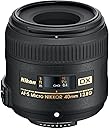
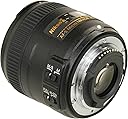
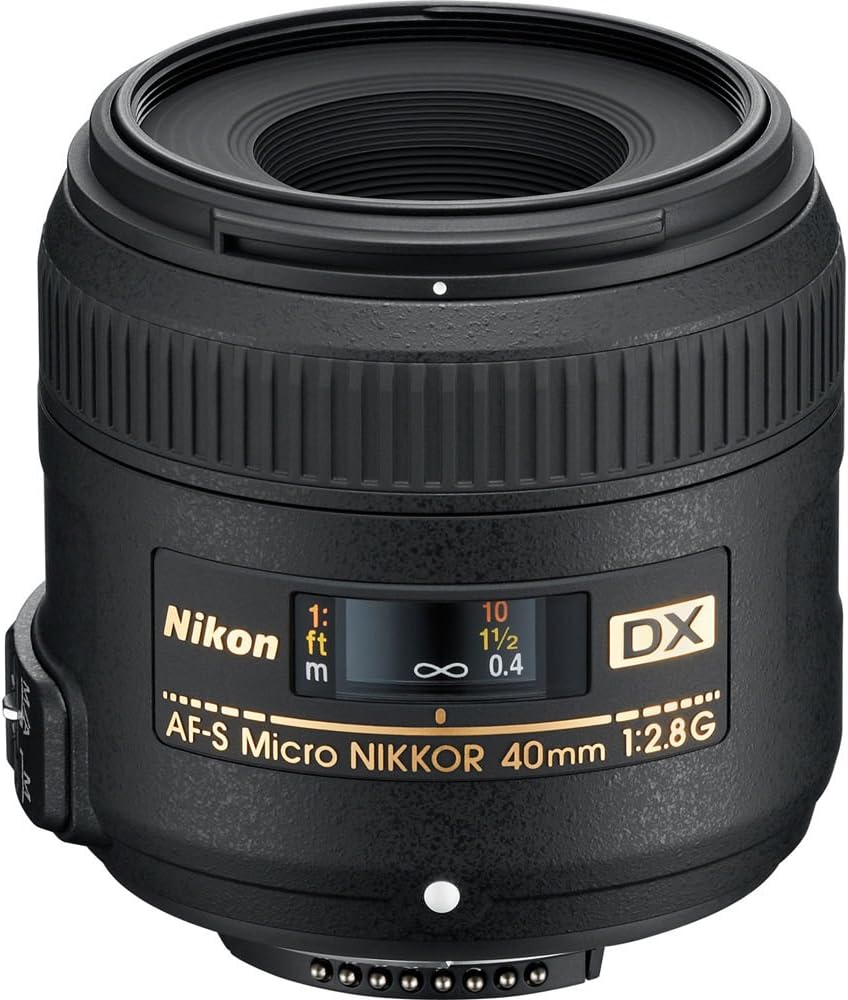
The Nikon AF-S DX Micro NIKKOR 40mm f/2.8G is a compact, lightweight prime macro lens designed for DX-format Nikon DSLRs. Featuring a true 1:1 reproduction ratio, a fast f/2.8 aperture, and Nikon’s Silent Wave Motor for quiet, precise autofocus, it excels at capturing life-size close-ups with stunning sharpness and beautiful background blur. Its 40mm focal length (equivalent to 60mm on full-frame) offers versatile use for macro, portrait, and general photography, making it an essential tool for professionals seeking to reveal intricate details with ease.


| ASIN | B005C50H2Y |
| Best Sellers Rank | 22,095 in Electronics & Photo ( See Top 100 in Electronics & Photo ) 222 in Camera Lenses |
| Box Contents | AF-S DX Micro-NIKKOR 40mm f/2.8G Fixed Zoom Lens for Nikon DSLR Cameras, CL-0915 Soft Case, HB-61 Bayonet Lens Hood, LC-52 Screw-on Front Lens Cap, LF-4 Rear Lens Cap |
| Brand | Nikon |
| Brand Name | Nikon |
| Camera Lens | NIKON Objectif AF-S DX 40 mm f/2.8 G Macro |
| Camera lens description | NIKON Objectif AF-S DX 40 mm f/2.8 G Macro |
| Colour | Black |
| Compatible Camera Models | [Nikon DX] |
| Compatible Devices | Nikon |
| Compatible Mountings | Nikon F |
| Compatible mountings | Nikon F |
| Customer Reviews | 4.6 out of 5 stars 1,695 Reviews |
| Exposure Control Type | Manual |
| Fixed Focal Length | 40 Millimetres |
| Focal length description | 40 millimeters |
| Focus Type | Ultrasonic |
| Global Trade Identification Number | 00018208022007, 05269692854833 |
| Has Self-Timer | No |
| Image Stabilization Type | no image stabilization |
| Iso Range | ISO 2.8 - 22 |
| Item Weight | 235 g |
| Lens Coating Description | Revêtement Super Intégré |
| Lens Design | Prime |
| Lens Mount | Nikon F |
| Lens Type | Macro |
| Lens type | Macro |
| Light Sensitivity | ISO 2.8-22 |
| Manufacturer | Nikon |
| Manufacturer Part Number | NIKKOR 40mm f/2.8G AF-S DX Micro - 2200 |
| Maximum Focal Length | 40 Millimeters |
| Maximum focal length | 40 Millimeters |
| Media Type | ProductImage |
| Minimum Aperture | 22 |
| Minimum Focal Length | 40 Millimeters |
| Model Name | AF-S DX Micro-Nikkor 40mm 1:2,8G |
| Model Number | NIKKOR 40mm f/2.8G AF-S DX Micro - 2200 |
| Number of Diaphragm Blades | 7 |
| Photo Filter Size | 52 Millimeters |
| Real Angle Of View | 38.85 Degrees |
| Screen Size | 3.2 Inches |
| UPC | 182080220070 018208022007 |
| Unit Count | 1.0 count |
| Viewfinder Type | LCD Display |
| Water Resistance Level | Not Water Resistant |
| Zoom Ratio | 1:1 |
M**H
If I were to lose this or if it were to break, would I buy it again? Without a doubt.
Wow, great lens. I bought this as a compromise between wanting a wider aperture/faster lens and to improve my macro photography and I am extremely pleased I did. On the macro side, I have tried the very very cheap alternates e.g. reversing ring and screw on close up lens (attached like a filter) and they work, but not easily and with less control over setup, than a simple point, focus, shoot, you get from a true lens. Yes, as per other review comments, you have to get close, yes that might reduce some light and yes you might frighten off that butterfly you were chasing around the garden all morning. But for my macro interest e.g. electronic components, still life and the such, they aren't going anywhere :-) That said, I bagged some good close up bee shots at the weekend, no issues. But this lens is more than a macro lens, it is really good - clear, sharp, fast, quiet - for street / walk about photography. The kit lens on my D3300 is 18-55mm, a very versatile range for most things and it was strange at first to have a fixed focal length, but that didn't last long. Having a fixed length makes you think about composition more, framing the shot up, using your feet instead of zooming, and that is not a bad thing. Having a relatively wide aperture f2.8, versus my kit lens f3.5, allows for more light so faster shutter speed to freeze motion and improve sharpness and much better bokeh. The focus on this thing is really quick and very quiet and pin sharp; only in macro use to I override what the lens might settle for, but that is a composition decision or I may purposely be focus stacking. Given the expense of true macro lenses and the advantages of having a faster lens, this is a a great compromise - you get a perfectly usable macro lens and a fantastic street lens in one. If I were to lose this or if it were to break, would I buy it again? Without a doubt. Updated: Added example macro shop of resistsor from my electronics kit.
B**T
Getting into macro with a 40mm and V1 combo!
This lens is a bit of a bargain. It is pin sharp and really well made. I bought it for my V1 and Ft-1 converter. It works perfectly with this combo and is easy to hand hold whilst chasing bugs around the garden. The 2.7x crop of the sensor adds an interesting effect. The lens allows 1:1 reproduction when used with a DX format camera. On the V1 it still focuses down to the same point, but the crop factor means the sensor only sees part of the image projected by the lens. Its like having an automatic enlargement of each picture. Therefore the image on the V1 sensor is greater than life size. The lens is very close to subject at minimum distance so you might be caught in your own shadow. Effectively it needs some form of artificial illumination to remove shadow and provide higher shutter speeds. See my review of LED ring light as well. As a bonus the Nikon SB-N7 flash appears to illuminate most subjects adequately in tests that I've done. The flash sits to one side of camera and is well forward of the body so as long as you havent got the lens hood on the flash doesnt cast a shadow from the lens. All in all I'm very happy with this lens on the V1. Of course you must factor in the FT-1 adapter cost, but I bought that originally for my 300mm, so this is a bonus!!
R**S
Extreme close up! And more!
I bought this lens to have a budget way in to macro (close up) photography. I now use it as a standard lens when I don't want to take my big zoom lens (18-140mm which is amazing but heavy). Macro takes a bit of practice and this lens is good for that. Very sharp and easy to manually focus. You need to get in really close so great for still objects but tricky for insects etc which get scared. As a standard lens you can switch the close up range off so that it autofocusses faster and again, really sharp. Technically on a Nikon DX camera "standard" is 35mm but there's so little difference it works well for general photography. f2.8 is wide enough for me too. Great little lens.
B**X
for what it costs its excellent. i have a tamron 18-200 zoom on my ...
just to say,for what it costs its excellent. i have a tamron 18-200 zoom on my d7000 at present. and the small test shots so far are only slightly better. at the long end of the zoom the 40mm is clearer than the tamron, but at 18-50 there is not to much in it,40mm slightly cleaner (not much though) this lens strenths are probably around the micro end. it is silent on focusing, light,well made,tacky plastic, but thats what you get at this price. i will still have to buy a 50mm prime 1.4 to get that extra light,as 2.8 is good,but not fast enough. the lens is worth the purchase if you have no other small lenses, but with hindsight 35 or 50mm prime would be a better choice. to be truthful its a 2 star lens on what you have in your hand, but the optics get it up to five star. ps.ps. taken a fair few shots now with it now, and i have to say,that it is worth every penny,and then some. pics are super sharp and very natural. if this lens was metal,i would expect to pay 4 times this money,and it would still be worth it. dont let the moaners put you off about the macro end being to close,yes it is,but if you take abit more time to position and compose, the results are awsome,the detail on a steam of a plant will blow you away. look at all the reviews and you wiill get the idea, that this lens is a must have. remember with the 1.5 crop factor this lens ends up to around 60mm. one step backwards please,and you have it in the bag.
S**Y
Superb for what it is
Image quality is superb. It does exactly what it is designed to do with no reservations and is doubly good when you consider the price. What it's good for (and what I use it for). High quality macro shots of inanimate objects or items that won't run away with a lens less than 3 inches from them (the close focussing 1:1 facility and exceptional image quality). Indoor and general 'snapshots' of friends and family (the 40mm focal length and the relatively 'fast' f/2.8 aperture). Why it might not be what you want. It's short focal length means you won't get macro shots of easily spooked insects as you won't get close enough before they've run/flown/jumped away. I still use my 18-105 f/3.5-5.6 for these with good but not quite true macro results. For these I'm saving up for a longer focal length macro lens, possibly with VR/OS for when hand held is the only option. To sum up, the 40mm f/2.8 macro is a useful lens for a number of situations. The lack of VR and it's short focal length are both limitations and good features (they make it a good, general, reasonably fast lens and above all - cheap!)
R**N
Just as I expected!
I read many reviews before buying this one. I was looking for a macro lens that would give me crisp details and this lens didn't disappoint me. In case you're wondering,it is way better than the 18-55mm kit lens.For instance,besides being used for macro photography,it can as well be used as a prime lens.It is very sharp and the color rendition is excellent.When you want to shoot a rather wide thing - like the spine of a book in horizontal - in a close range,it will give you all the details you need without any blur! The only 'negative' thing is that to shoot close ups you have to come very close to your subject and you risk hurting the lens.(If you're a wildlife photographer).Besides I believe the insects will go away upon seeing you coming towards them.But I am not into this kind of photography and was already of that shortcoming. All in all,it really is excellent.You will note the difference once you use it,especially if you had the kit lens before.It is perfect for indoor photography and macro-photography.Just be aware that you risk hurting it with something if you like shooting very very tiny things and that it is not suited for outdoor macro-photography.This lens is so good that I think it'll be a very long time before I'll buy another one.Just perfect!!
G**S
NICE LENS!
i FOUND IT IN EXCELLENT CONDITION. COMPARED TO A NEW ONE, IT HAS NO CASE
F**N
this lens will make you think a lot more about individual photographs
Prime lenses of fixed focal length went out of fashion at the end of the 1970s, and that was when we all started taking way too many poorly thought out photographs with our snazzy zoom lenses. At 40mm, equivalent to 60mm in old money (or full frame FX format), this lens is very close to the "standard" 50mm you used to get with your 1970s SLR camera, which means it sees very closely to what the human eye sees (tho in monoscopic rather than steroescopic), and is absolutely ideal for capturing those rare, odd things you happen to see about the place, in a close approximation of how you saw them in the first place. Rather than zoom you have to move back and forth to frame your image which actually slows you down and makes you think about the picture you're taking. You'll take far less wasted shots. Just one (or at tops 2) really telling shot that defines the inspiration for the photograph, rather than a flock of zoomed images snatching different bits and pieces of what you see, and which you'll just load onto your hard drive storage and never look at again. (I see you nodding and smiling in wry agreement.) Fixed focal length means a sharper image. Some of us remember the sharpness of those Olympus and Fujica 50mm primes, which were wasted on the quality of film in those olden days. Micro means having to stop down to get a depth of field that won't leave half your subject out of focus, the magnification here is 1-2-1, so forget the notion of doing hand-held close ups of flowers or insects, you'll need a tripod and a remote release, and also a means of actually disabling the autofocus, which can be a nuiscance, especially if you're mucking about with an electronic remote unit with the other hand and simultaneously watching the viewfinder. Nikon have for some reason adopted some woolly thinking in this department, giving native options of autofocus, or auto with manual override, which means having to keep your finger on the shutter release while you make adjustments, which is very fiddly. Some of their higher-range DSLRs allow you to completely disengage the autofocus, so if you haven't yet bought your camera, opt for a minimum of the D5xxx range. For sharpness that more than outweighs the inconvenience of losing zoom, five stars.
P**A
Die Alternative zu den Festbrennweiten 35mm und 50mm!?
Ich möchte in dieser Rezsension meinen Gedankengang und Erfahrungen zur Wahl des Objektives und Nutzung schildern. Wer über die Nutzbarkeit bzw. das Fazit lesen möchte sollte etwas weiter runterscrollen. Zu Beginn stellt sich vermutlich jeder die Frage: Welche Festbrennweite sollte man denn nun kaufen? 35mm oder 50mm? Wenn man sich damit beschäftigt, dann kommt noch ein 3. Kandidat in Frage: Das Nikon 40mm f2,8. Die Auswahl wird dadurch noch deutlich schwieriger. Am liebsten sollte man alle 3 kaufen oder gleich mehr Geld investieren aber das ist ja nicht immer möglich. (Oder nötig?) Das Nikon 40mm f2.8 hat nahezu die optimale Brennweite und wäre dadurch eine super Wahl. Das 50mm f1.8 gilt als günstige und exzellente Portait Linse. Dementsprechend ist die Brennweite für die normale Fotografie im Alttag eher ungeeignet.Obwohl sich damit auch exzellente und kreative Bilder erzeugen lassen. Das Nikon 35mm f1.8 gilt als das Immerdrauf Objektiv und manche könnten damit den ganzen Tag fotografieren, da die Brennweite so praktikabel ist und die Blende wunderschöne Möglichkeiten bietet. Zum Nikon 40mm nimmt sich die Brennweite aber nicht viel. Als Tipp für all jene mit dem Kitobjektiv: Falls ihr euch unsicher seid, welche Brennweite euch wichtig ist, dann versucht einmal nur mit der jeweiligen Brennweite zu fotografieren. Zoomen geht plötzlich nicht mehr und man bekommt ein ganz anderes Bild von der Situation. Als großes Problem erscheint (und ist es auch vielleicht aber dazu später mehr) die Blende von f2.8. Da bieten 35mm und 50mm deutlich mehr mit f1.8. Damit lässt das Objektiv doppelt soviel Licht durch und das Bokeh bzw. Tiefenunschärfe wird auch nochmal deutlich verstärkt. Das Nikon 50mm f1.4 bietet dort nochmal mehr, kostet aber auch mehr. Das 40er lässt aber auch schon 4x soviel Licht wie das Kit mit f5.6 durch und ist dadurch schon eine sehr starke Verbesserung. In dem Punkt ein deutlicher Vorteil von den anderen Festbrennweiten. Wenn man die optischen Werte betrachtet (Reviews und subjektive Meinungen) dann gilt das Objektiv als exzellent ohne große Schwächen und mit hoher Schärfe. Das 50mm soll zwar das schärfste sein aber das 35er soll hingegen weitaus "softer" bei f1.8 und f2.8 sein als das 40er. Das Bokeh soll ebenfalls weitaus besser sein. Aber das 40mm bietet ein extrem interessantes Features, welches die anderen nicht besitzen und das 40mm zu einem starken Allrounder machen. Die 1:1 Makrofunktion. Damit kann man soviel näher an sein Objekt ran und bekommt soviel bessere Nahaufnahmen! Ein richtiges Makroobjektiv ist unglaublich teuer, schwer und ist fast nur für Makro (naja fast) ausgelegt. Nicht so dieses Objektiv. Also man könnte das 40er als fast optimale Brennweite mit Makrofunktion nennen. _____________ Taugt dieses Objektiv denn nun als Makro? Ist es eine würdige Alternative zu den anderen Objekten? Ist die Qualität ausreichend? Makrofunktion: Da ich es ja als Funktion dargestellt haben durch die man auch auf f1.8 verzichten kann stellt sich die Frage: Lohnt sich das? Es lohnt sich teilweise und richtet sich stark nach den Wünschen. Das große Problem ist die Brennweite und somit auch Nahstellgrenze! Für 1:1 Makro muss man sehr nahe an sein Objekt ran und das teilweise auf wenige Zentimeter, wodurch große Probleme entstehen können. Es kommt sehr leicht dazu, dass man das Licht von der Sonne oder anderen Körpern sehr leicht blockiert und man so weniger Licht bzw. einen Schatten auf den Bild hat. Von oben fotografiert durchaus ein Problem. Zusätzlich wird so z.B. die Insektenfotografie sehr problematisch. Es ist möglich aber man muss so Nahe an das Insekt ran, dass man es fast schon berührt... Die Qualität hingegen hält ohne Probleme mit guten Makroobjektiven mit. Ich besitze mittlerweile das Sigma 105mm f2.8 und das 40er schlägt sich hervorragend gegen das Sigma (und das kostet 420 euro). Wenn man spontan mal ein Makro braucht oder gerne hätte, dann hilft dieses Objektiv super aus! Nicht jeder will oder kann das schwere Objektiv mit schleppen, insbesondere wenn Makro gerade nicht auf dem Tagesplan steht und dann hat man trotzdem ein 1:1 Makro mit. Zudem funktioniert das Objektiv viel besser als Zwischenringe (obwohl die auch nicht zu verachten sind) oder andere "Notlösungen". Der große Nachteil ist hier aber die Brennweite und das sollte jedem klar sein: Man muss sehr sehr nah, bis auf wenige Zentimeter, an das Objekt ran. Bildqualität: Schärfe: Exzellent! Das Teil ist bereits bei f2.8 gestochen scharf und das Maximum liegt irgendwo bei f5.6 aber man merkt die Unterschiede kaum. Das Objektiv überragt das Kit - Objektiv einfach und ich habe das seither nicht benutzt und verkauft. Das ist natürlich subjektiv aber ich möchte damit einfach die Allgemeine Meinung unterstützen, dass dieses Objektiv sehr scharf ist. Das gleiche gilt für das Bokeh. Das ist butterweich und ich habe nichts zu beanstanden. Also kein Sandpapier wie beim 35er. Es gibt leichte CAs aber die fallen niemals in der normalen Ansicht auf. Dafür gibt es das sogennante "Bokeh Fringing". Vignetting ist bei f2.8 vorhanden aber das fällt kaum auf bzw. lässt sich leicht korrigieren. Autofokus: Relativ schnell aber sehr zuverlässig im normalen Modus. Im Makro Modus wird der Autofokus leider langsam und funktionierte für mich nicht mehr so zuverlässig. Da ich aber nur manuell für Makro fokussiere, war das kein Problem für mich. Um zwischen den Modi durchzuschalten, muss man am Objektiv ein Schalter umlegen. Für Unendlich bis 0,2m und Full für Makro. Verarbeitung: Alles Kunststoff bis auf das Metall Bajonett. Es ist dennoch gut verarbeitet und hochwertig. Der Fokusring ist meiner Meinung nach etwas steif und leider nicht ganz so weich und präzise wie beim Sigma 105mm f2.8. Ich befürchte es ist wie bei allen Nikon G Objektiven. Es lässt sich trotzdem gut damit arbeiten. Fazit. Je nach Anwendung ein exzellentes Objektiv. Gerade die Makrofunktion ist ein tolles Feature, wenn auch nicht für alle Makroaufnahmen geeignet aber es ist immer Toll ein 1:1 dabei zu haben. Optisch ist das Objektiv hervorragend. Das größte Problem für mich ist tatsächlich die Blende. Ich würde mir so sehr eine F1.8 Blende bei diesem Objektiv wünschen. Aber man kann wohl nicht alles haben. Also die Alternativen sind eindeutig die anderen Festbrennweiten mit größerer Blende oder ein 17-50mm f2.8 Zoom von Tamron oder Sigma, falls man die Makrofunktion sowieso nicht benötigt. Aber diese kosten dann auch etwas mehr. Es ist gut möglich, dass ich auch für meine Fotografie und wegen dem Sigma 105mm auf ein Zoomobjektiv mit f2.8 wechsel. Dafür werde ich versuchen das 40mm f2.8 behalten. Es ist mir mittlerweile ans Herz gewachsen ;)
E**A
Buen lente para iniciar en macro y muy buen lente para retratos
Soy principiante en fotografía. Me gusta la macro fotografía y retrato, este lente es un poco de ambos mundos. Toma buenas fotos macro aunque tienes que acercarte mucho al sujeto que muchas veces tiende a espantarlo cuando hablamos de insectos, fuera de eso las macro que toma son geniales.. Para mi sorpresa toma muy buenos retratos, imágenes muy nítidas. En ocasiones donde la luz es escasa batalla un poco pero en general muy buen lente. Muy Recomendado.
W**T
Nikon Lens
Excellent
M**A
Loved it.
I recently picked up the Nikon 40mm f/2.8 macro lens and just finished my first shoot with it. I’m happy with the results. The image quality is very good—sharp focus, clean details, and solid color reproduction, especially for close-up shots of small items. Focusing is accurate, and the lens handles well overall. The depth of field at f/2.8 gives a nice background blur without overdoing it, which is great for product photography. It’s also compact and lightweight, which makes it convenient to work with. So far, I’m quite satisfied with its performance. For anyone looking to get into macro work or needing a reliable lens for detailed product shots, I’d definitely recommend the 40mm f/2.8. A solid addition to the kit.
T**Y
My new favorite lens
Despite usine this on a full from D780, I now consider this my new avorite lens and use it about 90% of the time... It does feel a little more plastic than some of the more expensive lens I have got, but I guess you get what you pay for... As for the quality, I havent been able to fault it... Maybe one day I will get the more expensive 35mm meant for full frames, but for the time being I am more than happy with the picture quality this lens gives.
Trustpilot
2 weeks ago
3 weeks ago