

Desertcart purchases this item on your behalf and handles shipping, customs, and support to Thailand.
๐ฒ Roll Into Legendary Adventures with the Ultimate D&D Blueprint!
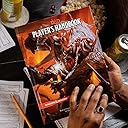
The D&D Playerโs Handbook (2014) is the definitive core rulebook for Dungeons & Dragons 5th Edition, featuring over 350 spells, 20+ races and classes, and streamlined mechanics designed to enhance roleplaying and combat. It serves as the foundational guide for creating characters, mastering gameplay, and exploring the multiverse, making it indispensable for both new players and seasoned adventurers seeking immersive storytelling and endless customization.


| Best Sellers Rank | 7,743 in Books ( See Top 100 in Books ) 4 in Role-Playing & War Games 203 in Magic & Fantasy Graphic Novels |
| Customer Reviews | 4.8 out of 5 stars 53,515 Reviews |
D**.
D&D is Back
D&D is back. I am sure i am gonna get some hate, but i disliked fourth edition with a fiery passion. I used to refer to it as "World of Warcraft Dungeons and Dragons Edition". Wizards of the Coast have restored my faith in D&D. D&D is finally back to its roleplaying roots. It feels like all the good bits of various Editions rolled into one (and it probably is). As the above statement indicates, Fifth Edition (5E) is a lot less mechanical than it used to be, and has returned to roleplaying as its focus. Character sheets are simple now. All with just enough information. And no unneeded junk cluttering up the sheet. A lot of the sheet is taken up by skills, and boxes to note racial and class bonuses/abilities. As well as the obvious section for Ability Scores (Strength, Dexterity, Constitution, etc...) And one or two other little bits. The book is now a lot less cluttered with mechanics and rules for every eventuality. In fact it is obvious to me that its general jist is that you should not let rules slow the game down (in fact there is a small section in the book that says something along those lines.) The main part of the book is given over to character creation. The different races, classes, and so on. And other parts of the book give insight into the multi-verse of D&D. A whole section is given over to magic. Not just spells, but also information on how spells work narratively. Rather than mechanically. And there is even a nice reasonably sized section explaining how there can be so many different worlds (games) without there being crossover or strict rules as to playing in particular settings; the multiverse. Its a a lot more interesting than i remember fourth edition being. Third Edition seems an age ago to me now, so i cannot comment on that much. The Artwork is very nice. And there is a lot of it. I have not had this long, but i am already a fan of 5E. And i can say its good to be back playing D&D. Dont have a group to play with? Well right now neither do I. I still play a few RPG's though. Solo. I am guessing advertisment is not allowed on reviews, so i will just say "Mythic" Have fun!
L**Y
Definitely better than 4e
Great production quality on the book (what the pictures don't tell you is that there's a tactile non-slip surface on the back cover!), but you want to hear about the contents. Here it is: As someone who's read the 3rd (and a half) and 4th Edition Player's Handbooks, I can say that I like this one best. Most of my experience is with 4th Edition (don't hold that against me) and this is a vast improvement on that for the following reasons: 1. It's less about numbers The Character Sheets have expanded to three pages instead of two, but one page is dedicated to spells (which your character might not even have) and another is dedicated to story-driven stuff like your character's personality, appearance, allegiances etc. Only one page dedicates any real space to stats, and even that one is relatively minimal. This is great, because... 2. Teaching a newbie how to make a character is easy I'll be honest: even I didn't fully understand what some of those stat boxes in the 4e character sheet were for for a long time. This book makes the whole process a lot more understandable, and thus less intimidating to newcomers. It's also just quicker for an expert to draw up a character. The character creation process is even more inviting to newbies because... 3. The new Background mechanic really emphasizes roleplaying When coming up with a character concept, you don't just pick a race and class and fart out a backstory. In this edition, "backgrounds" are part of the game mechanics, and a player chooses what philosophy they follow, what people are important to them, and what the character's major flaw is (for example, a visible "tell" when they lie, or being a sucker for a sob story). These points all get formatted in a way that you can pick them or roll a die and get them randomly. But the important part is that they matter - when you play to character, especially when you make decisions that are in keeping with your flaw, you get rewarded with "Inspiration" which can boost your rolls. You can also get a "trinket" which is a piece of junk (you can choose from a list or roll) your character carries for unknown sentimental reasons. This is absolute gold in terms of what a DM can do with that. Sure, you could add those details on your own initiative in 4e but newbies never think to do it. It gives a lot of depth and gets players to think about their characters more. 4. Magic Equipment is gone It's still in the game but it's in the Dungeon Master's Guide where it should be, instead of tantalizing 1st-level players with all this gear they don't have. Magic Equipment is a lot rarer and therefore more significant. The space saved by removing this means... 5. There are more races and classes Gnome, Half-Orc, Barbarian, Bard, Druid, Monk, Sorcerer... these races and classes were missing from Player's Handbook 1 in 4th Edition and I wasn't inclined to buy PHB2 just to get them, both for monetary reasons and because too many core books would be a lot to juggle during a game. They're included in the basic package in 5th Edition. 6. Class options are simpler Some of my players were overwhelmed by the amount of "Exploits" they had available to them. That level of complexity should be reserved for Wizards and the like; but a Fighter should be able to just swing a sword and let their imagination dictate whether they attempt some fancy trick with it, not have an Exploit tell them. Additionally, a lot of the bigger options/paths get left until you're a couple of levels in, allowing a player to get a feel for a character before committing too fully to choices that they might not even understand at 1st level. 7. Multiclassing is back the way it used to be Other people will point out that there are advantages and disadvantages to this, but I really prefer the old system from before 4e, and it's back. There are a lot of other little points I could spend all day talking about but the short version is: 5e is good, it emphasizes fun, and in terms of content it's better value for money than 4e's PHB1.
P**0
Amazing book and game
Anyone who is unsure about buying this book or is brand new to the game, look for the D&D core rules online. Many of the rules are free and you can start playing D&D today from an officially published source - without spending a penny. It's a good way to try the game before you invest in any books. That being said this book is a wonderful introduction into playing the game. The rules are in a clear format and it contains everything you need to create your first character. The artwork is excellent and it is a joy to read through the information on the different races and classes of D&D. It also contains some basic monster stats and pointers on where is best to get more inspiration for your games. If you are a player and looking for some more character options, i reccomend 'Xanthar's Guide to Everything' for additional class options and spells. 'Volo's Guide to Monsters' has some of the special races like goblins and bugbears. D&D Beyond is a site online that details where everything comes from, so if you want a particular race option or item then you can see where the material comes from. If you are a DM and want to get into the game more then you will probably need the Monster Manual, and the Dungeon Masters Guide. As a supplement to this there is also Mordenkainen's tome of foes, which has even more exotic monsters. All in all the player's handbook is the 'corest' of the core books, and you could absolutely run your first adventure from this single source.
F**B
Wizards hit the mark with the fifth edition...
What a return to form! After the ghastly 4th edition, Wizards of the Coast have conjured a superb rules set that harks back to the glories of the classic game whilst employing modern, cutting-edge mechanics. The advantage system is elegant and economical. The overall rules-light approach, steering away from battle grids and overly-tactical play, returns the game to the role players (as opposed to the roll-players), where it rightfully belongs. There is even a playful vibe throughout that reminds this reviewer of Gary Gygaxโs original. This version, with its outstanding artwork and layout, succinct explanations and rightful prioritisation of imagination and storytelling, is truly a worthy successor to its 1970s trailblazer. It is supported by a fantastic range of adventures and campaign setting supplements. And the publishers have commendably steered clear from the temptation to complicate the game with too many rules additions, as Paizo did with Pathfinder. Overall, this is a peerless product, particularly recommended for teenagers as a way to develop imaginative faculties and collaboration skills. Then again, youโre never too old...
A**R
Great visuals and lots of game information
๐ This book makes a great impression and has that new-book smell that I find slightly exciting in an anticipatory way. The book is very colourful, with full-page images throughout, but not to the detriment of the information enclosed. This book was a gift for my daughter, who plays D&D, and she was delighted to receive the book and immediately sent pictures of it to her fellow D&D players. She spent a great deal of time pouring through the book, so it seemed to captivate her attention. Itโs not a cheap book, and I worried about the possible advent of another version of the ruleset. My rationale is that I could prevaricate forever, as there always seem to be threats of rule changes with such games, so I took the plunge. Recommended. โ๏ธ
C**E
Good for its purpose, but you may want to hold off.
NECESSARY DISCLAIMER With a revised/updated players handbook releasing some time in 2024, unless you see yourself getting a lot of use out of this book in the next year, you may want to wait. Very very useful rulebook for both players and DMs, the only core book I'd say is a nigh on necessity alongside the basic rules, the other core books have very useful stuff too, but they're things that you can kinda freestyle your own homebrew stuff using the basic rules as examples, but the players handbook adds a ton of player options that are core to the game, with 8 more classes than those rules and at least 2 subclasses for each class (basic rules only has the "default" subclass for fighter, rogue, wizard and cleric) as well as by being a physical book, is a great resource to reference for the fundamental rules of combat, exploration, spellcasting and other important features. It can be overwhelming to read especially with all the flavour text surrounding and built in amongst the actual rules that it can be hard to read what something actually does, but this is a problem with basically every wotc dnd procut except monster stat blocks for the most part.
R**R
Back to good
I have been role-playing for over 20 years and like a majority of people D&D was one of my first games. I have played every version released and I would like to say they only got better but unfortunately 4th was a serious let down, even though it had a few nice touches. When I heard 5th was going to be released I was so uninterested but I have a weakness for this hobby so I started reading the reviews. Put it this way, I now own most of what's been released and so do my friends. This edition works, it has the freedom of 3rd with some of the nice ideas from 4th and 2nd. In it's essence it is 3rd rules but simplified, no more remembering what modifiers needs to be added or deducted. It's 30 pages of rules but 170 of character choices and development, which I so much prefer. Fighting monsters especially the tough ones is now about your tactics and how creative you can be rather than just stacking dump loads of magic items on you. I remember taking on a black dragon in 3rd with just 2 of us and beating it to a pulp, not in this edition, running and coming back harder and with a army would be the wiser option. From what I have read WotC are not going to release phb after phb, so theoretically you will only ever need the 3 core books. In summary, this is one of the best editions yet, dont want to take my word for it, read the reviews and/or buy it, I doubt you will be disappointed.
K**R
Value for money
Beautiful quality, lovely illustration
M**I
Price and deliverance
S**O
Ultima edizione papabile
Se la Dungeon Masterโs Guide รจ la bussola per creare mondi, il Playerโs Handbook (PHB) di Dungeons & Dragons 5ยช Edizione (2014) รจ il cuore pulsante del gioco, il libro che trasforma un lettore in un eroe. ร il manuale fondamentale, quello che ogni giocatore โ dal novizio al veterano โ deve avere sotto mano. La versione del 2014 ha segnato l'inizio di un'epoca d'oro per il gioco di ruolo, grazie a un design che privilegia la narrazione senza sacrificare la profonditร . Ecco perchรฉ rimane un capolavoro del genere: 1. Creazione del Personaggio: Un Viaggio nell'Identitร Il PHB ti offre tutti gli strumenti per dare vita al tuo alter ego fantastico. Le Classi Iconiche: Dalle furie del Barbaro ai complessi incantesimi del Mago, le 12 classi base sono bilanciate e ricche di personalitร . Ogni classe offre sottoclassi (Archetipi) che permettono di personalizzare il proprio stile di gioco in modo unico. Razze e Background: Il sistema dei Background รจ una delle intuizioni migliori di questa edizione: non solo definisce cosa sa fare il tuo personaggio, ma chi era prima di diventare un avventuriero, offrendo agganci narrativi immediati per il DM. 2. Regolamento Fluido: Il Sistema del Vantaggio Il manuale introduce (o perfeziona) la meccanica del Vantaggio/Svantaggio, che ha rivoluzionato il gioco: Semplicitร ed Eleganza: Invece di sommare decine di piccoli modificatori numerici, basta lanciare due dadi da 20 e prendere il migliore (o il peggiore). Questo rende il combattimento veloce, intuitivo e incredibilmente dinamico. Focus sulla Narrazione: Le regole sono scritte per essere al servizio della storia, permettendo ai giocatori di descrivere azioni eroiche senza essere frenati da burocrazie eccessive. 3. La Magia a Portata di Mano Quasi metร del libro รจ dedicata agli incantesimi, ed รจ una sezione meravigliosa: Catalogo Completo: Centinaia di incantesimi descritti con chiarezza, dai semplici trucchetti (Cantrips) che puoi lanciare all'infinito, fino ai desideri che possono riscrivere la realtร . Organizzazione: Le liste divise per classe e i capitoli sulle regole della magia rendono la gestione dei lanciatori di incantesimi fluida anche per chi รจ alle prime armi. 4. Un'Opera d'Arte da Sfogliare Non si puรฒ parlare del PHB 2014 senza menzionare l'estetica: Illustrazioni Immersive: Ogni pagina รจ arricchita da disegni che catturano l'essenza delle razze, delle armature e dei mostri, trasportandoti immediatamente in un mondo di alta fantasia. Layout Intuitivo: Le tabelle di progressione dei livelli, le liste dell'equipaggiamento e le appendici sugli stati (come "Ammaliato" o "Trattenuto") sono facili da consultare anche nel calore della battaglia.
T**A
Fantastic new edition
tl;dr: This is a great new edition, and I recommend it to almost anyone. I've spent at least some time with every edition of D&D since 1e and Red Box Basic, which I played as a kid. I missed most of the 2e era and I left 4e relatively early in its cycle, but I spent a ton of time playing 1e and 3e. I also have a little bit of exposure to old school revival (OSR) rules that harken back to earlier Original D&D rules. 5e captures a lot of what I like about all of the above. 5e continues the trend dating back to 2e (with THACO) of simplifying the math underlying the game. Almost everything in the game is an ability check -- pick the relevant ability score, add the bonus from that score to the result of a d20, and try to beat some number that represents the difficulty of the check. Proficiencies provide bonuses, having the advantage or disadvantage in a situation changes the odds, there's a few stray bonuses here and there, and that's pretty much it. The whole core of the game works on that mechanic -- attacks, saving throws, attempting to perform actions (with or without a relevant skill), pretty much everything. It's fantastic. 4e marked a major philosophical change to make D&D more like a *game*, as traditionally understood. Balance in gameplay became one of the most important aspects, there was a relentless focus on combat tactics, character capabilities became systematized into (mostly combat) "powers", many rules revolved heavily around "squares" and board position, and aspects that undermined that kind of gameplay were intentionally weakened -- e.g. magic items, the ability to fly, completely open-ended spells, etc. It was as easy to role play the game as ever, but things like the Encounters series of play sessions in gaming shops and the reuse of the rules in the D&D board games like Castle Ravenloft made it clear that role playing wasn't as integral to the rules, and the portion of the rules devoted to campaign play outside of specific encounters was scant at best. People who loved the tactical aspect of the game generally love 4e. For those people, 5e is going to be a step back, at least for now. The open-ended aspects of the game get a ton of love and none of the minis/squares/board position-based tactics make it into the PHB. If that's your thing, you won't like 5e at this point. My guess is that there will be further books that add back the same tactical depth, so you may yet end up really liking 5e, but for now, there's not that much for you here. Instead we get a return to "theater of the mind" (TOTM) gaming as the default assumption, where you imagine what's going on where your characters are and probably have a small map of the layout, but you don't move little minis around on a board or dungeon tiles or whatever. You could still play that way if you like it, but the game doesn't give you special rule support the way it did in 4e. Instead, the focus of the game rules is shifted to starting with players trying whatever actions they feel like (which need not be specific things the game designers have thought of in advance), and using the ability check mechanic to resolve it. Specific types of actions you may get you better bonuses because you're using a weapon you're good with or you have a relevant skill that means you're trained in that kind of action, but if what you want to do is swing a monkey by his tail and throw him into the mouth of the angry dragon, all the DM has to do is establish a difficulty and have you roll a (Dexterity, presumably) check to try it -- no power cards required. As far as I'm concerned, this is a huge win for imagination, and the fact that the game really tries to lay out that you can do whatever you can think of is fantastic, and shows they've learned key lessons from the OSR movement. We also get a return of focus to the campaign as a whole, as we see from the wonderful chapter on equipment. There's plenty of typical dungeon equipment and some obvious extras like artisan's tools for various trades, but it continues by telling you how much it costs to live in town (depending on the style in which you live, with details on what the different kinds mean), the price of various vehicles and riding and draft animals, the going rates for various trade goods, the cost of hiring different kinds of servants, and more. There have certainly been game supplements that have gone into even more detail in the past, but to put this much detail into the PHB itself really emphasizes how much focus there is on making the game world feel like a real place that your character is a part of -- this is by far the best this has ever been handled in a core rulebook in any edition. The other really fanstastic thing is the focus on making your character more that just a set of stats. There's a whole chapter on personality and character background that's a quantum leap over anything they've done in a PHB in the past. There are a variety of different kinds of background -- some examples are noble, soldier, guild artisan, hermit, criminal, sailor, folk hero, outlander. There's also variations on many of them (e.g. guild merchant for guild artisan), and specific encouragement to work with the DM on a custom background if you have a different idea. Every background gets two skills, one or more tool proficiency, and a special feature, such as guild membership or the ability for sailors to secure free working passage on a ship. The traditional pre-4e alignment wheel is back, but every character also gets two personality traits, a goal, a bond that ties them to something in the world (their clan, an enemy, etc.), and a weakness. There are tables for all of those things tied to each background that you can select or roll from, but there's plenty of latitude to come up with your own. Good role players already did a lot of work like this on their characters before any rules showed up in the rulebook like this, but this is a fantastic tool for new players, less character-focused players, or anyone trying to think of ideas for their latest character. The rules section of the book also does a good job building rules for social encounters and for general exploration of dungeons and the world at large, without resorting to gimmicks like 4e's skill challenges, which meant well, but turned something open-ended into something a little too mechanical. Combat will always be an important part of the rule system, but in 5e, it's just a part of a larger whole. Lest you think this is completely anti-4e, one strong thing 5e preserves is having different character tracks within each class, a real innovation over 3e. In 3e, you could build a really nice custom character, but you had to do it with complicated multiclassing approaches, careful study of skill levels and feat trees, etc. A lot of people like that kind of work, but it was *definitely* work. 4e had different class builds, paragon paths, and power selection such that you could make a character your own by making simpler decisions that didn't require a ton of upfront planning to nab the right prerequisites or take things in the order you wanted. 5e retains this. Different wizard schools and cleric domains are folded in as paths within the class that give you interestingly different gameplay, e.g. depending on whether you want to play a cleric that attacks mainly with spells or with weapons. There's a simple build of fighter designed for "I hit it with my sword" beginner players, but also a build that offers a choice of various combat maneuvers, and an Eldritch Kinght that can cast spells. Rogue comes with paths for standard thief, assassin, and arcane trickster -- no prestige class required. Wizards also get a simpler version of Vancian magic, and high-level wizards lose the unbalanced ability to lob 20 devastating area of effect spells in a row at their enemies (sorry, Wizard enthusiasts). There's a stealth path for monks for players who want to build ninjas. Interestingly, feats are an optional rule, and even if you play with them you don't have to select them. At various times depending on class, your character can add two points to ability scores (to a max of 20 on any given score). If you prefer, you can take a feat instead. You can do this once, or do it every time. This not only makes for an interesting tradeoff, it means feats can be incredibly powerful. You can learn to cast ritual magic like a member of a different class as a feat. You can pick up two of the fighter maneuvers for a non-fighter character with a feat. You can use a single feat to pick up 2 cantrips, 3 skills, or 3 languages plus cyphering. You can really customize the feel of your character by spending a single feat, but beginners don't have to worry about them, and nobody has to worry about keeping track of complicated feat trees and prerequisites. Multiclassing is an optional rule, and it's more flexible that the original (fake) multiclassing options in 4e but not as crazy as it was in 3e, because there are rules on what you get if you just dip into a second class for a level or two. I'm sure there are specific character concepts people will want to make with multiclassing, but overall, it feels a lot less necessary than it did in 3e, and a lot less unbalancing. There's definitely a focus on the core 4 races and core 4 classes, but other races from Gnome to Tiefling to Dragonborn (who are listed as not existing in every game world) are represented, and classes from Barbarian to Paladin to Warlock are here as well. I think they've captured the essence of each of these races and classes well, and this feels like a really polished product that people who like virtually any edition can come to and find a way to capture what they liked about the characters and gameplay of that edition (again, tactical 4e players notwithstanding, for now). There's a great ability to adapt this from pretty simple, streamlined games to much more in-depth ones. If you prefer using the general action-resolution system over keeping track of a ton of character abilities, you could download the free version of the rules and maybe buy a monster manual and play a streamlined, OSR-influenced game happily for years. If you like lots of options for building out your character, there's a ton here for you, and I'm sure there will be plenty more to come in forthcoming splat books. Houserule different healing rules and such (options the forthcoming DMG is likely to lay out for you), and you could play anything from a gritty, inches-from-death style game remininscent of OD&D or 1e to a game that makes you feel invincible as long as you play intelligently like 4e can. When you consider all the ways the rules have improved, 5e could easily fulfill WotC's hopes and become a lingua franca for D&D fans of all the various editions to migrate to and find common ground. Considering the quality of the materials they're releasing, I hope they succeed.
K**N
Exactly as pictured
Bought this several years ago so I could have my own copy and not need to borrow my friend's all the time. Love it, super helpful, and I still refer to it while playing (even though there are new versions, my friends and I prefer this version).
R**T
The ultimate tool for any D&D/RPG fan
If you're at this page, you probably already know what you're getting into. This is the ultimate tool for newcomers to D&D and experienced players as well. The quality of this book is absolutely stellar. The artwork is stunning and the quality of the content given by Wizard of the Coast is well thought out and enough for most people to understand what encompasses making a character for your RPG session. There can be no D&D 5E without this book. Buy it.
Trustpilot
3 weeks ago
1 week ago