![The Dam Busters - Special Edition [DVD]](https://m.media-amazon.com/images/I/71o-OVUcBVL._AC_SL3840_.jpg)
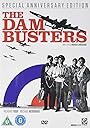
The Dam Busters - Special Edition [DVD]
Product ID: 51819868
Buy anything from 5,000+ international stores. One checkout price. No surprise fees. Join 2M+ shoppers on Desertcart.
Desertcart purchases this item on your behalf and handles shipping, customs, and support to Thailand.
Classic wartime drama directed by Michael Anderson. The film tells the story of Dr Barnes Wallis (Michael Redgrave), whose invention of the 'Bouncing Bomb' is greeted with scepticism in World War II. However, RAF Wing Commander Guy Gibson (Richard Todd) proves the bomb's worth in a daring mission to destroy the German Ruhr dams. The cast also includes Basil Sydney and Ursula Jeans. Review: A major classic, aged but still wearing that crown, towering over the competition! Also a lesson in how war films should be made - This war film based on actual events is an already immortal classic, still as powerful in Year of Grace 2014 as it was when first released in 1955. Below, more of my impressions, with some SPOILERS. 1. Operation "Chastise" and real "Dam Busters" Operation "Chastise" (very appropriately named, possibly for the first time in military history) was an attack on three German dams carried out on 16-17 May 1943 by Royal Air Force No. 617 Squadron flying specially modified Lancaster bombers and using a new weapon: "bouncing bomb" invented and developed by renown engineer Barnes Wallis (amongst his earlier realisations was the design of Vickers Wellington bomber). This mission was unusually dangerous because to succeed British bombers had to attack at low speed and very low attitude, risking at any moment crashing in the ground, when in the same time being exceptionally vulnerable to the Flak, including the numerous 20 mm guns, which usually were not a concern to four engine bombers operating at high attitude... As the result of the attack, the Möhne and Edersee Dams were breached, causing catastrophic flooding of the Ruhr valley and of villages in the Eder valley - the third target, Sorpe dam, sustained only minor damage. Two hydroelectric power plants were destroyed and several more were damaged. Numerous factories and mines were also damaged to diverse degree due to flooding and an estimated 1,600 people drowned. Even if the damage was repaired by Germans, production in affected areas didn't return to normal before September 1943. The cost to the attackers was high, as out of 20 Lancasters which took off for the attack 8 were lost and 53 crew members were killed with 3 more being taken prisoners. What made this incredibly daring and very successful operation even more remarkable, was that, although it was not made on purpose, the 617th squadron was a very multinational and diverse outfit, with crews hailing from all over the Commonwealth: United Kingdom, Canada, Australia, New Zealand and amongst the pilots there was even one American volunteer serving with RAF, Lieutenant Joe McCarthy. Following the Dams Raid 617 Squadron was kept together as a specialist unit and participated in numerous bombing operations, frequently using other types of specialised ordnance developed by Barnes Wallis, including giant Grand Slam and Tallboy bombs. It was with those latter munitions that the 617th Squadron attacked and destroyed in 1944 German super-battleship "Tirpitz" in her base in Norway. The squadron is still active today. Very sadly, Wing Commander Guy Gibson, the officer in command of the whole mission, didn't survive the war - he was killed in action (probably shot down by a German fighter) on 19 September 1944, when flying a target marking Mosquito over Netherlands. He was only 26 years old. Five of men who flew on the same bomber with him in operation "Chastise" were killed even earlier, during another bombing mission over Germany on 16 September 1943. 2. The film The film was made in 1955, when Barnes Wallis and many "Dam Busters" were still alive, therefore it was possible to consult with them extensively and as result this film sticks quite closely to the reality of things. This real deal feeling was also helped by RAF contributing three real Lancaster bombers taken out of reserve and refit for service for the needs of this film. The narration is strictly chronological, from the moment when Barnes Wallis got the idea of "bouncing bombs", through the phase of conception of those new munitions, experimentation and modifications until finally the introduction in service. Then begins the phase of selection of crews for the mission, training and other preparations and finally the extremely dramatic mission itself. For the needs of the film some changes were of course introduced, the most important of which is the whole struggle Barnes Wallis has to wage with war time bureaucracy (both civilian and military) to even be able to launch the whole project of "bouncing bombs". In reality no such thing took place, to the contrary, Wallis, who was already very well known in this time, received lots of support and was efficiently backed up by both civilian and military hierarchy, which explains how this project advanced so fast. Another interesting thing is that in 1955 the whole "bouncing bomb" technology was still a military secret, therefore in the film the bombs have the shape of spheres, when in the reality they were shaped as barrels... Finally, another major change was made to make the action even more dramatic - in the film one of the bombers crashes into a mountain as it is not able to pull up fast enough from the bomb run (I am NOT saying which bomber it is...). In reality no such thing happened during the bomb run but some planes damaged by Flak crash landed after the attack itself was over. The music written for this film is of course already a legend - the "Dambusters March" achieved already immortality and will certainly continue to be performed, listened to and adored for centuries. 3. My impressions about the film The first time I saw this film was ages ago, in communist Poland, when I was still a boy - and it was an "eyes wide open, nail biting, jaw dropping" experience! And now, after re-watching it recently, I was very pleased to see that with time it didn't lose any of its fire power! The success of the film is certainly not due to special effects which in 1955 were nothing like those available today. This film is also in black and white and action scenes happen at night, which should logically diminish their impact - but it is NOT the case! No, the real reason why "Dambusters" is so good is the strength of scenario and a perfectly structured narration of the story, an art frequently forgotten (or simply discarded) in today's films. The tension is build up from the beginning, with initially just a hint that something REALLY big is going to happen and then the stakes are raised slowly but regularly, until the moment when Gibson and his men see this first dam... At that moment the viewers couldn't care less about special effects as we are already so immersed in the story that no escape is possible, even if the Flak started to shoot spaghetti instead of tracers... To conclude on the action scenes - their age notwithstanding they still pack such power that together with the great finale from "633 Squadron" (a lesser war film describing a fictitious raid) they very strongly inspired George Lucas when he was creating the archi-famous sequence of rebel fighters attacking Death Star in "Star Wars". The way in which the heroism of those incredible men is described is another treasure. The whole story is narrated in a matter of fact way, as if it was just another day at the office - it just so happens that the office for those men is deep inside the enemy territory. There is no pathos, there is no drama, there is no soul searching, there is no PrTSD (Pre-Traumatic Stress Disorder, something that figures in most modern war movies), no politically correct pseudo-psychological babble (are we the good guys? Are we REALLY the good guys? Are we REALLY, REALLY, REALLY the good guys?), which all affect so badly so many modern war films. Here things are told simply and calmly and the viewers are trusted to be adult enough to understand by themselves how terribly dangerous that mission was and how it took real balls to fly at the lowest possible level into this Valley of the Shadows of Death, with Flak in the front, on both sides and even above(!) on the hills, carrying an enormous bomb exposed to enemy fire and still go at the target - MORE THAN ONCE if the first approach was unsuccessful! I heard many rumours that a remake of "Dambusters" is being prepared in USA, but until now nothing concrete was ever announced. Honestly, I am of two minds about it - on one hand I would be tempted to see this raid again, with the state of the art XXI century special effects but on another, when I think of all the abominations, horrors and other indignities visited lately upon war stories by Hollywood (just think of "Pearl Harbour", "U-571" or "Wind Talkers") I would as much prefer that at least this masterpiece remains unspoiled... There were many book written abouth this famous raid, but if I was to recommend just one I think I would go with "Dambusters. Operation Chastise 1943" by Doug Dildy, published by Osprey in its "Raid" series in October 2010. It is a small book, only 80 pages long, but quite comprehensive and it may be a good idea to read it before watching (re-watching) this film. CONCLUSION: this is a GREAT film, a GREAT classic, still as powerful today as in 1955. To buy, watch, keep and re-watch. Enjoy! Review: The definate War Movie - There can be few people who have never seen this superb war film recounting the design of the Bouncing bomb which was designed specifically for one purpose to burst the dams of the Rhur valley in Germany and thus cripple the industrial manufacturing base of the country. Wing Commander Guy Gibson awarded the VC for his command of 617 squadron played really well by Richard Todd. Recently on reading Guy Gibsons early 60s paperback autobiography about Bomber Command entitled "Enemy Coast Ahead" and now thankfully back in print after many years, the enactment of scenes in the film are very true to life having been given no embelishments to improve the story. Every single scene in the film is relevant to the story even down to Gibson and fellow officer watching the West end production in London, coming up with the ingenious idea of using searchlight beams to accurately assertain the correct height of his aircraft whilst in flight The tension,huge loss of life with eight Lancasters with the eight crew failing to return and the now famous Dambusters March. Possibly the special effects now well over 50 years old may appear dated but nothing detracts from making the Dambusters one of the most convincing and accurate depictions of true wartime events. You might be interested to know that behind the visitor centre just outside Rhayader in Mid Wales Elan Valley is the actual remains of Barnes Wallaces coffer dam used to test the neccessary explosive charge needed to breach the Rhur dams. After seeing an article about it in my daily newspaper i desided to go and see it for myself. Incredibly i have been to the Elan Valley many times to take part in the annual 20 mile road race without realising the remains of Wallaces dam were so close. The walk along Caban Coch reservoirs shoreline is not suitable for the infirm or elderly which is a shame but the sense of anticipation of going to see such a significant and famous wartime relic so cleverly concealed was something i will never forget. The dam must be atleast 20ft tall and 5ft thick and over 300ft wide but Mr wallace certainly made a mess of it. There is so much original debris lying around that those who know it's there can easily grab a piece without any threat of depleting the supply. When standing ontop which again is easily done the memories of this famous film come flooding back and you soon realise the importance and reasoning for sighting the dam in such a remote area of Mid Wales. Even the original buildings are there in a kind of time warp. The depiction of Barnes destroying the small dam at the begining of the film is quite strange after you realise how huge the original structure was. Even today without any knowledge of it's existence which must be the case for the countless thousands who visit this picturesque area it is of no surprise that the Germans never located it's presence. Derwent Water in the Peak District was the main test area for the Lancasters.The squadron was the only one officially allowed to fly under a hundred feet whilst in testing.Throughout the war nobody knew why the Lancasters flew so low,even other squadrons not connected to 617 were left in the dark. Guy Gibson did own a black labrador that he called "Nigger" and yes he was unfortunately killed just outside the airbase, so the film remains as close to the real events of the war that we are likely to get. It is only on purchasing the BluRay addition to this film that i was made aware of Gibsons lost companion "Nigger" appearing in the final credits of the film. Just watch as Barnes Wallace full of remorse at having sent so many young men to die on this important mission for war moral talks to Gibson. Just in the distant background above Gibsons right shoulder we see a ghost like black creature in slow motion, is this Nigger ?. Nothing in the film has been added to improve the story unlike vertually every other war film to date. The film keeps to the known facts and uses them to its brilliant advantage and on watching it again recently the acting and storyline still carry significant weight to make the film one of the true greats in British cinematic history. The film may be approaching it's sixtieth birthday remarkably quickly but it's popularity will never cease. Everything right down to the genuine archive film along Chesill beach on the south coast is factually accurate which goes to make it possibly the greatest war film to come out of a British studio.
| Colour | Black & White |
| Contributor | Basil Sydney, Bill Kerr, Derek Farr, George Baker, Guy Gibson, John Fraser, Michael Anderson, Michael Redgrave, Patrick Barr, Paul Brickhill, R.C. Sherriff, Richard Leech, Richard Todd, Robert Clark, Robert Shaw, Ursula Jeans, W. A. Whittaker Contributor Basil Sydney, Bill Kerr, Derek Farr, George Baker, Guy Gibson, John Fraser, Michael Anderson, Michael Redgrave, Patrick Barr, Paul Brickhill, R.C. Sherriff, Richard Leech, Richard Todd, Robert Clark, Robert Shaw, Ursula Jeans, W. A. Whittaker See more |
| Customer Reviews | 4.7 out of 5 stars 1,626 Reviews |
| Format | Anamorphic, Black & White, PAL, Widescreen |
| Genre | Drama |
| Language | English |
| Manufacturer | Studiocanal |
| Number of discs | 1 |
| Runtime | 2 hours and 3 minutes |
D**K
A major classic, aged but still wearing that crown, towering over the competition! Also a lesson in how war films should be made
This war film based on actual events is an already immortal classic, still as powerful in Year of Grace 2014 as it was when first released in 1955. Below, more of my impressions, with some SPOILERS. 1. Operation "Chastise" and real "Dam Busters" Operation "Chastise" (very appropriately named, possibly for the first time in military history) was an attack on three German dams carried out on 16-17 May 1943 by Royal Air Force No. 617 Squadron flying specially modified Lancaster bombers and using a new weapon: "bouncing bomb" invented and developed by renown engineer Barnes Wallis (amongst his earlier realisations was the design of Vickers Wellington bomber). This mission was unusually dangerous because to succeed British bombers had to attack at low speed and very low attitude, risking at any moment crashing in the ground, when in the same time being exceptionally vulnerable to the Flak, including the numerous 20 mm guns, which usually were not a concern to four engine bombers operating at high attitude... As the result of the attack, the Möhne and Edersee Dams were breached, causing catastrophic flooding of the Ruhr valley and of villages in the Eder valley - the third target, Sorpe dam, sustained only minor damage. Two hydroelectric power plants were destroyed and several more were damaged. Numerous factories and mines were also damaged to diverse degree due to flooding and an estimated 1,600 people drowned. Even if the damage was repaired by Germans, production in affected areas didn't return to normal before September 1943. The cost to the attackers was high, as out of 20 Lancasters which took off for the attack 8 were lost and 53 crew members were killed with 3 more being taken prisoners. What made this incredibly daring and very successful operation even more remarkable, was that, although it was not made on purpose, the 617th squadron was a very multinational and diverse outfit, with crews hailing from all over the Commonwealth: United Kingdom, Canada, Australia, New Zealand and amongst the pilots there was even one American volunteer serving with RAF, Lieutenant Joe McCarthy. Following the Dams Raid 617 Squadron was kept together as a specialist unit and participated in numerous bombing operations, frequently using other types of specialised ordnance developed by Barnes Wallis, including giant Grand Slam and Tallboy bombs. It was with those latter munitions that the 617th Squadron attacked and destroyed in 1944 German super-battleship "Tirpitz" in her base in Norway. The squadron is still active today. Very sadly, Wing Commander Guy Gibson, the officer in command of the whole mission, didn't survive the war - he was killed in action (probably shot down by a German fighter) on 19 September 1944, when flying a target marking Mosquito over Netherlands. He was only 26 years old. Five of men who flew on the same bomber with him in operation "Chastise" were killed even earlier, during another bombing mission over Germany on 16 September 1943. 2. The film The film was made in 1955, when Barnes Wallis and many "Dam Busters" were still alive, therefore it was possible to consult with them extensively and as result this film sticks quite closely to the reality of things. This real deal feeling was also helped by RAF contributing three real Lancaster bombers taken out of reserve and refit for service for the needs of this film. The narration is strictly chronological, from the moment when Barnes Wallis got the idea of "bouncing bombs", through the phase of conception of those new munitions, experimentation and modifications until finally the introduction in service. Then begins the phase of selection of crews for the mission, training and other preparations and finally the extremely dramatic mission itself. For the needs of the film some changes were of course introduced, the most important of which is the whole struggle Barnes Wallis has to wage with war time bureaucracy (both civilian and military) to even be able to launch the whole project of "bouncing bombs". In reality no such thing took place, to the contrary, Wallis, who was already very well known in this time, received lots of support and was efficiently backed up by both civilian and military hierarchy, which explains how this project advanced so fast. Another interesting thing is that in 1955 the whole "bouncing bomb" technology was still a military secret, therefore in the film the bombs have the shape of spheres, when in the reality they were shaped as barrels... Finally, another major change was made to make the action even more dramatic - in the film one of the bombers crashes into a mountain as it is not able to pull up fast enough from the bomb run (I am NOT saying which bomber it is...). In reality no such thing happened during the bomb run but some planes damaged by Flak crash landed after the attack itself was over. The music written for this film is of course already a legend - the "Dambusters March" achieved already immortality and will certainly continue to be performed, listened to and adored for centuries. 3. My impressions about the film The first time I saw this film was ages ago, in communist Poland, when I was still a boy - and it was an "eyes wide open, nail biting, jaw dropping" experience! And now, after re-watching it recently, I was very pleased to see that with time it didn't lose any of its fire power! The success of the film is certainly not due to special effects which in 1955 were nothing like those available today. This film is also in black and white and action scenes happen at night, which should logically diminish their impact - but it is NOT the case! No, the real reason why "Dambusters" is so good is the strength of scenario and a perfectly structured narration of the story, an art frequently forgotten (or simply discarded) in today's films. The tension is build up from the beginning, with initially just a hint that something REALLY big is going to happen and then the stakes are raised slowly but regularly, until the moment when Gibson and his men see this first dam... At that moment the viewers couldn't care less about special effects as we are already so immersed in the story that no escape is possible, even if the Flak started to shoot spaghetti instead of tracers... To conclude on the action scenes - their age notwithstanding they still pack such power that together with the great finale from "633 Squadron" (a lesser war film describing a fictitious raid) they very strongly inspired George Lucas when he was creating the archi-famous sequence of rebel fighters attacking Death Star in "Star Wars". The way in which the heroism of those incredible men is described is another treasure. The whole story is narrated in a matter of fact way, as if it was just another day at the office - it just so happens that the office for those men is deep inside the enemy territory. There is no pathos, there is no drama, there is no soul searching, there is no PrTSD (Pre-Traumatic Stress Disorder, something that figures in most modern war movies), no politically correct pseudo-psychological babble (are we the good guys? Are we REALLY the good guys? Are we REALLY, REALLY, REALLY the good guys?), which all affect so badly so many modern war films. Here things are told simply and calmly and the viewers are trusted to be adult enough to understand by themselves how terribly dangerous that mission was and how it took real balls to fly at the lowest possible level into this Valley of the Shadows of Death, with Flak in the front, on both sides and even above(!) on the hills, carrying an enormous bomb exposed to enemy fire and still go at the target - MORE THAN ONCE if the first approach was unsuccessful! I heard many rumours that a remake of "Dambusters" is being prepared in USA, but until now nothing concrete was ever announced. Honestly, I am of two minds about it - on one hand I would be tempted to see this raid again, with the state of the art XXI century special effects but on another, when I think of all the abominations, horrors and other indignities visited lately upon war stories by Hollywood (just think of "Pearl Harbour", "U-571" or "Wind Talkers") I would as much prefer that at least this masterpiece remains unspoiled... There were many book written abouth this famous raid, but if I was to recommend just one I think I would go with "Dambusters. Operation Chastise 1943" by Doug Dildy, published by Osprey in its "Raid" series in October 2010. It is a small book, only 80 pages long, but quite comprehensive and it may be a good idea to read it before watching (re-watching) this film. CONCLUSION: this is a GREAT film, a GREAT classic, still as powerful today as in 1955. To buy, watch, keep and re-watch. Enjoy!
M**S
The definate War Movie
There can be few people who have never seen this superb war film recounting the design of the Bouncing bomb which was designed specifically for one purpose to burst the dams of the Rhur valley in Germany and thus cripple the industrial manufacturing base of the country. Wing Commander Guy Gibson awarded the VC for his command of 617 squadron played really well by Richard Todd. Recently on reading Guy Gibsons early 60s paperback autobiography about Bomber Command entitled "Enemy Coast Ahead" and now thankfully back in print after many years, the enactment of scenes in the film are very true to life having been given no embelishments to improve the story. Every single scene in the film is relevant to the story even down to Gibson and fellow officer watching the West end production in London, coming up with the ingenious idea of using searchlight beams to accurately assertain the correct height of his aircraft whilst in flight The tension,huge loss of life with eight Lancasters with the eight crew failing to return and the now famous Dambusters March. Possibly the special effects now well over 50 years old may appear dated but nothing detracts from making the Dambusters one of the most convincing and accurate depictions of true wartime events. You might be interested to know that behind the visitor centre just outside Rhayader in Mid Wales Elan Valley is the actual remains of Barnes Wallaces coffer dam used to test the neccessary explosive charge needed to breach the Rhur dams. After seeing an article about it in my daily newspaper i desided to go and see it for myself. Incredibly i have been to the Elan Valley many times to take part in the annual 20 mile road race without realising the remains of Wallaces dam were so close. The walk along Caban Coch reservoirs shoreline is not suitable for the infirm or elderly which is a shame but the sense of anticipation of going to see such a significant and famous wartime relic so cleverly concealed was something i will never forget. The dam must be atleast 20ft tall and 5ft thick and over 300ft wide but Mr wallace certainly made a mess of it. There is so much original debris lying around that those who know it's there can easily grab a piece without any threat of depleting the supply. When standing ontop which again is easily done the memories of this famous film come flooding back and you soon realise the importance and reasoning for sighting the dam in such a remote area of Mid Wales. Even the original buildings are there in a kind of time warp. The depiction of Barnes destroying the small dam at the begining of the film is quite strange after you realise how huge the original structure was. Even today without any knowledge of it's existence which must be the case for the countless thousands who visit this picturesque area it is of no surprise that the Germans never located it's presence. Derwent Water in the Peak District was the main test area for the Lancasters.The squadron was the only one officially allowed to fly under a hundred feet whilst in testing.Throughout the war nobody knew why the Lancasters flew so low,even other squadrons not connected to 617 were left in the dark. Guy Gibson did own a black labrador that he called "Nigger" and yes he was unfortunately killed just outside the airbase, so the film remains as close to the real events of the war that we are likely to get. It is only on purchasing the BluRay addition to this film that i was made aware of Gibsons lost companion "Nigger" appearing in the final credits of the film. Just watch as Barnes Wallace full of remorse at having sent so many young men to die on this important mission for war moral talks to Gibson. Just in the distant background above Gibsons right shoulder we see a ghost like black creature in slow motion, is this Nigger ?. Nothing in the film has been added to improve the story unlike vertually every other war film to date. The film keeps to the known facts and uses them to its brilliant advantage and on watching it again recently the acting and storyline still carry significant weight to make the film one of the true greats in British cinematic history. The film may be approaching it's sixtieth birthday remarkably quickly but it's popularity will never cease. Everything right down to the genuine archive film along Chesill beach on the south coast is factually accurate which goes to make it possibly the greatest war film to come out of a British studio.
M**N
A nigh-on flawless presentation for a true British classic
Anyone who has only ever seen Michael Anderson's definitive 1954 war film on a muddy, soft television transmission or the previous standard definition DVD should prepare themselves to be floored when they sit down to watch this new 1080P Blu-Ray. The visual presentation is nothing short of perfection, and I do not say such things lightly. To their credit, Optimum have got absolutely EVERYTHING right on this one. Firstly, the frequent temptation with HD to crop films that were originally shot Academy down to fill a 16:9 frame has been resisted, with the film retaining its full original 1.33:1 aspect ratio, pillar-boxed within the 16:9 frame. The clarity of the image is so stunning that I cannot imagine they used anything other than the original negative, which would mean that the film would have had to have undergone a full-blown restoration (not cheap!) Grading is absolutely first rate, with a terrific grey scale and no discernible clipping of white areas of the image. I did notice some slight black crush on very dark jackets, but this may well just be my TV. The image is as sharp as a razor, with the amount of extra detail being revealed nothing short of staggering for a film made over fifty years ago. Most importantly, this sharpness is entirely natural and I did not detect the slightest bit of artificial processing of any kind; no edge enhancement, no artificial sharpening and no DNR. The image retains a wonderfully natural, film-like quality with grain present throughout, as it should be, but always mild and controlled, and never bothersome. They've even left the original, beautifully ornate BBFC censor card on the front, a lovely touch which is much appreciated as it helps transport you immediately back to the time that the film was made (well, it does me, anyway!). Sound-wise, things aren't quite as impressive. The film is constrained by the inevitable technical limitations of the time, and I suspect by the rather compressed, mid-rangey sound that they used an optical track rather than a superior magnetic one. However, not knowing what sound materials survive on the film, it is not really fair to criticize. The Dolby Digital Stereo 2.0 track (most likely twin-channel Mono) is completely adequate for a film of this period, and as long as you don't go into it expecting a full immersive surround sound mix and accept it for what it is, you shouldn't be disappointed. Extras wise, there is absolutely squat, unfortunately, not even a trailer, but again expecting reams of bonus features for a film of this vintage (the term 'making-of' hadn't even been invented yet!) is rather unfair. An interview with Richard Todd would have been nice, though. Finally, for purists who may be worried, don't be... they've left the dog's name alone!
T**E
Forgotten how good it was!!
It must be well over 20 years since I last saw this film and I recalled it from my teens/20s as being a good film in the best of British Sunday afternoon tradition. Older, wiser, more critical perhaps, I bought The Dambusters on a whim with eyes wide open that I would probably be disappointed. How wrong I was. This isn't just a good film, it is a truly great film. It still stands tall today. Sure, the special effects are light years behind what could be done today, but the whole structure of the film: its pace, its dialogue, its depiction of failure as well as success would be very difficult to better. As has been stated before, it is really a film of two halves - the first of the boffin battling against physics and bureaucracy to see his idea to fruition; the second half the story of the raid itself - a group of non-heroes just doing their job - in a unique way on a remarkable night. The two scenes immediately before setting off and immediately after landing where not a single word is spoken are amongst the most powerful you are ever likely to see - they draw you into imagining yourself in that same situation and pondering how you would have coped with the emotional turmoil of it all. Notwithstanding the inevitable conclusion I sat riveted to the TV for the full length of the film and felt that my life had been enhanced for doing so. Heaven forbid they should ever try to film a remake of this - with the exception of special effects, I just couldn't see it being bettered!
S**N
Enemy coast ahead.
The Dam Busters is set during the Second World War, and is based on the true story of the RAF's 617 Squadron, the development of the "bouncing bomb", and Operation Chastise, which details the attack on the Möhne dams in Germany. It stars Michael Redgrave as Barnes Wallis and Richard Todd as Wing Commander Guy Gibson. Michael Anderson directs and R. C. Sheriff adapts the screenplay based on the books The Dam Busters by Paul Brickhill and Enemy Coast Ahead by Guy Gibson. The theme tune "Dambusters March" is by Eric Coates and has passed on into pop culture folklore as a stirring & uplifting piece of music. Exciting yet talky, rousing but serious, The Dam Busters stands tall as one of the better war film's to have come out of Britain. Anderson's movie consists mainly of two parts, the first sees the often quirky Wallis struggle to get his bouncing bomb idea perfected to see out the task in hand. Not only that but he has to wade thru red tape and the suspicions of the establishment. Standing by observing the trials, eager to lead this top secret mission, is Gibson, a model of stiff upper lippery and a bally hero in waiting. His men, full of guts, intensively train with skill and dedication for what could ultimately shorten the war. It's this first half that lifts the film to a higher level, for there is no pointless filler, no tacked on romantic strands, it's a fully involving character piece that neatly blends its physics with its humanistic elements. The involvement is such, that come the second half, nail-biting tension takes over as the planes make their way to Germany for the all important raid. And then, in amongst the dazzle and blood pumping sequences, we still get time for reflection as the makers pay careful attention to ensure we know that human life was lost during this particular point in combat history. Hugely influential {don't be surprised if you have an urge to watch Star Wars after it} and dripping with realism, this is a great movie that serves as a fitting tribute to those who gave their life for the war effort. 8/10
A**R
`Dam Busters' Special Anniversary Blu-Ray: superb restoration of a great classic (and the dog retains his real name!)
The reputation of this classic 1954 British film directed by Michael Anderson has endured through the decades and grown stronger in recent years. This is remarkable because the film was made on a modest budget in monochrome and the rather primitive `special effects' of the aerial action sequences are in a different league to modern viewers' now-routine experience of sophisticated cutting-edge CGI supported by >$100 million budgets. Why then is this film so highly regarded and not consigned to cinematic oblivion? The answer includes a sharp intelligent script and fine understated character acting especially from Richard Todd and Michael Redgrave. The fast-paced narrative story line is gripping and absorbing, with a documentary feel which the viewer knows is based closely on what actually happened. A few minor changes are made to enhance the drama like Wallis' battles with the Air Ministry to have his bouncing bomb idea accepted, when in reality the AM was enthusiastic and supportive from the start, but you can forgive these minor details because the end result is so excellent. Guy Gibson himself was killed flying a Mosquito on operations over Europe in 1944, so though he survived the May 1943 Ruhr Dams raid he did not survive the war. However many of the other people portrayed in the film were still alive in 1954 and were consulted extensively to ensure the fine details were got right. The Avro Lancasters in the film are real aircraft still airworthy in 1954, and because the film was made only 9 years after the end of WW2 it has the look and feel of the period. Decades-later reconstructions rarely get right exactly how people looked and spoke, their values and selfless devotion to duty so anachronistic in the 21st century, but here it's natural and true-to-life. The script has an economy of language and refreshing absence of mawkish emotional baggage (and no sub-plot to clog-up the action), qualities from which many aspiring contemporary film-makers might learn. The theme music by Eric Coates is one of the most instantly recognisable film scores in cinematic history, perfect in tone with an enduring power which endows the story with a kind of nobility and sense of great occasion. The `Special Anniversary' 1080p Blu-Ray is a fine sharp print of the original, unedited film. The aspect ratio is 1.33:1, so nothing is cropped. The picture quality is so good that it looks as though the original negative has been extensively restored (as with the recent `World at War' series Blu-Ray release) with fine greyscales, deep blacks, near-perfect contrast and no flicker. The image quality stands up well in the company of more recent monochrome productions like `Schindler's List' and `The Artist'. The sound is good, too: not great, but more than acceptable for a 60-year old film. You get a couple of extras, the longest of which is a talking-heads based documentary on the raid and 617 Squadron's other wartime exploits, featuring the few now-very-aged survivors - this in colour and in 16:9 to fit current TV screens. For the image quality alone, this Blu-Ray release can be unconditionally recommended. In an unedited script Guy Gibson's pet labrador retains his name, in 1943 England a centuries-old word in common use for a specific shade of dark brown, completely absent the baggage attached to it in the USA with its very different racial-social history (in Peter Jackson's proposed new remake, in a gesture towards modern PC sensibilities the dog is reportedly to be referred to throughout as `Nigsy', a pet name Gibson often used when calling his labrador which steers the hound clear of possible controversy).
M**5
Only the brave
This is Britain at its best shown on film, produce with a host of British stars, which are well directed and produced. The film was produce with Richard Todd in the lead role playing Guy Gibson a true British hero, it was based on two books, The Dam Busters and Gibson's own account Enemy Coast Ahead, he was to loose his life later in the war on a mission over Germany. Micheal Redgrave plays the part the the aircraft genius behind the bouncing bomb, Barnes Wallis with feeling, for thought and a sensible approach. The film is well shot over the original training dams and training route which 617 used to practice for the raid. The film which is shot in black and white was to allow atmosphere and the use of material from the war, The use of the mosquito and high ball footage the footage in place of the Lancaster's and the upkeep test mine was because the film was top secret. This is well worth a night in with a good drink, crisps and friends. The acting is faultless and the accents are good.
T**P
Still so incredible
It is many years since the Film was launched and following a sudden impulse to research Guy Gibson's short life I decided to buy the DVD of his epic feat with 617 Squadron. I suppose it was the add ons that made this for me, the interviews with the remaining few raid members, who at the time considered it all in the line of duty, but in hindsight are probably only just coming to terms with the enormity of the events. The film is a classic with superb casting and performances to match. Whether Guy Gibson's personality was quite as 'human' as Richard Todd portrayed, we will nver know as Gibson lost his life to friendly fire in 1945 over Holland. The DVD is very good value supporting the story of the events of 1943 and with RAF Scampton and the Dams themselves 'all alive and kicking' visits are called for just to revel and reminisce in a superhuman feat. Even Barnes Wallace after the War chose to emphasise what the Squadron achieved using his 'tools for the job' This DVD is a must for the current post War generations clearly showing the advances in current technology with that available at the time.
Trustpilot
5 days ago
2 weeks ago