We remain fully operational. Our teams are working around the clock to ensure your deliveries continue safely.

DOWNLOAD THE APP


Copyright © 2025 Desertcart Holdings Limited
DOWNLOAD THE APP


Buy anything from 5,000+ international stores. One checkout price. No surprise fees. Join 2M+ shoppers on Desertcart.
Desertcart purchases this item on your behalf and handles shipping, customs, and support to Thailand.
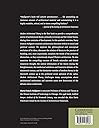
Modern Architectural Theory: A Historical Survey, 1673–1968 [Mallgrave, Harry Francis] on desertcart.com. *FREE* shipping on qualifying offers. Modern Architectural Theory: A Historical Survey, 1673–1968 Review: Architecture - Gift for architect. Enjoyed. Review: The New Gold Standard - Mallgrave has integrated and consolidated an enormous body of literature, thought and imagery on the emergence of "modern" architectural theory. If you want to know WHY our cities and buildings look the way they do, it is because architects explored their intentions in theoretical exercises. Mallgrave offers the most compelling depiction of the changing fortunes of these intentions in this magisterial survey. The scope and sweep of his effort is breathtaking, and the story is FINALLY being told without the pedantic hectoring of advocate-historians like Pevsner and Geidion and their minions. Mallgrave's insight and wit are in evidence upon each an every page. This is an epochal study and worthy of a major academic award. Mallgrave has written the first comprehensive treatment on a subject that has been explored without much nuance for nearly a century and a half. He deserves our unending gratitude.
| Best Sellers Rank | #2,940,806 in Books ( See Top 100 in Books ) #985 in Architectural Criticism #1,502 in Architecture (Books) #3,210 in Computer Programming Languages |
| Customer Reviews | 4.5 4.5 out of 5 stars (11) |
| Dimensions | 8.5 x 1.18 x 11 inches |
| Edition | 1st |
| ISBN-10 | 0521130484 |
| ISBN-13 | 978-0521130486 |
| Item Weight | 3.75 pounds |
| Language | English |
| Print length | 522 pages |
| Publication date | July 13, 2009 |
| Publisher | Cambridge University Press |
R**R
Architecture
Gift for architect. Enjoyed.
J**Y
The New Gold Standard
Mallgrave has integrated and consolidated an enormous body of literature, thought and imagery on the emergence of "modern" architectural theory. If you want to know WHY our cities and buildings look the way they do, it is because architects explored their intentions in theoretical exercises. Mallgrave offers the most compelling depiction of the changing fortunes of these intentions in this magisterial survey. The scope and sweep of his effort is breathtaking, and the story is FINALLY being told without the pedantic hectoring of advocate-historians like Pevsner and Geidion and their minions. Mallgrave's insight and wit are in evidence upon each an every page. This is an epochal study and worthy of a major academic award. Mallgrave has written the first comprehensive treatment on a subject that has been explored without much nuance for nearly a century and a half. He deserves our unending gratitude.
A**E
Fantastic survey not only is the breadth and depth of analysis but also in its structure. Chapters and sub-headings are systematically ordered according to locations, architects, movements and time period making it easy to read and consult. As the author very clearly states in the introduction, the history of architecture is not the same as the history of architectural practice. I was initially sceptical of the additional value a theoretical survey would provide over the excellent surveys of Curtis and Frampton (which touch on the main theoretical works) but I was pleasantly surprised. Not only does it add value not in providing additional understanding and knowledge of theoretical discourse, you also get a sense of the aspirations, personalities and relationships of architects. More important however are the relationships the author draws between the theoretical discourse in other disciplines perspective (social, philosophical, political, technological, artistic, etc) and the theoretical discourse in architecture. It gives a detailed 'big picture' that you don’t get in other books. The writing is academic in tone (although there are a few amusing anecdotes). The photographs are B&W and medium quality.
L**Y
This was a while ago but just what I wanted
D**Y
This is the book every PhD student and researcher in architectural history should have. A weighty tome indeed and an excellent reference work for checking up on those factoids just outside your thesis' area. But dry as a corpse's dust.
Trustpilot
1 month ago
1 month ago