We remain fully operational. Our teams are working around the clock to ensure your deliveries continue safely.

DOWNLOAD THE APP


Copyright © 2025 Desertcart Holdings Limited
DOWNLOAD THE APP






Buy anything from 5,000+ international stores. One checkout price. No surprise fees. Join 2M+ shoppers on Desertcart.
Desertcart purchases this item on your behalf and handles shipping, customs, and support to Thailand.
🍹 Chill in Style, Lock in Freshness!
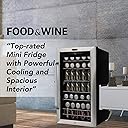
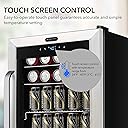
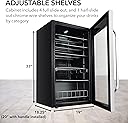
The Whynter BR-1211DS is a 3.4 cu. ft. freestanding beverage refrigerator that cools up to 136 cans with precision digital controls (34ºF–43ºF). Featuring a double-pane glass door with UV protection, stainless steel trim, and a built-in lock, it combines security with sleek design. Its quiet compressor and adjustable shelving make it perfect for offices, dorms, or entertainment spaces seeking efficient, stylish drink storage.


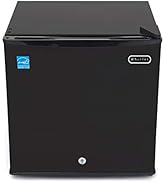





| ASIN | B076S9XLF5 |
| Additional Features | Touch Control |
| Adjustable Temperature Control | Yes |
| Annual Energy Consumption | 85 Watts |
| BEE Star Rating | No Energy Star |
| Best Sellers Rank | #78,991 in Industrial & Scientific ( See Top 100 in Industrial & Scientific ) #102 in Beverage Refrigerators |
| Brand Name | Whynter |
| Capacity | 3.4 Cubic Feet |
| Color | Stainless Steel |
| Compressor Type | rotary_scroll |
| Configuration | Freezerless |
| Cooling Method | Compressor |
| Customer Reviews | 3.7 3.7 out of 5 stars (236) |
| Defrost System Type | Automatic |
| Door Material Type | Stainless Steel |
| Door Orientation | Left |
| Finish Types | stainless steel |
| Form Factor | Stand Alone |
| Global Trade Identification Number | 00852749006337 |
| Has Convertible Freezer | No |
| Included Components | Refrigerator |
| Installation Type | Freestanding |
| Inverter Type | Has Inverter |
| Is Customizable? | No |
| Is Electric | Yes |
| Is Product Cordless | No |
| Item Dimensions D x W x H | 20"D x 19"W x 33"H |
| Item Type Name | Beverage Refrigerator with Double-Layer Glass Door, 136-Can Drink Mini Fridge with Lock & Digital Control, BR-1211DS |
| Item Weight | 61 Pounds |
| Lock Type | Key |
| Manufacturer | Whynter |
| Manufacturer Part Number | BR-1211DS |
| Model Name | Beverage Refrigerator with Double-Layer Glass Door |
| Model Number | BR-1211DS |
| Number Of Shelves | 5 |
| Number of Doors | 1 |
| Number of Sections | 1 |
| Pattern | Beverage Refrigerator |
| Power Plug Type | Type B - 3 pin (North American) |
| Refrigerant | R-600A |
| Refrigerator Net Capacity | 3.4 Cubic Feet |
| Shelf Type | Wire |
| Size | 136 Can |
| Specification Met | ETL |
| UPC | 852749006337 |
| Unit Count | 1.0 Count |
| Voltage | 115 Volts |
| Warranty Description | One Year Limited Manufacturer Warranty |
A**M
For those who want to dry age beef
After extensive online research trying to find the perfect beverage refrigerator for dry aging beef, this one appears to work really well. Most glass door beverage refrigerators do not get cold enough or hold temperature steady enough to dry-age beef successfully. This one will hold temperature in the low-to-mid 30s, with the exception of its defrost cycle that it runs automatically every few days. During the defrost cycle, I have not seen the temperature rise above 40°. You do need to add a thermoworks refrigerator / freezer thermometer with a wired probe so you can accurately measure the temperature, and record highs and lows. I think the best temperature range for dry aging beef seems to be between 34 and 36 degrees average temperature. I recommend placing the thermoworks temperature probe into a glass of water covered with cling wrap so you don't get rapid fluctuations in temperature, but rather track the temperature of something with more thermal mass, much like having a thermometer probe in the center of your dry aging meat. Tracking air temperature in a refrigerator will not give you as accurate of a picture of the average temperature. The thermoworks model that I'm speaking of can be purchased on their website for approximately $25, and the probe wire is so thin / low profile that it can be ran under the door seal without creating an air gap. This refrigerator can be a bit noisy when the compressor is running, but I was able to quiet it down by finding one of the copper cooling lines near the compressor that when firmly gripped resulted in decreased noise. I wrapped this line with a large mass of plumber's putty, which acts as a nice noise damper. When you are dry aging meat, and I've been able to fit approximately 50 lb of bone in ribeye on the provided racks, there is a substantial amount of moisture that you are removing from the meat, which condenses and freezes on the cooling mat in the back of the refrigerator. This refrigerator does an excellent job of defrosting itself every couple of days, and the water from the melted ice runs through a tiny drain into a reservoir that sits immediately above the compressor. I modified mine with a small length of flexible clear plastic tubing, cut a notch in the side of the reservoir's built in corner overflow spout so that the water level would start spilling over earlier, and glued the plastic tubing into the bottom of the overflow spout and ran the other end into a small plastic container to catch the excess water. It works like a charm. I am certain that if you don't do this modification, and dry age substantial amounts of meat, the amount of ice that will form on the cooling mat and ultimately melt during the defrost cycle will overwhelm the small reservoir, and you will end up with water on the floor. It is an easily fixed problem, but I don't consider it a flaw given that I'm using this fridge for something other than its intended purpose. If you were just refrigerating beverages, there would be nowhere near as much ice build up, and the reservoir would suffice. The other necessary modification is to add a small electronics / PC cooling fan that sits on the back of the top rack and runs continuously to provide air circulation and appropriate drying of the meat. All I did was find one on Amazon for about $25, cut the power cord near the plug end, and ran the power cord through the small defrost drain in the back of the fridge, which exits immediately above the reservoir previously mentioned. The wire runs laterally over the side of this reservoir, and does not interfere with the function of the drain. I then simply rewired the plug to the cord once it was passed through the drain, using wire nuts and electrical tape. This fan runs continuously and provides the necessary air movement for dry aging. While the refrigerator does have a built-in fan near the light, I don't believe it runs continuously, and likely does not provide enough airflow on its own. Considering that the most basic purpose-built dry aging fridges cost around $1500, this is a much more cost effective method for small scale home use. I personally do not think that built in humidity control or a UV light will make any substantial difference in the quality of dry aged meat in the 30 to 60 day range, and are mainly gimmicks that are used to make you think that the purpose built units are worth exorbitant prices. Salt blocks are also essentially pointless, but they won't hurt, so go for it if it makes you feel better. I am a physician with a background in microbiology before I went to medical school, so I'm not just making uninformed statements. Dry aging can be done successfully at home with great results. Buy choice or prime grade ribeye primals, preferably bone-in with lots of remaining outer fat, at least 10 pounds each, place directly on the wire racks in this dedicated fridge, monitor the temperature, provide constant air flow, and be patient. 45 days is the sweet spot. Anything less than 30 days will not be worth your time. Over 60 gets too strong of a flavor for most people. Trim off the dried outer pellicle and enjoy. Cheers!
L**I
UPDATE: Broken in just over 2 years of use. Cannot recommend this product. Read on.
Full disclosure: I'm a mechanical engineer and I used to work at a refrigerator compressor manufacturing plant around 16 years ago. That doesn't necessarily make me an expert, but I won't address anything I don't have enough understanding of here. UPDATE: Refrigerator stopped working after just over 2 years of use. I cannot in good conscience recommend this unit for 3 reasons: 1) it lasted only just over 2 years; 2) it's very energy inefficient; and 3) ice accumulates heavily at the evaporator even when the door is opened maybe 2-3 times a week. I came in this morning to find water pooled around the unit and the internal temperature at over 50F. My hardwood floor is now ruined because of that. Everything seems to work, including the relay turns the compressor on (I can hear the click), but the compressor itself won't turn on. In my original review I noted the low-quality compressor, and I have been proven right, unfortunately. Even though I'm EPA608-certified, meaning I could replace this compressor myself and get the unit to work again, it is just not cost-effective, so it's unfortunately trash now. Regarding the energy efficiency piece, the problem with this unit is that the condenser coil (the part that discards the heat to the outside) is housed around the unit. That makes insulation very challenging, especially for such thin walls. I have individual measurements of my house power circuits, and can confirm this unit uses far more energy than my kitchen refrigerator or the chest freezer that sits in the garage. Then there's the ice piece... I noted in my original review that I expected some ice to form over time, but it's quite a lot more than I anticipated. I had to defrost it twice a year, and I only opened its door to get a beverage 2, maybe 3 times per week. I favored form over function, and learned a lesson. I'll now either buy an actual mini-refrigerator (without a see-through door), or spend more to buy an appliance from a reputable manufacturer. This is my original review: Construction/quality: The fridge itself is good. The handle is firm once installed, and I didn't notice any wobbles or anything unusual after I put it on the floor and adjusted its feet. Insulation could be a bit better, as you're able to notice the top and sides are colder after the unit has been on for a few hours. This is, however, a common difficulty with small refrigerators: to improve insulation you need to make the walls thicker, either losing internal space or making the unit larger, so there's an optimal point between insulation/wall thickness and heat losses. If you look at your kitchen refrigerator you'll notice its walls are quite thicker. Finally, the manual mentions that the control panel would lock itself after 2 minutes of inactivity, after which you'd need to press both temperature up & down buttons for 5 seconds to unlock it - well, that hasn't happened, and I don't know if there's a way to lock the controls (which are on the outside of the glass door), so I guess I'll just have to hope my kids don't mess around with it... Temperature: When the unit was plugged in for the first time it didn't take long for it to reach its lowest setpoint (34F) empty. A few hours after that, I loaded it with around 45 soda cans at room temperature, and it worked overnight and the good part of the following morning to cool those down to its lowest setpoint, which is expected given that it uses a small compressor. If you want it to work faster it's definitely best to put cans in the kitchen fridge overnight before moving them to this unit already cold. Another point worth mentioning is that the condenser (which is what dumps the heat from inside the fridge into the room it's located in) sits just beneath the external side walls (noticeable because those get warm when the compressor is running), so if you mount the unit where air flow is restricted, it will not operate as efficiently or get as cold as it's designed to. I've had some time to run a couple of thermometers in the unit. Unfortunately, their accuracy is abysmal and I cannot trust the actual temperature they're displaying. One is showing 12F right now, which is simply absurd, the other is much closer to reality - more on that below. However, for measuring the temperature variation, this second one is good enough. It's measuring a 6F min/max variation over the course of several days. Honestly, that's not bad for a beverage refrigerator. It doesn't mean the items you put in there will have their actual temperature vary by that much, it just means that the air inside the fridge is varying 6F - and take that with a grain of salt also, because there are several other variables to be taken into account here. Remember that it takes a while to cool something down, but it also takes a while for it to warm back up again, so you can expect the temperature of, say, a soda can to vary by approximately 2F. That's quite good! To check how cold my beverages actually got, I allowed everything to stabilize over the course of a few days, and then I took a water bottle, opened it, and measured the temperature using a meat thermometer that had just been calibrated with ice water - meaning it can measure things at or close to 32F very well. It measured 34F. Noise: I saw some reviewers complaining about noise, so I was concerned about that. Noise is subjective, so your mileage may vary. I have it in my office about 5 feet away from me, and while it doesn't bother me during my work day, I would definitely not have this unit in or near my bedroom at night, because it would bother me a lot. For reference, my bedroom sits next to the kitchen, and I don't hear my kitchen fridge because that one is actually silent. One thing to note is that I saw some reviewers mention that the internal fan made noise, but mine is truly silent; it seems to operate all the time and I don't hear it at all. The compressor and associated coolant flow are the main sources of noise, and if you want those to be more silent while also having a fridge that gets very close to 34F, you need to look for a name brand and pay maybe 3 times more than this, while still having the risk that it'll use a similar (likely cheap) compressor. Drip tray: The only issue I had so far is that the drip tray came broken and completely loose from the unit, which is why I initially rated the unit with 3 stars, but later changed it to 5 once they sent me a new drip tray. Further below I'll describe what a drip tray is, but for now what matters is that I opened a support ticket directly with Whynter using their website and they sent me a new drip tray. Interestingly, the new drip tray had a different shape, which seemed to match my compressor a bit better...so perhaps the original (broken) drip tray was an incorrect part? I don't know. It's fixed, they sent me a new drip tray fast, and that's what matters. Here's what a drip tray is: remember when you had to periodically remove all the stuff from your refrigerator and allow the internal evaporator (the thing at the back with all the tubes) to defrost? Well, a lot of people today don't even know that this used to be a thing because they came up with "frost-free" refrigerators. What almost no one knows, however, is that frost-free refrigerators still accumulate ice on their evaporators (which are now hidden away in large refrigerators), but there's normally a mechanism to melt the ice every so often, which will then drip out of the fridge and onto the drip tray. This drip tray stays right on top of the compressor because it takes advantage of the fact that the compressor gets hot when it's running, so it allows the water to evaporate away quite fast. The automatic defrosting method varies a lot, from a dedicated heating element, to allowing the evaporator to get a bit warmer (or less cold) from time to time so that ice can melt away on its own, to not doing anything and allowing some ice to still form depending on the temperature setpoint. I don't know which method, if any, this unit uses, so I won't be surprised if I see some minor ice buildup over the next few months, because I'm running it at its lowest temperature setpoint. Easiest way to deal with that is to raise the temperature setpoint for a few days (i.e., when going on vacation), which won't be an issue for a beverage refrigerator. Well, that's all I had. Quite a long one, but I hope it helps someone.
T**S
Cold, gorgeous and full of beer!
Researched this for awhile. Looked at numerous units and settled on this one. Received this last Thursday. After reading about a lot of fridges getting damaged in transit, I was happy to see this was packed to the gills. Double boxed, corner braces and supports on all four sides. Perfect condition. Let it sit right side up for 24 hours just in case. Plugged it in, and it cooled down pretty quickly. Pretty flexible shelving situation. (I'm only using 3 since I want more room for growlers.) I have various sizes in there to show the sizes possible. It's deep enough for 5 bottles. The racks are designed with the metal shelving close together, so nothing falls over. In addition to the racks pictured, we have two more full sized shelves, and one half shelf that goes on the bottom to form a full shelf with that little black ledge. Exterior is a glossy black finish, door is stainless steel. Temperature is very consistent. Love the control panel. Interior light works well, but I haven't packed it full yet, so I assume it'll be tricky when it's full. The fan runs constantly which is great, but could be noisy if it's in a room like a home theatre. We have it in our video game room and it's no louder than a regular fridge. Fan runs around 43-45 dB (listed as babbling brook or computer online) When the compressor kicks in, it bumps it up to around 55 dB. Again, noticeable for sure, but not obnoxious. Overall, I'm very happy. Keeps our drinks cold, looks classy. Have wanted one for awhile, and it was worth the wait and slightly higher cost.
J**O
No enfría como yo necesitaba. Marca 1 o 2 grados centígrados pero en realidad no están bien frías las latas
Trustpilot
5 days ago
3 weeks ago