We remain fully operational. Our teams are working around the clock to ensure your deliveries continue safely.

DOWNLOAD THE APP


Customer Services
Copyright © 2025 Desertcart Holdings Limited
DOWNLOAD THE APP
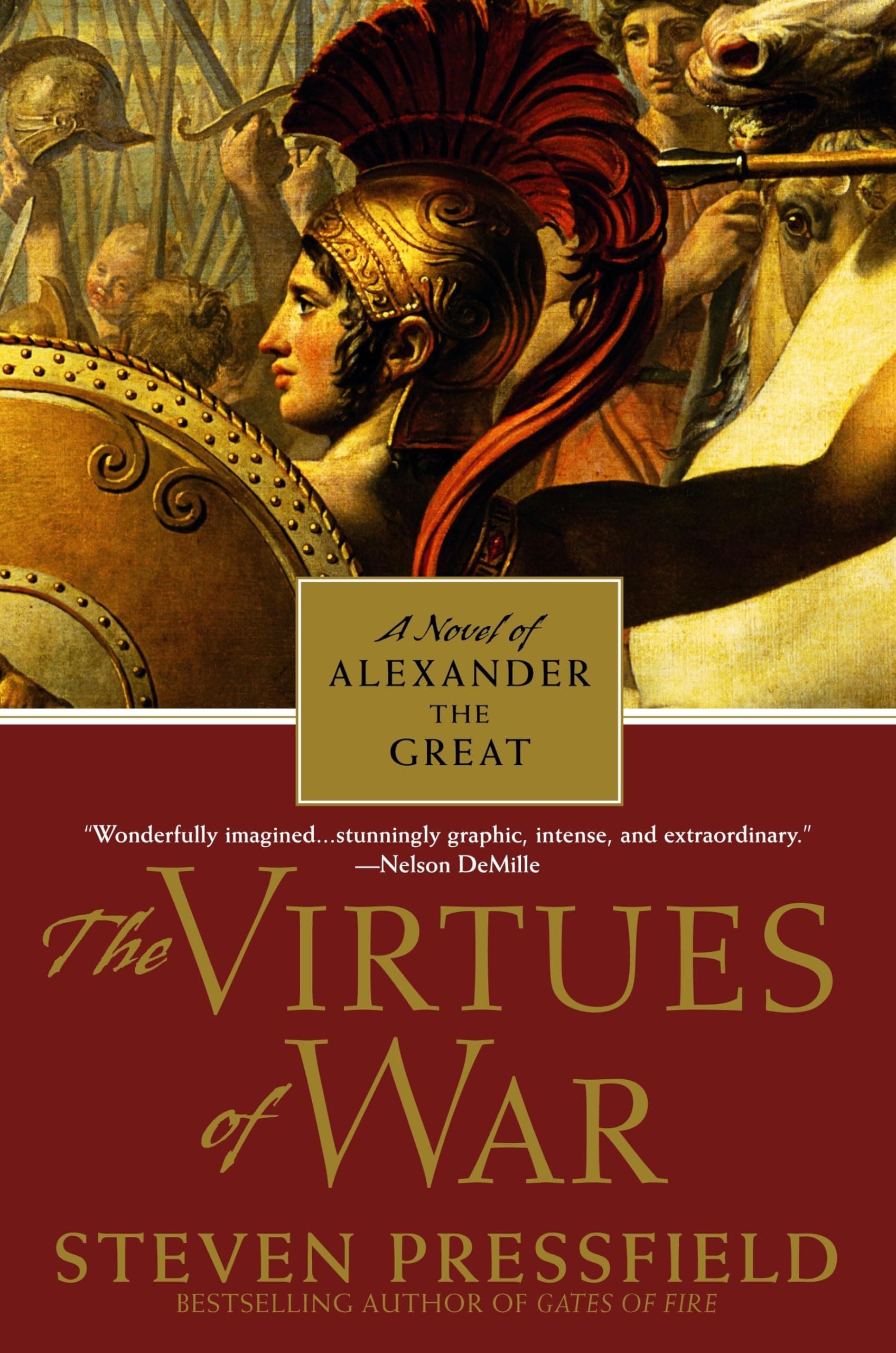
desertcart.com: The Virtues of War: A Novel of Alexander the Great: 9780553382051: Pressfield, Steven: Books Review: A Staple for the library of Warriors ⚔️ - "The Virtues of War" written in the first-person voice of Alexander the Great, provides an engaging perspective on his journey from ascending the throne of Macedon to conquering empires before his untimely death at the age of thirty-three. Steven Pressfield's deep understanding of warfare, leadership, and the complexities of human emotion shines through the pages of this historical fiction. Drawing from his own Marine Corps background, Pressfield masterfully delves into the motivations that drive soldiers. The notion that soldiers are bound by their love of glory and their will to fight resonates deeply with anyone who has experienced the call of arms. The training scene with Telamon and the wolf pack metaphor powerfully illustrate the essence of being a soldier, capturing the sense of duty, sacrifice, and unity that soldiers share. Moreover, the novel does not shy away from the brutal realities of war. The description of battles, the blood, heat, and terror of the battlefield, and the deep emotional impact on both soldiers and leaders reflect Pressfield's profound knowledge of warfare. The book also explores the moral complexities of warfare, the understanding that the enemy is made up of men with families and dreams, forcing us to confront the grim truth behind the glory. As a Marine who values the principles of honor, discipline, and self-command, I appreciated the emphasis on virtue and leadership showcased through the character of Memnon. His mastery of strategy, understanding of politics, and unwavering commitment to his men serve as a poignant example of a well-rounded leader. "The Virtues of War" is not just a novel; it's a journey into the heart and mind of a soldier-king. Pressfield's brilliant writing brings history to life, transporting readers to ancient battlefields and into the psyche of a leader who dared to reshape the world. This book is a must-read for anyone interested in military history, leadership, and the complex emotions that drive soldiers to achieve greatness. Just as Alexander's legacy lives on, so too will the impact of this exceptional literary work. Review: The Ultimate, Intimate Company of Men - Dear readers don't forget that this book is a novel, historical fiction, and so, to argue about the pros and cons of anything undocumented about Alexander the Great some 2,300 years ago is a bit absurd. But, let's delve into the absurd anyway. It's almost never disputed today that Alexander was indisputably bi-sexual and perhaps 100% homosexual. He has become a modern day gay icon. Alexander was a man who spent his entire (short) life day-in-day-out exclusively in the intimate company of men. Yet, Steven Pressfield's "Virtues of War" skirts Alexander's sexual identity with unwelcome obliviousness, except for blunt suggestions and veiled images of intimacy between Alexander and Hephaestion - and other younger men under his careful tutelage. Alexander frequently comments about the astonishing beauty of young men. Pressfield's indirect acknowledgement of Alexander's' homosexuality is this: Hephaestion is mentioned in Alexander's own voice by name and deed approximately 9,000 times in this 350 page novel, in contrast to the scant 200 or 300 words devoted to Alexander's relationship with any woman, including his mother and the 2 women he "married." What price would Pressfield have paid for actual acknowledgement of what everyone actually now understands? No price at all. In fact some good old m2m sex would have given a very welcome and healthy jolt to the painfully over-explained military tactics pages (and pages and pages) to say nothing of the boring lists (and lists and lists) of generals, captains and so on. Worse yet, Pressfield cheats us when we do not hear -- in Alexander's own voice -- his overwhelming grief and loss when Hephaestion dies, or hear Alexander's own agony and confessions as death overtook him. Why let another narrator in an "epilogue" tell us "about" those crucial moments that would have honestly portrayed the inner Alexander? The terribly disappointing ending of the book is a huge flaw. I really did want to read Alexander's own words, not Itanes, when Hephestion dies, and I really wanted to hear Alexander confess on his death bed that he was homosexual. What a let-down at the end! Yuck! Two deaths define and punctuate Alexander's life. First was Bucephalus' death - his beloved massive 21-year old horse. Second was Hephaestion's, whose demise literally devastated Alexander, causing a life-changing upheaval and loss, something from which Alexander never recovered. Page 341, "yet, from the death of Hephaestion, he was never the same man." Why? His spouse was dead. Interestingly, the death of his father is almost inconsequential. But make no mistake. This is an epic novel of epic scope about the epic star-power character of all time. Pressfield shows Alexander as a fascinatingly powerful man, an immense historical figure, the subject of countless literary works. This one - Alexander as the central character in a novel - is excellent. However, there is no denouement, no final crisis, no real mystery, no wonderment, no surprise, and no suspense. Just the end -- before he dies! Alexander's "daimon," the mystical magical will to fight, his internal warrior persona, his soul and driving conscience and life force, seems never to fail him until near the end when Telemon tells Alexander, Page 312, "The daimon is inhuman." Indeed it is possible, Pressfield suggests, that the internal Alexander was evil. Such are the things of legends. The book's structure is excellent with Alexander narrating his own story in first person - his fictional voice, as he instructs Itanes in the virtues of war. Thus, we are not spared any detail of Alexander's internal musings, his conflicts and motivations (except noted above about his own defining sexuality). The horrors of war back then are spread before us in great detail by Alexander himself. The reader is awe-struck by the logistical accomplishments involved in moving and sustaining an army of hundreds of thousands of men through harsh territory over 8 years and 11,250 miles. Alexander is brutal and unyielding, brilliant and belligerent, and almost always --with rare exceptions even with all his apparent insight -- fully able, easily and completely, to blame others for his own mistakes, murders and failures -- or the unanticipated consequences of his victories. Page 188, "My envoys sought to make the leading men of Tyre and Gaza see reason; I dispatched letters beneath my own hand. I pledged to make their cities richer, freer, safer. Still they resisted. They compelled me to make examples of them." Thus, he drove his men to the "end of the known world" to further his mega maniacal ambitions, for better or worse. His ability to motivate men to kill for him is astonishing. To have achieved a readable novel, given a lack of plot or true story line, Pressfield gives us a good read. Not great, but well worth your time, if you are a Greekophile. Was Alexander "great?" Who knows and who cares!! He's always a good read!


| Best Sellers Rank | #100,866 in Books ( See Top 100 in Books ) #226 in Military Historical Fiction #760 in War & Military Action Fiction (Books) #1,221 in War Fiction (Books) |
| Customer Reviews | 4.6 4.6 out of 5 stars (1,426) |
| Dimensions | 5.2 x 0.79 x 8.11 inches |
| ISBN-10 | 0553382055 |
| ISBN-13 | 978-0553382051 |
| Item Weight | 10.8 ounces |
| Language | English |
| Print length | 368 pages |
| Publication date | September 27, 2005 |
| Publisher | Bantam |
S**Z
A Staple for the library of Warriors ⚔️
"The Virtues of War" written in the first-person voice of Alexander the Great, provides an engaging perspective on his journey from ascending the throne of Macedon to conquering empires before his untimely death at the age of thirty-three. Steven Pressfield's deep understanding of warfare, leadership, and the complexities of human emotion shines through the pages of this historical fiction. Drawing from his own Marine Corps background, Pressfield masterfully delves into the motivations that drive soldiers. The notion that soldiers are bound by their love of glory and their will to fight resonates deeply with anyone who has experienced the call of arms. The training scene with Telamon and the wolf pack metaphor powerfully illustrate the essence of being a soldier, capturing the sense of duty, sacrifice, and unity that soldiers share. Moreover, the novel does not shy away from the brutal realities of war. The description of battles, the blood, heat, and terror of the battlefield, and the deep emotional impact on both soldiers and leaders reflect Pressfield's profound knowledge of warfare. The book also explores the moral complexities of warfare, the understanding that the enemy is made up of men with families and dreams, forcing us to confront the grim truth behind the glory. As a Marine who values the principles of honor, discipline, and self-command, I appreciated the emphasis on virtue and leadership showcased through the character of Memnon. His mastery of strategy, understanding of politics, and unwavering commitment to his men serve as a poignant example of a well-rounded leader. "The Virtues of War" is not just a novel; it's a journey into the heart and mind of a soldier-king. Pressfield's brilliant writing brings history to life, transporting readers to ancient battlefields and into the psyche of a leader who dared to reshape the world. This book is a must-read for anyone interested in military history, leadership, and the complex emotions that drive soldiers to achieve greatness. Just as Alexander's legacy lives on, so too will the impact of this exceptional literary work.
D**D
The Ultimate, Intimate Company of Men
Dear readers don't forget that this book is a novel, historical fiction, and so, to argue about the pros and cons of anything undocumented about Alexander the Great some 2,300 years ago is a bit absurd. But, let's delve into the absurd anyway. It's almost never disputed today that Alexander was indisputably bi-sexual and perhaps 100% homosexual. He has become a modern day gay icon. Alexander was a man who spent his entire (short) life day-in-day-out exclusively in the intimate company of men. Yet, Steven Pressfield's "Virtues of War" skirts Alexander's sexual identity with unwelcome obliviousness, except for blunt suggestions and veiled images of intimacy between Alexander and Hephaestion - and other younger men under his careful tutelage. Alexander frequently comments about the astonishing beauty of young men. Pressfield's indirect acknowledgement of Alexander's' homosexuality is this: Hephaestion is mentioned in Alexander's own voice by name and deed approximately 9,000 times in this 350 page novel, in contrast to the scant 200 or 300 words devoted to Alexander's relationship with any woman, including his mother and the 2 women he "married." What price would Pressfield have paid for actual acknowledgement of what everyone actually now understands? No price at all. In fact some good old m2m sex would have given a very welcome and healthy jolt to the painfully over-explained military tactics pages (and pages and pages) to say nothing of the boring lists (and lists and lists) of generals, captains and so on. Worse yet, Pressfield cheats us when we do not hear -- in Alexander's own voice -- his overwhelming grief and loss when Hephaestion dies, or hear Alexander's own agony and confessions as death overtook him. Why let another narrator in an "epilogue" tell us "about" those crucial moments that would have honestly portrayed the inner Alexander? The terribly disappointing ending of the book is a huge flaw. I really did want to read Alexander's own words, not Itanes, when Hephestion dies, and I really wanted to hear Alexander confess on his death bed that he was homosexual. What a let-down at the end! Yuck! Two deaths define and punctuate Alexander's life. First was Bucephalus' death - his beloved massive 21-year old horse. Second was Hephaestion's, whose demise literally devastated Alexander, causing a life-changing upheaval and loss, something from which Alexander never recovered. Page 341, "yet, from the death of Hephaestion, he was never the same man." Why? His spouse was dead. Interestingly, the death of his father is almost inconsequential. But make no mistake. This is an epic novel of epic scope about the epic star-power character of all time. Pressfield shows Alexander as a fascinatingly powerful man, an immense historical figure, the subject of countless literary works. This one - Alexander as the central character in a novel - is excellent. However, there is no denouement, no final crisis, no real mystery, no wonderment, no surprise, and no suspense. Just the end -- before he dies! Alexander's "daimon," the mystical magical will to fight, his internal warrior persona, his soul and driving conscience and life force, seems never to fail him until near the end when Telemon tells Alexander, Page 312, "The daimon is inhuman." Indeed it is possible, Pressfield suggests, that the internal Alexander was evil. Such are the things of legends. The book's structure is excellent with Alexander narrating his own story in first person - his fictional voice, as he instructs Itanes in the virtues of war. Thus, we are not spared any detail of Alexander's internal musings, his conflicts and motivations (except noted above about his own defining sexuality). The horrors of war back then are spread before us in great detail by Alexander himself. The reader is awe-struck by the logistical accomplishments involved in moving and sustaining an army of hundreds of thousands of men through harsh territory over 8 years and 11,250 miles. Alexander is brutal and unyielding, brilliant and belligerent, and almost always --with rare exceptions even with all his apparent insight -- fully able, easily and completely, to blame others for his own mistakes, murders and failures -- or the unanticipated consequences of his victories. Page 188, "My envoys sought to make the leading men of Tyre and Gaza see reason; I dispatched letters beneath my own hand. I pledged to make their cities richer, freer, safer. Still they resisted. They compelled me to make examples of them." Thus, he drove his men to the "end of the known world" to further his mega maniacal ambitions, for better or worse. His ability to motivate men to kill for him is astonishing. To have achieved a readable novel, given a lack of plot or true story line, Pressfield gives us a good read. Not great, but well worth your time, if you are a Greekophile. Was Alexander "great?" Who knows and who cares!! He's always a good read!
K**R
Awesome book with great storytelling
C**N
Wie in seinen anderen Romanen auch (Antike: Gates of Fire: An Epic Novel of the Battle of Thermopylae , Zweiter Weltkrieg: Killing Rommel , Zukunft: The Profession: A Thriller ) erzählt Steven Pressfield vom Krieg. Obwohl Feldherr Alexander persönlich die Geschichte seiner Eroberungen schildert, spürt man beim Lesen Leben und Leiden seiner Soldaten. Die Schlachten auf dem Weg Alexanders nach Indien werden detailliert nachgezeichnet. Immer wieder geht Pressfield auf Strategien und Waffen ein, auf Taktiken und Abwägungen. Alexanders außergewöhnliche Fähigkeiten werden in Pressfields Buch in den größeren Rahmen ihrer Zeit gesetzt. Die technischen Weiterentwicklungen (etwa die lange Sarissa und die Rolle der Kavallerie) und die strategischen Winkelzüge auf dem Schlachtfeld werden mit so viel Enthusiasmus geschildert, dass man selbst als Pazifist interessiert am Ball bleibt. Die dreckigen, blutenden und sterbenden Infanteristen und Pferde geben der Geschichte eine Authentizität, die mit Sandalenfilmen von anno dazumal nichts gemein hat. Das Buch ist flüssig geschrieben. Die Kampfszenen fesseln. Auch wenn er damit nicht zufrieden wäre: Mehr als drei Sterne kann ich "Alexander" leider nicht geben. Abzüge erhält der Roman, weil er an vielen dann doch zu langatmig geraten ist. Für meinen Geschmack hätte Pressfield an der einen oder anderen Stelle eine Schlacht etwas kürzer und dafür einen Gedanken, ein Gespräch oder ein Motiv Alexanders etwas ausführlicher schildern können. Mir gefiel auch nicht, dass es keine Wechsel in der Perspektive gab, der mir einen Überblick über die Gesamtsituation hätte geben können. Trotzdem ist der Roman in einigen Bereichen ausgesprochen gelungen. Besonders an Kriegsführung, Strategie und antiken Waffengattungen Interessierte sollten unbedingt Pressfield lesen. Wer allerdings ein etwas breiteres Feld inklusive politischer Entwicklungen, persönlicher Geschichten und vielleicht Romantik möchte, ist da aufgehoben, wo Alexander Zeit seines Lebens hin wollte: woanders.
H**E
Sem muito o que dizer, quem não o conhece passe a conhecer. Tem uma palestra sobre A Guerra da Arte na Nova Acrópole.
S**N
A great rollicking story of one man's leadership, destiny and drive. The lifestyles and motivations of Alexander's era are brought to life with an enticing take on that moment in time.
R**E
I first read Mr Pressfield's book, Gates of Fire. This is written to the same high standard. This author can make the reader feel he writes having been present as an observer in Alexander's inner circle. It is nothing short of an excellent read. (One small point only would I quibble over and that was his description of Hephaestion as "a good friend", when a majority of academics can concur he was all of that and in all likelihood, far more). Further, the author's description of the passing of Hephaestion and his subsequent funeral was passed off in more or less one paragraph! If any one event affected Alexander in his life more than any other, it was the death of his "good friend". It devastated Alexander & diminished him. So deeply tragic and despite this young king's faults, only the coldest of hearts would not even now reach out to him in his grief and hurt and loneliness. Nonetheless, very highly recommended.
Trustpilot
1 month ago
4 days ago