
Buy anything from 5,000+ international stores. One checkout price. No surprise fees. Join 2M+ shoppers on Desertcart.
Desertcart purchases this item on your behalf and handles shipping, customs, and support to Thailand.
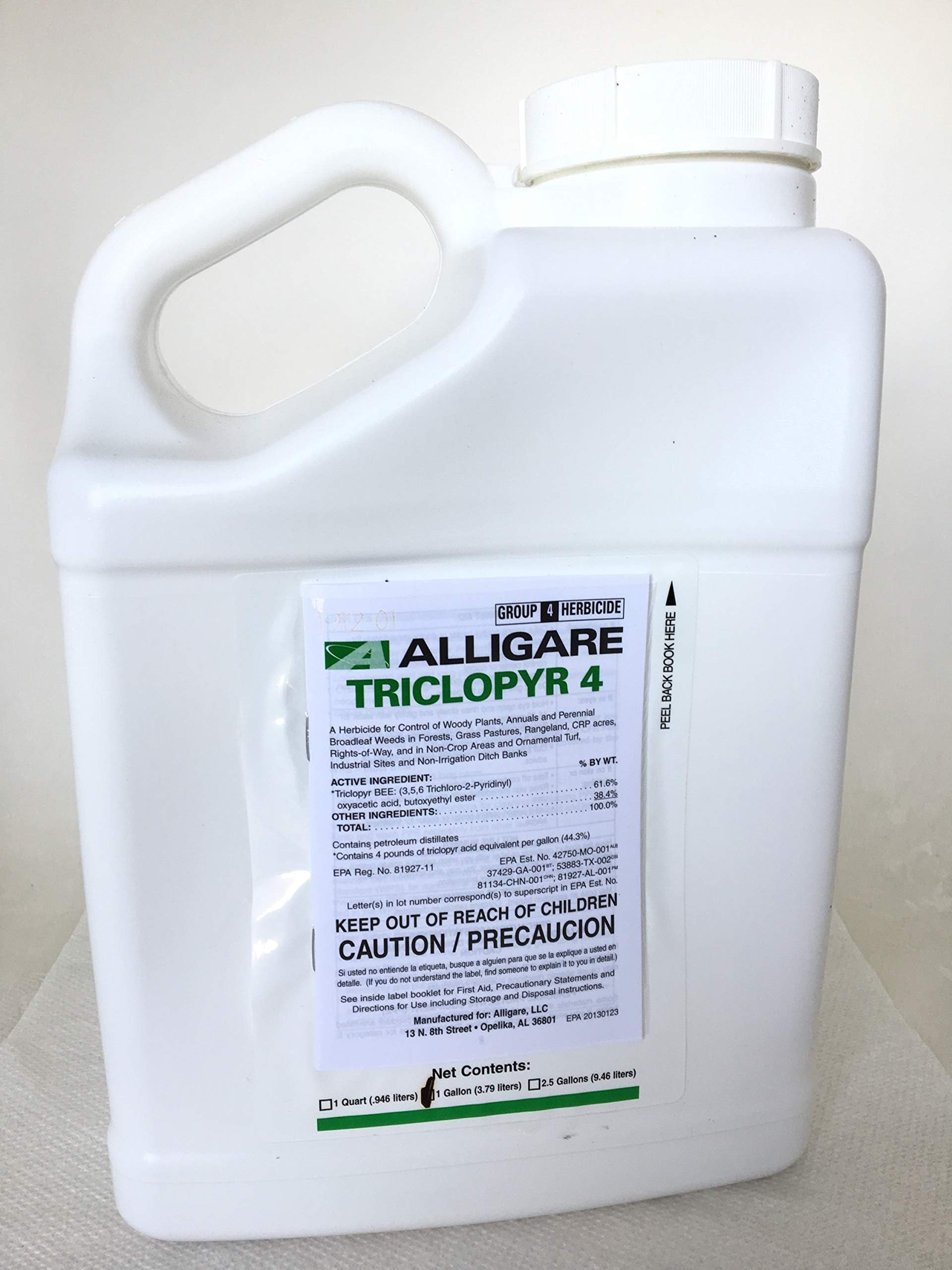
Review: Worked great for Lamium (Yellow Archangel) - We successfully used Agri Star Triclopyr 4E to control "Lamium" galeobdolon (yellow archangel). Mixing from concentrate is *significantly* less expensive than ready-mixed name brands. One gallon of the concentrate should make 64-128 gallons of mix. I followed this advice with very good results: https://www.desertcart.com/review/R1QWCWFWZY4Y0Y/ref=cm_cr_dp_title?ie=UTF8&ASIN=B004S70RK4&channel=detail-glance&nodeID=2972638011&store=lawn-garden 1 gallon of Tryclopyr 4 spray. Recipe and mix order: - ยฝ gallon of water - 1-2oz Agri Star Tryclopyr 4E - 16oz light oil (diesel or veggie oil), as surfactant. - 2-3oz Mark-It Blue, as spray indicator. - Water to fill 1 to gal. - 2oz dish soap as emulsifier (add last to avoid excessive foaming) - Mix well Our experience with Tryclopyr 4: - Extremely good results controlling lamium. ---- 1-2 days to see slight withering. ---- ~1 week to be convinced that treated plants are no longer thriving. ---- Brown and dead by 1 month. - Spot treatment was required afterwards for small patches missed on first round. - Used either light machine oil and veggie oil with good results. - Spray indicator โMark-it-blueโ was extremely useful. - I feel confident selectively spraying while avoiding nearby desirable plants (except around vine maples) - Used in both 1 gal handheld sprayer and 4 gal backpack sprayer. Note there are two formulations of Tryclopyr: Tryclopyr 3 (Amine) o Water soluble o Available up to ~44% concentrate o More prone to ground water contamination(?) o Not volatile o Tryclopyr 3 bottom line: Easier to use and distribute but more expensive. Tryclopyr 4 (Ester) o Oil soluble o Available up to ~61% concentrate o less prone to groundwater contamination(?) o more volatile โ vapor is harmful and can damage off-target plants o Tryclopyr 4 bottom line: Less expensive and possibly more effective but harder/more unpleasant to use. General advantages of Tryclopyr 3 or 4: - Selective: targets woody plants. - Does not harm grasses. - Short half-life as it is rapidly broken down in the environment. - Itโs been around for a long time with a lot of toxicity research data concluding:[Link deleted] ---- Nominally or practically non-toxic to humans, animals, birds, fish. ---- Itโs excreted by animal renal systems and does not accumulate in the food chain. Our observed disadvantages of Tryclopyr 4: - Slight oily smell present for weeks after application. - Vine maples show unintended damage near heavily sprayed areas. I suspect vine maples are highly susceptible to the volatile esterโs vapors. โTriclopyr ester is volatile and, therefore, can be absorbed by plants as a vapor, which can cause unwanted damageโ [Link deleted] Here is the best article I found which details an interesting experiment testing various herbicides for controlling lamium (Tryclopyr is the favorite). [Link deleted] Triclopyr fact sheet: [Link deleted] Review: Effective brush/tree herbicide at a an very good price point - This item Triclopyr 4E is a cost-effective solution to kill brush and other woody plants. It is identical to the name brand Garlon 4 Garlon 4 Ultra Triclopyr herbicide for fence rows and more except in a 1 gallon container rather than the typical wholesale size of 2.5 gallon. Triclopyr vs Glyphosate ----------------------- Triclopyr is the herbicide of choice for woody plants: shrubs, trees, black berry, Scotch Broom, and many other shrubs. Compare this with glyphosate, the active ingredient in RoundUp, that is very effective against leafy plants such as most weeds, but a poor choice for woody plants such as shrubs and trees. Safety ------ Tryclopyr is relatively safe to work with and for livestock, wild animals, and the ultimate runoff into streams and lakes. I know that Washington State uses triclopyr to control brush along the state roadways. You will, of course, want to read the label carefully and a web search will turn up many studies of the use of triclopyr. "Cut stump method" for killing stumps ------------------------------------ The commonly used RoundUp (Glyphosate) is not very ineffective for killing trees. Even a small sapling may take repeated soaking sessions with glyphosate to kill the plant. Triclopyr is very effective in killing trees. Full concentrated triclopyr (60%) will kill even a very large stump in one application using the "cut stump" method. After cutting the tree, apply full concentration (60%) triclopyr promptly to the freshly cut wood. You can paint it on with a small brush or use a squirt bottle. I wet the full surface of the fresh cut although a smaller amount might be sufficient. If you have an old stump that is re-sprouting, cut into the green wood and apply the triclopyr to the freshly cut green wood. If you apply the triclopyr promptly (not more than about 30 minutes after making the cut) the chemical will be best distributed into the stump and to some extent into the roots. "Relative cost" --------------- This particular item is one gallon of the highest concentration of triclopyr. It is a generic form of Garlon 4. Both are packaged at about 60% concentration, which is the maximum or "full" concentration available. The maximum concentration is by far the most economical. For this item my cost was $96.95 + $15 (shipping) = $111.95 for one gallon of maximum concentration. For property I own in Washington State I buy another generic product Element 4 (also 60%) at a farmers supply store. I buy 2.5 gallons for $180. So the cost per one gallon of full concentration is $72. So if you have a lot of land, the farmers supply store is your best choice. Triclopyr is the active ingredient in Ortho Poison Ivy & Brush Control. Locally 1 qt of Ortho concentrate is $15.73 with 8% concentration, so the price equivalent to one gallon of maximum concentration is approximately $472 vs $112 for Triclopyr 4E. Even worse, the premixed Ortho is $16.98 for one gallon with a concentration of only 0.7%. This gives a cost of approximately $1,455 vs $112 for Triclopyr 4E. So prices to get the same one gallon of maximum concentration of 60% are: Triclopyr 4E from desertcart, $ 112 Element 4 from farm supply store, $ 72 Garlon 4, $ 142 Ortho concentrate at local hardware store, $ 472 Ortho pre-mix at local hardware store, $1,455 So if you need a fair amount of triclopyr this item from desertcart is at a very good price point.
| ASIN | B004S70RK4 |
| Active Ingredients | Herbicide, triclopyr |
| Best Sellers Rank | #65,114 in Patio, Lawn & Garden ( See Top 100 in Patio, Lawn & Garden ) #320 in Weed Killers |
| Brand | ALLIGARE |
| Brand Name | ALLIGARE |
| Coverage | non-selective broad spectrum coverage |
| Customer Reviews | 4.7 out of 5 stars 328 Reviews |
| Item Form | Liquid |
| Item Weight | 4.45 Kilograms |
| Liquid Volume | 1 Gallons |
| Part Number | 000087 |
| Unit Count | 128 Fluid Ounces |
G**O
Worked great for Lamium (Yellow Archangel)
We successfully used Agri Star Triclopyr 4E to control "Lamium" galeobdolon (yellow archangel). Mixing from concentrate is *significantly* less expensive than ready-mixed name brands. One gallon of the concentrate should make 64-128 gallons of mix. I followed this advice with very good results: https://www.amazon.com/review/R1QWCWFWZY4Y0Y/ref=cm_cr_dp_title?ie=UTF8&ASIN=B004S70RK4&channel=detail-glance&nodeID=2972638011&store=lawn-garden 1 gallon of Tryclopyr 4 spray. Recipe and mix order: - ยฝ gallon of water - 1-2oz Agri Star Tryclopyr 4E - 16oz light oil (diesel or veggie oil), as surfactant. - 2-3oz Mark-It Blue, as spray indicator. - Water to fill 1 to gal. - 2oz dish soap as emulsifier (add last to avoid excessive foaming) - Mix well Our experience with Tryclopyr 4: - Extremely good results controlling lamium. ---- 1-2 days to see slight withering. ---- ~1 week to be convinced that treated plants are no longer thriving. ---- Brown and dead by 1 month. - Spot treatment was required afterwards for small patches missed on first round. - Used either light machine oil and veggie oil with good results. - Spray indicator โMark-it-blueโ was extremely useful. - I feel confident selectively spraying while avoiding nearby desirable plants (except around vine maples) - Used in both 1 gal handheld sprayer and 4 gal backpack sprayer. Note there are two formulations of Tryclopyr: Tryclopyr 3 (Amine) o Water soluble o Available up to ~44% concentrate o More prone to ground water contamination(?) o Not volatile o Tryclopyr 3 bottom line: Easier to use and distribute but more expensive. Tryclopyr 4 (Ester) o Oil soluble o Available up to ~61% concentrate o less prone to groundwater contamination(?) o more volatile โ vapor is harmful and can damage off-target plants o Tryclopyr 4 bottom line: Less expensive and possibly more effective but harder/more unpleasant to use. General advantages of Tryclopyr 3 or 4: - Selective: targets woody plants. - Does not harm grasses. - Short half-life as it is rapidly broken down in the environment. - Itโs been around for a long time with a lot of toxicity research data concluding:[Link deleted] ---- Nominally or practically non-toxic to humans, animals, birds, fish. ---- Itโs excreted by animal renal systems and does not accumulate in the food chain. Our observed disadvantages of Tryclopyr 4: - Slight oily smell present for weeks after application. - Vine maples show unintended damage near heavily sprayed areas. I suspect vine maples are highly susceptible to the volatile esterโs vapors. โTriclopyr ester is volatile and, therefore, can be absorbed by plants as a vapor, which can cause unwanted damageโ [Link deleted] Here is the best article I found which details an interesting experiment testing various herbicides for controlling lamium (Tryclopyr is the favorite). [Link deleted] Triclopyr fact sheet: [Link deleted]
G**E
Effective brush/tree herbicide at a an very good price point
This item Triclopyr 4E is a cost-effective solution to kill brush and other woody plants. It is identical to the name brand Garlon 4 Garlon 4 Ultra Triclopyr herbicide for fence rows and more except in a 1 gallon container rather than the typical wholesale size of 2.5 gallon. Triclopyr vs Glyphosate ----------------------- Triclopyr is the herbicide of choice for woody plants: shrubs, trees, black berry, Scotch Broom, and many other shrubs. Compare this with glyphosate, the active ingredient in RoundUp, that is very effective against leafy plants such as most weeds, but a poor choice for woody plants such as shrubs and trees. Safety ------ Tryclopyr is relatively safe to work with and for livestock, wild animals, and the ultimate runoff into streams and lakes. I know that Washington State uses triclopyr to control brush along the state roadways. You will, of course, want to read the label carefully and a web search will turn up many studies of the use of triclopyr. "Cut stump method" for killing stumps ------------------------------------ The commonly used RoundUp (Glyphosate) is not very ineffective for killing trees. Even a small sapling may take repeated soaking sessions with glyphosate to kill the plant. Triclopyr is very effective in killing trees. Full concentrated triclopyr (60%) will kill even a very large stump in one application using the "cut stump" method. After cutting the tree, apply full concentration (60%) triclopyr promptly to the freshly cut wood. You can paint it on with a small brush or use a squirt bottle. I wet the full surface of the fresh cut although a smaller amount might be sufficient. If you have an old stump that is re-sprouting, cut into the green wood and apply the triclopyr to the freshly cut green wood. If you apply the triclopyr promptly (not more than about 30 minutes after making the cut) the chemical will be best distributed into the stump and to some extent into the roots. "Relative cost" --------------- This particular item is one gallon of the highest concentration of triclopyr. It is a generic form of Garlon 4. Both are packaged at about 60% concentration, which is the maximum or "full" concentration available. The maximum concentration is by far the most economical. For this item my cost was $96.95 + $15 (shipping) = $111.95 for one gallon of maximum concentration. For property I own in Washington State I buy another generic product Element 4 (also 60%) at a farmers supply store. I buy 2.5 gallons for $180. So the cost per one gallon of full concentration is $72. So if you have a lot of land, the farmers supply store is your best choice. Triclopyr is the active ingredient in Ortho Poison Ivy & Brush Control. Locally 1 qt of Ortho concentrate is $15.73 with 8% concentration, so the price equivalent to one gallon of maximum concentration is approximately $472 vs $112 for Triclopyr 4E. Even worse, the premixed Ortho is $16.98 for one gallon with a concentration of only 0.7%. This gives a cost of approximately $1,455 vs $112 for Triclopyr 4E. So prices to get the same one gallon of maximum concentration of 60% are: Triclopyr 4E from Amazon, $ 112 Element 4 from farm supply store, $ 72 Garlon 4, $ 142 Ortho concentrate at local hardware store, $ 472 Ortho pre-mix at local hardware store, $1,455 So if you need a fair amount of triclopyr this item from Amazon is at a very good price point.
K**K
I'll start by saying that this is a great product! I'm very familiar with using the "name ...
I'll start by saying that this is a great product! I'm very familiar with using the "name brand" products, but for my home use, I wanted something I could get in a smaller size and a little cheaper. Triclopyr 4E is basically Garlon 4 with a different name (same amount of active ingredient). Herbicides can be confusing with so many options for different applications. This is an herbicide you can use for most applications, from spraying your standard small weeds, to larger tree and shrub species. Be careful though! This will kill everything, and if you're looking for something for your yard, there's better options. This is made for the more heavy-duty jobs. At home, I've used it on a variety of different species, including black locust, multiflora rose, blackberry, ailanthus (tree of heaven), staghorn sumac, and many others. It kills it all! The trick is knowing how to apply the herbicide for each species you're trying to get rid of. The directions tell a lot, but for the everyday person, it can be a lot to digest. I suggest you first look up the different ways herbicides can be used. Search basal bark treatment, foliar application, stump treatment, and hack and squirt. This will help you determine how to use the Triclopyr 4E. After that, if you know the type of plant you're trying to get rid of, search the best method of herbiciding it. As a general rule, small weeds and shrubs can usually be foliar sprayed successfully, but larger species usually need to be stump treated or hack-and-squirted to kill them. You also need to know that this is a highly concentrated product. You do not spray straight Triclopyr 4E on the plant. It must be mixed with water or another product. For foliar applications, you can get away with a 2% mixture (or 2.5oz Triclopyr 4E for every gallon of water). With this mixture, it helps to also have a product called a surfactant. Surfactant helps the water and herbicide mix well and adhere to the leaves of what you're spraying. The surfactant you buy will have a recommended amount to be added to each batch of herbicide/water mix. For stump treatments and hack-and-squirt, I use a 25% mixture. This works better by substituting water for basal oil, heating oil, or diesel fuel to mix with the herbicide (this helps the herbicide to adhere to the plant longer until it has time to work). You just use 1/4 gallon of herbicide for every gallon of total mixture. With the basal oil, diesel, or heating oil, surfactant is not required, as they work as the surfactant. I would definitely recommend this product!
G**H
Great product when mixed correctly.
Excellent herbicide. Next level strength compared to more common cheaper products. It can be used alone or mixed with other products. I have a large farm (500 acres) so I know about herbicides and weed control. One to two ounces per gallon of mix does a good job depending on what weeds you are controlling. I don't use it for tree killing as that is not my problem. Kills things like milkweed that other herbicides just weaken. Instructions are terrible as noted by other reviewers. Reading reviews it appears that many people out there are confused about what to mix with this product when applying. Here is the straight skinny from a farmer: When mixing up a gallon of spray you need to use a surfactant, which simply means it must have the ability to stick to the leaves you are spraying. Any light oil can be used. I use diesel. If you are concerned about spraying oil on your plant, use a vegetable oil that you buy in the supermarket. I use about 16 oz of oil per gallon of spray. As we all know, oil and water don't mix so you have to add an emulsifier. This is simply a soap that breaks down the surface tension of the oil so that it can mix with the water and form an emulsion. I use good old liquid dish washing soap. About 2 0z per gallon does the trick. This will keep the oil, water, and herbicide all mixed together while spraying. Otherwise the oil will simply float on top of the water. You should fill the sprayer half full of water, add the oil and herbicide, shake well and add the rest of the water. Now add the soap and shake very well to emulsify the oil and mix up the entire thing. BE CAREFUL, if you add the soap too soon all you will get are suds in the sprayer. When refilling and mixing the next load of spray, don't use a hose with nozzle to fill or you will again get all suds. Fill up a bucket with water and slowly pour it into the sprayer to fill to the correct level.
M**E
Worked well for me mixed 1:4 with vegetable oil
After struggling to interpret the label instructions, I tried mixing 1 part concentrate with 4 parts vegetable oil (from a Walmart gallon jug). I squirted in purple food coloring as a marker and went to work on recently cut brush (ceanothus, choke cherry, buckwheat) in eastern San Diego county. The results have been satisfying and I'm ordering a second gallon to be ready for fall. The food coloring doesn't stay mixed with the oil very well but I give the sprayer a shake from time to time. The oil did not spray at all well out of a left-over Roundup sprayer (too viscous); I recommend a small carry-around tank sprayer with wand (like from Ace Hardware) which works fine.
R**H
Killed what I hacked and squiryed
used it on trees of heaven around fields with good success, did a quarter acre trail in woods with success, next spring will use on 50 acres, mixed with 3 gallons diesel fuel just got to find die to tell what trees have been hit
W**.
Good seller and fast delivery
Good product to control Honey Locus Trees and Mesquite Trees, greenbrier vines.
R**N
good vendor
great delivery and great price
Trustpilot
3 weeks ago
1 month ago