We remain fully operational. Our teams are working around the clock to ensure your deliveries continue safely.

DOWNLOAD THE APP


Customer Services
Copyright © 2025 Desertcart Holdings Limited
DOWNLOAD THE APP
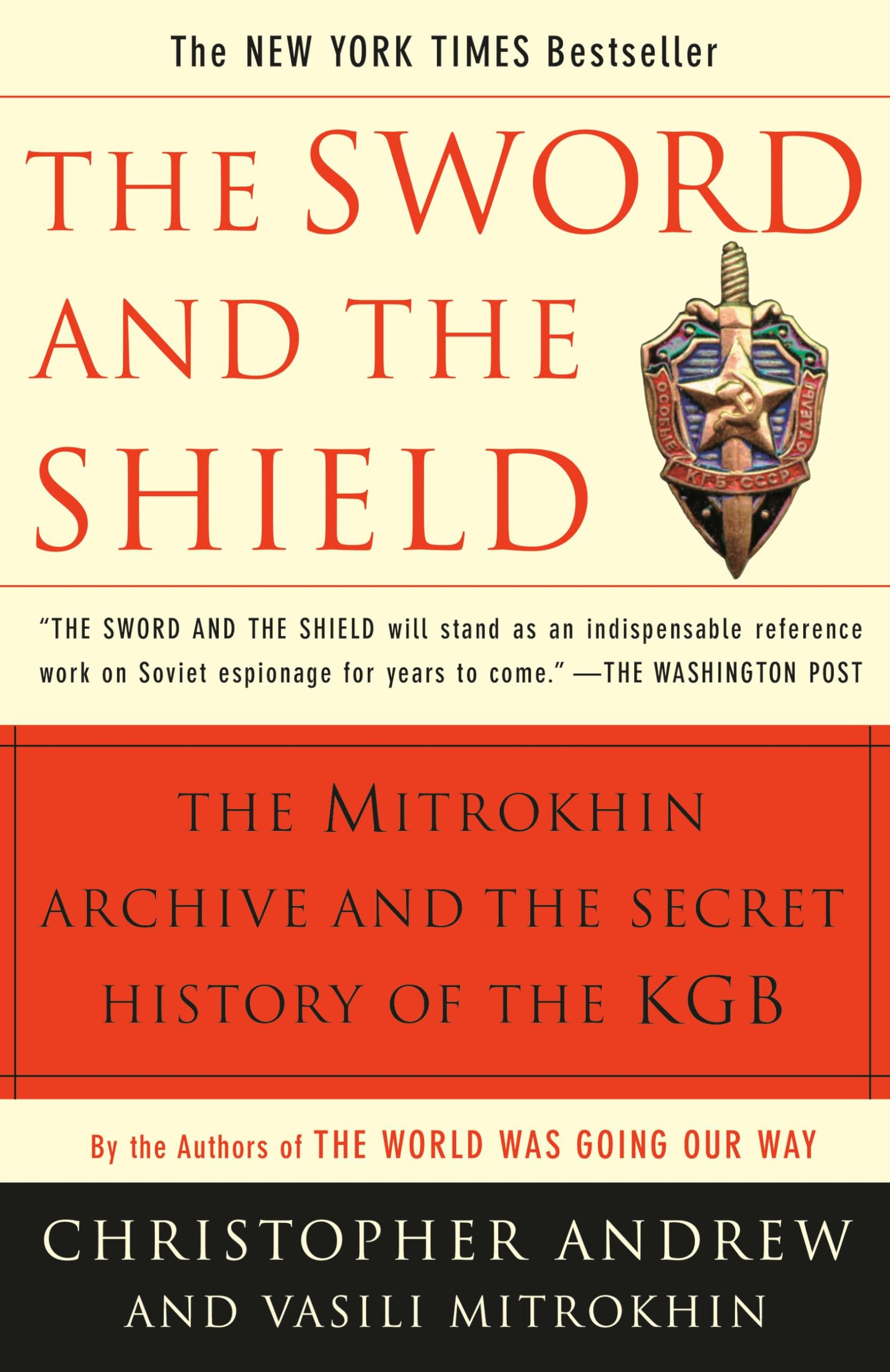
The Sword and the Shield: The Mitrokhin Archive and the Secret History of the KGB [Christopher Andrew, Vasili Mitrokhin] on desertcart.com. *FREE* shipping on qualifying offers. The Sword and the Shield: The Mitrokhin Archive and the Secret History of the KGB Review: Excellent review of the KGB - Excellent and eye-opening. Recommended. Review: A Tour de Force Reveal of the KGB - Christopher Andrew’s The Sword and the Shield provides an in-depth examination of Soviet espionage activities based on the Mitrokhin Archive, a treasure trove of classified KGB documents smuggled out of the USSR by Vasili Mitrokhin, a senior KGB archivist who defected to the West. This book is a seminal work in understanding the inner workings of Soviet intelligence during the Cold War, shedding light on the breadth of KGB operations and the ideological zeal that drove its agents. The title encapsulates the dual role of the KGB as both a "sword" of the Communist Party, actively engaging in espionage, subversion, and covert operations, and a "shield" protecting the Soviet regime from perceived internal and external threats. Through meticulous analysis, Andrew reveals the KGB’s successes and failures, offering a nuanced portrayal of its global reach and influence. The book begins with a historical overview of the KGB, rooted in the Bolshevik Revolution and the establishment of the Cheka, its predecessor. Andrew details the evolution of Soviet intelligence, highlighting how its mission was shaped by the paranoia of leaders like Lenin and Stalin. The KGB became an all-encompassing organization tasked with safeguarding the Soviet state while exporting Communist ideology worldwide. The Soviets were particularly successful in infiltrating the top secret Manhattan project and Los Alamos during development of the atomic bomb. The Soviets had stolen complete working plans for the A bomb even before USA dropped it on Japan. Mitrokhin’s documents expose the KGB's hierarchical structure and the significance of its foreign intelligence wing, the First Chief Directorate, responsible for espionage outside the USSR. Andrew demonstrates how the agency’s ideological fervor often blurred the lines between strategic statecraft and ideological adventurism. One of the book’s central themes is the KGB’s extensive infiltration of Western institutions, including governments, media, academia, and even intelligence agencies. Andrew highlights key cases, such as the Cambridge Five in Britain and Aldrich Ames in the United States, to illustrate how deeply Soviet operatives penetrated Western defenses. These successes were often offset by failures caused by defector revelations, mismanagement, over-reliance on ideological recruits, and just plain bumbling. Despite its ability to gather extensive intelligence, the Soviet agencies all too often failed to analyze and interpret it effectively, due to ideological biases in the agencies and in the state leadership much as Stalin earlier dismissed intelligence reports about Hitler's plans to invade Russia in WWII. Andrew also explores the KGB’s attempts to influence public opinion in Western democracies through active measures, including propaganda campaigns, disinformation, and covert funding of Communist parties and anti-establishment movements. It is eye-opening to realize the extent to which KGB has gone through the years to disseminate misinformation, fabrications and lies in attempting to discredit dissidents, western politicians, western values, capitalism and the United States. In fact, I suspect that many of the negative reviews of this book emanated from the FSB, the successor to the KBG. A substantial portion of The Sword and the Shield focuses on the KGB’s activities in the developing world. During the Cold War, the USSR sought to expand its influence in Africa, Asia, and Latin America by supporting revolutionary movements, propping up friendly regimes, and undermining Western allies. The book provides detailed accounts of Soviet involvement in hotspots such as Angola, Afghanistan, and Cuba, revealing both the scale and limitations of KGB operations in these regions. In addition to its foreign exploits, the KGB played a central role in maintaining domestic control within the USSR. Andrew details its campaigns against dissidents, religious groups, and nationalist movements, underscoring the regime’s dependence on surveillance and coercion. The Mitrokhin Archive exposes how the KGB’s pervasive network stifled opposition while creating an atmosphere of fear and mistrust among ordinary citizens. The book concludes by examining the decline of the KGB as the Soviet Union neared collapse. Internal corruption, political infighting, and the inefficacy of its operations in preventing systemic failure eroded the agency's power. Mitrokhin’s defection and the publication of his archive dealt a significant blow to the KGB’s reputation and provided invaluable insights into its methods. Andrew argues that the legacy of the KGB continues to influence Russian politics, particularly under the leadership of former KGB officer Vladimir Putin. The agency's historical impact on the global stage serves as a cautionary tale about the intersection of ideology, state power, and intelligence operations. In The Sword and the Shield, Andrew delivers a masterful synthesis of historical scholarship and espionage history, although there may be too much detail for every casual reader. For example, literally hundreds of spies are identified in the book, and in each case the author provides the various code names and controllers of every individual. By revealing the secrets of one of the most powerful intelligence agencies in history, the book offers a comprehensive perspective on the Cold War’s covert battles and their enduring consequences.
| ASIN | 0465003125 |
| Best Sellers Rank | #118,721 in Books ( See Top 100 in Books ) #24 in Espionage True Accounts #51 in Russian History (Books) #129 in Political Intelligence |
| Customer Reviews | 4.6 4.6 out of 5 stars (481) |
| Dimensions | 6.13 x 2.4 x 9.25 inches |
| Edition | First Edition |
| ISBN-10 | 9780465003129 |
| ISBN-13 | 978-0465003129 |
| Item Weight | 1.95 pounds |
| Language | English |
| Print length | 736 pages |
| Publication date | September 5, 1999 |
| Publisher | Basic Books |
R**T
Excellent review of the KGB
Excellent and eye-opening. Recommended.
K**8
A Tour de Force Reveal of the KGB
Christopher Andrew’s The Sword and the Shield provides an in-depth examination of Soviet espionage activities based on the Mitrokhin Archive, a treasure trove of classified KGB documents smuggled out of the USSR by Vasili Mitrokhin, a senior KGB archivist who defected to the West. This book is a seminal work in understanding the inner workings of Soviet intelligence during the Cold War, shedding light on the breadth of KGB operations and the ideological zeal that drove its agents. The title encapsulates the dual role of the KGB as both a "sword" of the Communist Party, actively engaging in espionage, subversion, and covert operations, and a "shield" protecting the Soviet regime from perceived internal and external threats. Through meticulous analysis, Andrew reveals the KGB’s successes and failures, offering a nuanced portrayal of its global reach and influence. The book begins with a historical overview of the KGB, rooted in the Bolshevik Revolution and the establishment of the Cheka, its predecessor. Andrew details the evolution of Soviet intelligence, highlighting how its mission was shaped by the paranoia of leaders like Lenin and Stalin. The KGB became an all-encompassing organization tasked with safeguarding the Soviet state while exporting Communist ideology worldwide. The Soviets were particularly successful in infiltrating the top secret Manhattan project and Los Alamos during development of the atomic bomb. The Soviets had stolen complete working plans for the A bomb even before USA dropped it on Japan. Mitrokhin’s documents expose the KGB's hierarchical structure and the significance of its foreign intelligence wing, the First Chief Directorate, responsible for espionage outside the USSR. Andrew demonstrates how the agency’s ideological fervor often blurred the lines between strategic statecraft and ideological adventurism. One of the book’s central themes is the KGB’s extensive infiltration of Western institutions, including governments, media, academia, and even intelligence agencies. Andrew highlights key cases, such as the Cambridge Five in Britain and Aldrich Ames in the United States, to illustrate how deeply Soviet operatives penetrated Western defenses. These successes were often offset by failures caused by defector revelations, mismanagement, over-reliance on ideological recruits, and just plain bumbling. Despite its ability to gather extensive intelligence, the Soviet agencies all too often failed to analyze and interpret it effectively, due to ideological biases in the agencies and in the state leadership much as Stalin earlier dismissed intelligence reports about Hitler's plans to invade Russia in WWII. Andrew also explores the KGB’s attempts to influence public opinion in Western democracies through active measures, including propaganda campaigns, disinformation, and covert funding of Communist parties and anti-establishment movements. It is eye-opening to realize the extent to which KGB has gone through the years to disseminate misinformation, fabrications and lies in attempting to discredit dissidents, western politicians, western values, capitalism and the United States. In fact, I suspect that many of the negative reviews of this book emanated from the FSB, the successor to the KBG. A substantial portion of The Sword and the Shield focuses on the KGB’s activities in the developing world. During the Cold War, the USSR sought to expand its influence in Africa, Asia, and Latin America by supporting revolutionary movements, propping up friendly regimes, and undermining Western allies. The book provides detailed accounts of Soviet involvement in hotspots such as Angola, Afghanistan, and Cuba, revealing both the scale and limitations of KGB operations in these regions. In addition to its foreign exploits, the KGB played a central role in maintaining domestic control within the USSR. Andrew details its campaigns against dissidents, religious groups, and nationalist movements, underscoring the regime’s dependence on surveillance and coercion. The Mitrokhin Archive exposes how the KGB’s pervasive network stifled opposition while creating an atmosphere of fear and mistrust among ordinary citizens. The book concludes by examining the decline of the KGB as the Soviet Union neared collapse. Internal corruption, political infighting, and the inefficacy of its operations in preventing systemic failure eroded the agency's power. Mitrokhin’s defection and the publication of his archive dealt a significant blow to the KGB’s reputation and provided invaluable insights into its methods. Andrew argues that the legacy of the KGB continues to influence Russian politics, particularly under the leadership of former KGB officer Vladimir Putin. The agency's historical impact on the global stage serves as a cautionary tale about the intersection of ideology, state power, and intelligence operations. In The Sword and the Shield, Andrew delivers a masterful synthesis of historical scholarship and espionage history, although there may be too much detail for every casual reader. For example, literally hundreds of spies are identified in the book, and in each case the author provides the various code names and controllers of every individual. By revealing the secrets of one of the most powerful intelligence agencies in history, the book offers a comprehensive perspective on the Cold War’s covert battles and their enduring consequences.
L**D
cumbersome yet all encompassing and essential history of the KGB and its role in the Soviet System
The Sword and The Shield by Christopher Andrew is perhaps the most complete history of an intelligence agency ever written. Having first read the second volume The World was Going Our Way, The KGB and the Battle for the Third World, I resolved to expand my knowledge by reading the acclaimed first volume. There is no getting around the fact the The Sword and the Shield is an extremely tedious and somewhat cumbersome read. The author constantly exposes the reader to hundreds of sources, agents, and operations that are hard to keep straight. The author also expects that the reader will have a high degree of knowledge about the Cold War and the Soviet Union, and for that reason I do not recommend this book to readers unfamiliar with those topics. Because of the tediousness and seriousness of the topic I have only awarded the book 4 stars. That being said, for anyone interested in studying intelligence or the Soviet Union, this book is a must read. The author successfully promotes the claim that the KGB and the Soviet Security Apparatus was much more crucial to the survival and promotion of the Soviet State than recent experts on the Soviet Union have claimed. He does this by tracing the history of the Soviet Intelligence from the Bolshevik revolution until the dissolution of the Soviet State in 1991. Perhaps the most interesting part of the book is the early history of the KGB which is mostly unknown to students of the Cold War. The KGB from the 1920s until the mid 1950s and early 1960s was perhaps the most successful intelligence agency agency of its time. Achieving high level penetrations of government institutions in almost every western country, while at the same time assassinating and terrorizing opponents of the Soviet State both domestic and abroad. The earlier successes of the KGB did much to enhance the reputation of the KGB as the brutal and and brilliant intelligence service that it is often portrayed as in today's popular culture. The TV show The Americans as well as recent movies such as Salt are current examples of the KGB's mythical status in popular culture. Despite the KGB's early successes the author portrays the KGB as much less efficient than the official histories of the KGB and its successor agency, The SVR, would suggest. For all the KGB's success western intelligence agencies, particular the agencies of the United States and Great Britain, had largely leveled the playing field by the 1960s. The KGB collected immense amounts of intelligence, yet often failed to produce objective analysis of the intelligence it collected due to fears of subverting the widely held beliefs and biases of senior party officials. The KGB also spend enormous amount of time and effort countering ideological subversion from dissidents in the Soviet Union, including Jehovah's witnesses, members of the protest movement Solidarity, and prominent intellectuals critical of the Soviet State. The author suggests that the pursuit of individuals who did not prove a serious threat to the Soviet State was a waste of time and resources. Perhaps the most frightening aspect of the book was the ingenious methods soviet intelligence used to convince individuals in positions of power to spy or work for the Soviet Union. Threats of violence, sexual blackmail, harassment, "false flag" operations, and even love from spouses who were KGB officers were used to compromise and convince intelligence targets. In some ways the book could even be considered a manual of how the KGB compromised and recruited intelligence targets. The ruthlessness of KGB blackmail operations reached the point where targets sometimes committed suicide to escape the clutches of the KGB.For anyone interested in the history of the Soviet Union and the methods of the KGB this book is essential to understanding the role and function of the KGB in the Soviet Union.
A**Y
An eye opener book. Must read how murky the government to government exchange through spying and social engineering is. Thriller.
D**O
great buy from great seller
A**E
Recebi a encomenda e o que chamou atenção é a quantidade de camadas de proteção que tinha no pacote e o produto estava em ótima qualidade recomendo o vendedor.
W**K
Super interessant!
C**H
Very poor quality of book. It was sold as 2nd hand/read which is hard to believe as pages were stuck together. I was then only offered 60% of the original cost as a refund. I will not be purchasing from World of Books again.
Trustpilot
1 month ago
3 weeks ago