We remain fully operational. Our teams are working around the clock to ensure your deliveries continue safely.

DOWNLOAD THE APP


Copyright © 2025 Desertcart Holdings Limited
DOWNLOAD THE APP

Buy anything from 5,000+ international stores. One checkout price. No surprise fees. Join 2M+ shoppers on Desertcart.
Desertcart purchases this item on your behalf and handles shipping, customs, and support to Thailand.
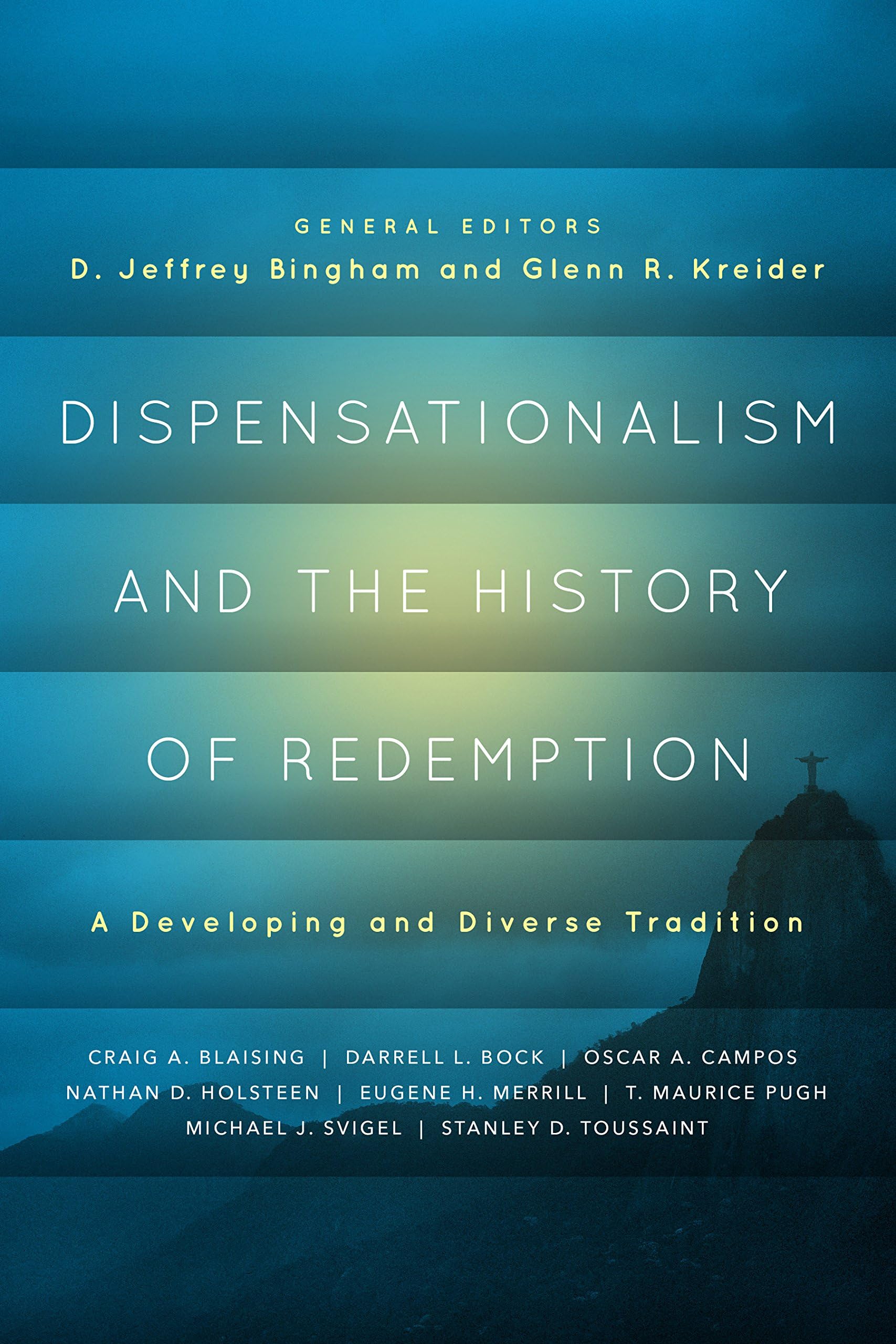
Dispensationalism and the History of Redemption: A Developing and Diverse Tradition [Bingham, D Jeffrey, Kreider, Glenn R] on desertcart.com. *FREE* shipping on qualifying offers. Dispensationalism and the History of Redemption: A Developing and Diverse Tradition Review: Helpful Assessment on Current Status of Dispensationalism in Evangelicalism - Dispensationalism has had a rich tradition in the Evangelical movement in England, Canada and the U.S. since the late-19th Century. But since its inaugural systemization by J.N. Darby, C.I. Scofield, and the better-known Lewis S. Chafer, along with the popularizing of its teachings through the 1909 Scofield Reference Bible and Niagara Bible Conferences, it has gone through quite a bit of development, as the book under review suggests in its subtitle. This book is essentially a modern assessment on the status of Dispensationalism, where it has come from, and its trajectories forward. It has been quite some time since there has been a book published at the popular level that positively supports Dispensational theology, so its certainly encouraging to see a strong Evangelical tradition reasserting itself in the public square. For those well acquainted with Dispensationalism, the tradition has come a very long way since its days of awesome-looking prophecy charts and ensuring at every turn that Israel and the Church shall never see the other until their wedding day. Development began taking place in the early 1950s, after the passing of Dispensational theologian Lewis S. Chafer (1952), with works coming from the pens of Alva McClain ('The Greatness of the Kingdom"), Charles Ryrie ("Dispensationalism", "The Basis for the Premillennial Faith"), John Walvoord ("The Millennial Kingdom", "The Rapture Question") and Dwight Pentecost ("Things to Come"). Their reimagining of Dispensationalism brought the "peoples of God" (Israel and the Church) much closer together in the Christian history of redemption, though its eschatological outworking remained largely untouched. This reimagining was developed between the 1950s-1980s. However, many in the tradition felt it wasn't close enough, and have married the "peoples of God" into the "people of God" with what is common known as 'Progressive' Dispensationalism, a movement which originated from the Dispensational Study Group within the Evangelical Theological Society (ETS) beginning in the early to mid-1980s. Along with marrying the 'peoples of God' into the 'people of God', Darrell Bock, Robert Saucy, Craig Blaising, David Turner, and others called for a more 'complementary hermeneutic' which allowed the NT's use of the OT to reform both the kingdom and ecclesiological expectations created by the OT when it was in isolation. These developments came to a close in the mid-to-late 1990s, which is where Dispensationalism largely finds itself today. Into these developments enters this excellent book by a variety of Dispensational scholars, largely from Dallas Seminary, discussing the current status of the tradition, its voice in modern Evangelicalism, and its continuing influence and evangelistic impact around the world. While opponents within the Evangelical fold continue to pile-on their criticisms of much older, and frankly outdated, Dispensational streams of thought, these authors deal with both traditions in a very irenic, and brotherly spirit. The book is a collection of essays re-telling the Dispensational story as it stands today. In summary, this book is more of a popular-level, though helpful, update on the status of one of the most enduring and influential Evangelical traditions in the West. While it certainly isn't your grandpa's Dispensationalism (and not even your 1967 Scofield Bible Dispensationalism!), it still can be seen, as Charles Ryrie famously stated in his distillation of Dispensationalism, as "A Help Not a Heresy". Highly recommended book to understand the past history, present status, and future trajectories of Dispensationalism within the fold of our common Evangelical Faith. Review: Very helpful in developing my understanding of dispensationalism - This book was a perfect read for me to develop my understanding of dispensationalism. Not only has it been a great introduction for me, it has pushed me to move forward to deepen my understanding through some other similar books.
| ASIN | 080240961X |
| Best Sellers Rank | #324,668 in Books ( See Top 100 in Books ) #23 in Christian Fundamentalism #33 in Religious Fundamentalism (Books) #3,243 in Christian Bible Study (Books) |
| Customer Reviews | 4.5 4.5 out of 5 stars (69) |
| Dimensions | 6 x 0.62 x 9 inches |
| Edition | First Edition |
| ISBN-10 | 9780802409614 |
| ISBN-13 | 978-0802409614 |
| Item Weight | 14.4 ounces |
| Language | English |
| Print length | 272 pages |
| Publication date | September 1, 2015 |
| Publisher | Moody Publishers |
W**R
Helpful Assessment on Current Status of Dispensationalism in Evangelicalism
Dispensationalism has had a rich tradition in the Evangelical movement in England, Canada and the U.S. since the late-19th Century. But since its inaugural systemization by J.N. Darby, C.I. Scofield, and the better-known Lewis S. Chafer, along with the popularizing of its teachings through the 1909 Scofield Reference Bible and Niagara Bible Conferences, it has gone through quite a bit of development, as the book under review suggests in its subtitle. This book is essentially a modern assessment on the status of Dispensationalism, where it has come from, and its trajectories forward. It has been quite some time since there has been a book published at the popular level that positively supports Dispensational theology, so its certainly encouraging to see a strong Evangelical tradition reasserting itself in the public square. For those well acquainted with Dispensationalism, the tradition has come a very long way since its days of awesome-looking prophecy charts and ensuring at every turn that Israel and the Church shall never see the other until their wedding day. Development began taking place in the early 1950s, after the passing of Dispensational theologian Lewis S. Chafer (1952), with works coming from the pens of Alva McClain ('The Greatness of the Kingdom"), Charles Ryrie ("Dispensationalism", "The Basis for the Premillennial Faith"), John Walvoord ("The Millennial Kingdom", "The Rapture Question") and Dwight Pentecost ("Things to Come"). Their reimagining of Dispensationalism brought the "peoples of God" (Israel and the Church) much closer together in the Christian history of redemption, though its eschatological outworking remained largely untouched. This reimagining was developed between the 1950s-1980s. However, many in the tradition felt it wasn't close enough, and have married the "peoples of God" into the "people of God" with what is common known as 'Progressive' Dispensationalism, a movement which originated from the Dispensational Study Group within the Evangelical Theological Society (ETS) beginning in the early to mid-1980s. Along with marrying the 'peoples of God' into the 'people of God', Darrell Bock, Robert Saucy, Craig Blaising, David Turner, and others called for a more 'complementary hermeneutic' which allowed the NT's use of the OT to reform both the kingdom and ecclesiological expectations created by the OT when it was in isolation. These developments came to a close in the mid-to-late 1990s, which is where Dispensationalism largely finds itself today. Into these developments enters this excellent book by a variety of Dispensational scholars, largely from Dallas Seminary, discussing the current status of the tradition, its voice in modern Evangelicalism, and its continuing influence and evangelistic impact around the world. While opponents within the Evangelical fold continue to pile-on their criticisms of much older, and frankly outdated, Dispensational streams of thought, these authors deal with both traditions in a very irenic, and brotherly spirit. The book is a collection of essays re-telling the Dispensational story as it stands today. In summary, this book is more of a popular-level, though helpful, update on the status of one of the most enduring and influential Evangelical traditions in the West. While it certainly isn't your grandpa's Dispensationalism (and not even your 1967 Scofield Bible Dispensationalism!), it still can be seen, as Charles Ryrie famously stated in his distillation of Dispensationalism, as "A Help Not a Heresy". Highly recommended book to understand the past history, present status, and future trajectories of Dispensationalism within the fold of our common Evangelical Faith.
A**R
Very helpful in developing my understanding of dispensationalism
This book was a perfect read for me to develop my understanding of dispensationalism. Not only has it been a great introduction for me, it has pushed me to move forward to deepen my understanding through some other similar books.
Z**Z
Good in depth explanation of Dispensationalism
Good in depth explanation of Dispensationalism. Some of the articles are highly academic, while others are more for the layman. I realized while reading this book that I was raised in this tradition. Although this makes more sense than Calvinism, there are building blocks that just don't hold up under the weight of common sense hermaneutics. However, if you want to know everything there is to know about Dispensationalism, this is the book for you. It is written by the foremost authorities on the subject.
M**E
This is a great book on dispensationalism
This is a great book on dispensationalism, by the staff of Dallas Theological Seminary, that has been the top seminary on Dispensationalism. I had a few of the writers as professors, and they are tops in their field. This book explains all parts of it to a degree, by the experts on each subject. I love it, and it is interesting, and not a dry read.
S**.
very informative and believable
points were well made and simple and precise
J**E
Informative, But Left Me Hungry
Dispensationalism and the History of Redemption contains essays by ten scholars about dispensationalism. The scholars include Craig A. Blaising, Darrell L. Bock, Oscar A. Campos, Nathan D. Holstein, Eugene H. Merrill, T. Maurice Pugh, Michael J. Svigel, and Stanley D. Toussant. Each scholar has some connection with Dallas Theological Seminary, which teaches dispensationalism. Each scholar either has a degree from DTS, or he teaches there. What is dispensationalism? More specifically, what is the dispensationalism that is promoted and engaged in this book? First of all, dispensationalism maintains that God has dealt with people in different ways throughout history. God’s ways of operating in Old Testament times were not entirely the same as God’s ways of operating in New Testament times. In Old Testament times, there was a focus on the nation of Israel, observing the Torah, and offering sacrifices to atone for sin. In New Testament times, there is a church that consists of Jews and Gentiles, Christians are not expected to observe the Mosaic law, and the blood of Christ is what atones for sin. Of course, many Christians believe this, even those who would not classify themselves as dispensationalists. Dispensationalists have been accused, however, of teaching that people were saved by works in Old Testament times (particularly under the Mosaic law), a charge that is denied in this book. Second, dispensationalism distinguishes between Israel and the church. In the Old Testament, God makes promises to Israel about possessing the land of Canaan and prospering there. For dispensationalists, these promises are to be interpreted literally and as applying to the people of Israel. By contrast, other Christians have regarded the promises as ultimately symbolic of the work of Christ or God’s spiritual blessings for the church. There are other features that have characterized dispensationalism. There is a dispensationalist teaching that God offered to send the Messianic era if Israel would repent, that God established the church when Israel did not to do so, and that God would send the Messianic era and restore Israel after she repents. There is a belief in a pretribulational rapture, the idea that God will take Christians to heaven before the Great Tribulation, which will precede the second coming of Christ to earth. The book defines and defends dispensationalism. It mentions different kinds of dispensationalism (classic, revised, and progressive) and the differences of opinion among dispensationalists. A few essays contrast dispensationalism with Covenant Theology. One essay discusses the history of dispensationalism. It divides the history of dispensationalism into seven eras, the way that many dispensationalists divide biblical history into seven dispensations. Other essays struggle with the issue of dispensationalism and biblical interpretation: What does it mean to interpret the Bible literally, as dispensationalists claim to do? How does dispensationalism relate to the tendency of many Christians to believe that the Bible speaks to them personally? There are also essays about dispensationalism and the Old Testament, the New Testament, and eschatology. The book is informative, and it can whet one’s appetite as it portrays dispensationalism as a diverse belief system that has undergone development. The book is unsatisfying, however, in that it did not really explain why God operates as God does, under dispensationalism. Perhaps one can draw conclusions: God worked with Israel in the Old Testament so that she would bless the nations, but God then worked through the church after Israel as a nation failed to repent, making Israel an unsuitable vessel for God’s purposes. God will still restore Israel, however. The book also should have gone into how Israelites were justified by grace through faith even under the Mosaic law. The book also should have tackled more arguments that Covenant Theology has made. Covenant Theology has argued that Old Testament promises to Israel are treated as symbolic in the New Testament. The book should have interacted with its arguments by addressing how dispensationalists have interpreted such passages. An index would also have been helpful. That way, readers can refresh their memories about the distinction among classical, revised, and progressive dispensationalism. I give this book 3.5 stars. It is worth reading on account of its information. Yet, I was still hungry after reading it. I received a complimentary review copy of this book from the publisher, in exchange for an honest review.
T**R
Five Stars
Great book! A must read for every Dispensationalist!
M**Y
Five Stars
good book
F**N
I haven't finished it yet, but the parts I've read are well-written, very helpful and contributed by a good cross-section of dispensational scholars. I do think it should have a full bibliography at the end of the book and not have to track through the footnotes to see the sources used by the authors. This is a good resource for investigators to hear from dispensationalists about where they are, instead of listenng to non-dispensationalists say where they think dispensationalists are. I recommend the book.
C**F
A well written book which answered a number of question that had troubled me for many years and answered a lot of questions i had not considered before. It should be read by all theologians and learners like myself, whether dispensationalists or not.
I**L
Great writers on dispensationalism. Well written. Great reading.
Trustpilot
1 month ago
1 month ago