
🚗 Fix it like a pro — bond with Amazing GOOP and never look back!
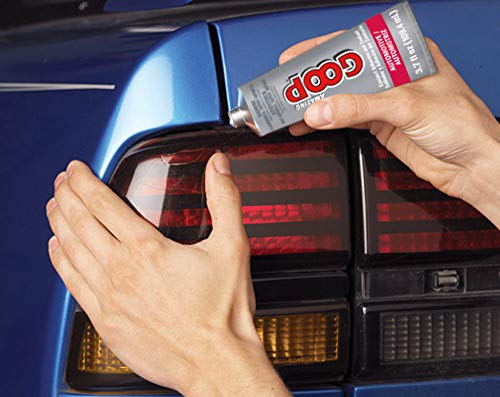
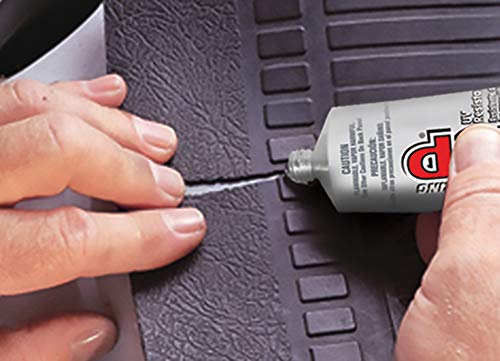
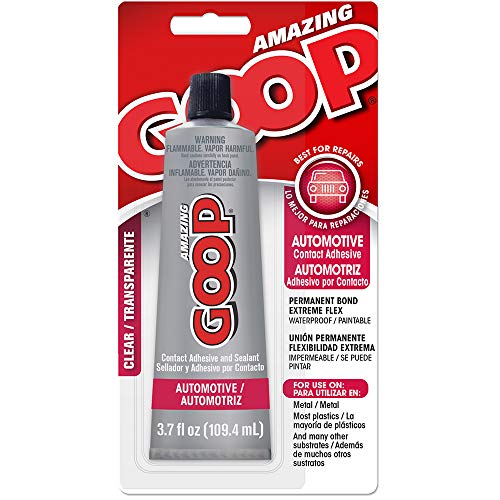
Amazing GOOP 160012 is a 3.7 fl. oz. automotive adhesive featuring a self-leveling formula designed for durable, fluid-resistant repairs. Ideal for professional-grade fixes, it delivers seamless bonding and long-lasting strength, making it a trusted choice for millennial managers who demand reliability and precision in their automotive maintenance.
| ASIN | B000CCID28 |
| Best Sellers Rank | #50,801 in Automotive ( See Top 100 in Automotive ) #179 in Automotive Fillers, Adhesives & Sealants |
| Item model number | 160011 |
| Manufacturer | Amazing GOOP |
| Product Dimensions | 2.54 x 10.16 x 20.32 cm; 81.65 g |
B**N
Very good glue, very pleased with end result.
M**T
Good adhesive. I’ve used this goop on all kinds of things and it works great. I once glued up a hole in a transfer case the size of a dime, you could even see the fluid on the other side of the patch. Never had any issues and drove it for years and years.
A**R
Great Glue .... I googled search strong Automotive Epoxy glue to glue / bond Rubber to aluminum to repair my motorcycle carburetor rubber inlets . Which it has done great . Also now use to stick my Dremel hobby tool sanding drums to the rubber shank , so they stay on , I get full use out of them .... Highly recommend this glue 👍 good at bonding different materials in harsh conditions 👍 i.e. Automotive / household 👍
M**K
Great blue works wonderfully
S**Y
There is a large family of Goop adhesives, "All Purpose", "Automotive", "Craft", "Household", "Lawn and Garden", "Marine", "Plumbing", "RV", "Sport and Outdoor", and "Wood and Furniture" As far as I can tell, all are identical. Some varieties (such as Marine Goop) meant for outdoor use may be more UV resistant. So, at least for indoor use, I suggest buying the cheapest. In the local hardware store, "Household Goop" is usually the cheapest. At the time of this writing, "Plumbing Goop" is the cheapest on Amazon. IN GENERAL Goop will bond virtually any material, including leather, plastics, glass, and metal. The bond is clear, very strong, waterproof, and hard but flexible. EXAMPLES Examples are endless. In addition to the examples below, I've used it to repair ceramic plant pots and shoes. I also use it to seal rust spots on my dishwasher rack. The Goop it also makes a "cushioned" surface that will prevent scratches to dishes. I use Goop to close small holes in window screens. I've used Goop to seal holes in air-mattresses. ELECTRICAL Goop is far superior to electrical tape for splicing wires, re-insulating cat-chewed wires, waterproofing and vibration-proofing electrical connections. There is a black variety of "Shoe Goop" if you want your repair to be less noticeable. PLUMBING Goop is great for sealing small leaks (including garden hose connections, etc.). However, you have to turn off the water, and the connections must be absolutely dry. Moreover, it takes several days for Goop to dry to reasonable strength. If you turn on the pressure before then you will make a water balloon. It's better to wait a week. Moreover, it may take several applications to get a thick enough layer of Goop to hold against normal household pressure--so a sink, toilet, etc. may be out-of-commission for at least three days waiting for the Goop to dry. SHORTCOMINGS 1) An opened tube thickens quickly. Store open tubes in a small glass jar with a tight metal lid. Old thick Goop does not work well for some uses (such as repairing shoes), but is perfect when you need a thick application--such as insulating an exposed electrical connection or to hold pressure in a leaking water line. It is best to start with a thin layer from a new tube to maximally bond to the surface 2) Until it dries, Goop flows, alot. Therefore a thickly-applied layer may dry to a very thin layer (because most of the glue has flowed somewhere else). So, it may be essential to apply several thin layers (at intervals of 4 hours or longer) rather than one thick layer. Alternatively, you can apply a thicker layer of old thick Goop over an initial layer of new Goop. If possible, arrange the pieces you are gluing to minimize flowing, i.e., usually horizontal. For several hours, depending on the temperature etc., the glue is "repositionable" after thickening a little, that is, you can push it back into place. Unfortunately, if you use too many layers or "reposition" the glue too much, the result is not as attractive. 3) Except when still tacky (when it can be removed with naptha or acetone), Goop is essentially non-cleanup-able. So, for example, while it might be terrific for fixing a leaking windshield, if you mess up and your application is ugly, there is essentially nothing you can do about it. Although Goop is terrific for repairing a broken ceramic statuette--if a little extra oozes out, there is no way to clean it up the excess. You could simply peel/rub-off excess silicon glue. You could simply wipe off "white glue" and clean up with a moist paper towel. 4) The fumes are strong and toxic. Allow glued items to dry in a well-ventilated area (ideally out-of-door) for several days. When doing alot of gluing, I work in my carport with a large utility fan blowing the fumes away---and still usually get a nasty headache. It is best to use gloves when working with Goop. TO GOOP OR NOT TO GOOP While Goop is truly miraculous--there are situations when other types of glue are better choices. White Glue: For most light-duty indoor household applications which do not have to be waterproof, ordinary household white glue is much safer, cleanup is much easier, and in most cases repairs are redo-able if you make a mistake. For example: Elmer's All Multipurpose White Glue, 7 5/8 oz. (E379) Wood Glue: Carpenters's wood glue is essentially water-proof (when dry) white household glue. It is much better than Goop for most wood repairs. It penetrates and strengthens the wood. It is much safer, and cleanup is much easier. If the joint breaks again (because the wood is weak), it can be re-glued. For example: Elmer's E701 Carpenter's Wood Glue 8-Ounce Silicon Glue: Silicon glue is best for glass, and when you want a truly flexible connection (for example, to absorb vibrations). It is a better choice for general household use on glass, plastic, and metal when you do not need the maximum possible strength. It is safer than Goop, and cleanup is easier. Like Goop, silicon glue takes days to reach reasonable strength, weeks to reach maximum strength. For example: GE Silicone II Household Glue, 2.8 oz Epoxy: When you need a strong rigid workable (e.g. sandable surface) adhesive, particularly for use on metal or hard plastic, epoxy is a much better choice. For joining metal "J&B Weld" epoxy is best. Most epoxies dry with little running or shrinkage, and so are good for filling gaps. Fiberglass epoxy is best for joining/filling hard plastic. Epoxies are safer than Goop, and cure much quicker. For example: J-B Weld 8265-S Cold Weld CLEARBOND H-3S Clear Strong Epoxy Adhesive Syringe - .85oz APPLICATOR TIP If you use the applicator tip, and do not use the entire tube at one time, much unused glue remains in the tip, which is wasted and clogs up the tip. If you plan to use the glue again within about a week, then jam an old unused (uncut) applicator tip over the one on the tube, and store in a small glass jar with a tight lid. If you aren't likely to do more gluing within two weeks, remove the tip and put the cap back on (and store the tube in a small jar with a tight lid) If it is necessary to clean out an applicator tip, then take it off the tube, let the glue dry for several days, then pull it out with tweezers. CONCLUSION Goop is one of those "miracle" products with a thousands uses, which needs to be a permanent part of any household. Other such items include silicon grease Permatex 22058 Dielectric Tune-up Grease - 3 oz. painter's tape ScotchBlue Painter's Tape 2090-1E2, 1 Inch by 60 Yards, 1 Roll , and WD-40. WD-40 Spray Lubricant - 16-oz. > Click on “Stoney” just below the product title to see my other reviews, or leave a comment to ask a question.
Trustpilot
2 weeks ago
2 days ago