
DOWNLOAD THE APP


Customer Services
Copyright © 2025 Desertcart Holdings Limited
DOWNLOAD THE APP
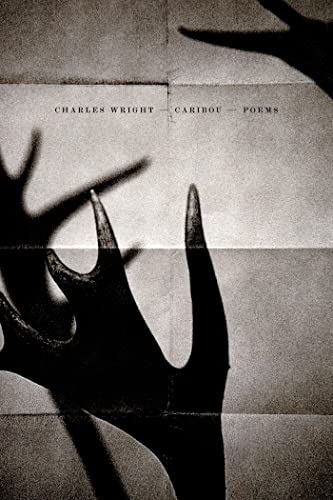
Caribou: Poems
B**T
Neutral on this.
Charles Wright is my favorite poet, and I've learned a lot from reading his work; however, this is my least favorite of his published volumes. After two complete readings spaced 3 months apart, I still feel disappointed. This volume does not progress from the volume before as all his other have done for me. It falls so far short of Black Zodiac, and I really wanted it to be better.
C**P
Wonderful word pictures
I do not read poetry books, but this book is for people like me who enjoy the pictures, songs and shared memories that poems can bring. It can be read for pleasure without twisting one's brain into nots trying to figure out what some esoteric word puzzle means. Persons who do not believe in a mystical life in the sky will appreciate the honesty of the poet.
R**X
Three Stars
poems ok, design of book pretentious and over done and too expensive
H**O
Music to our ears
A musically rich collection in all senses.
G**G
Much of Life is Stepping into the Darkness
I started reading Charles Wright’s new collection of poem, “Caribou,” and immediately was reminded of something that happened 20 years ago.I was on the board of the World Bird Sanctuary, an organization on the preservation of raptors (thinks birds like hawks, falcons, great horned owls, and eagles). We met monthly at different locations, One month we met at the ranger’s station at Lone Elk County Park in far western St. Louis County.Our meeting began at 4 p.m. and spilled over into the evening hours. I had to leave at 7:30, and as I stepped outside to go to the parking lot. I instantly realized two things: it was pitch black, with no outside light; and I was in the middle of something large and alive.I froze in place, not knowing what to do, until the ranger’s car appeared on the road and I could see by his headlights. I was in the middle of the elk herd, which liked to come down to the station at night to sleep. Some were already asleep; others were standing on the sidewalk, blocking the way to my car. The park, by the way, was misnamed. There was no lone elk; there was actually a herd of about 100 elk.With the light of the ranger’s car, I carefully made my way through the herd. If you’ve never seen one, adult elk are big, like horses, and I was meandering my way through them. Carefully. And smiling. “Nice elk. Good elk. Just let me get to my car and you can go back to sleep.” They gave me a rather bored eye and I made my escape.Caribou, which we often call reindeer, are in the same family as moose, deer, and my herd of elk (or wapiti). Caribou have mostly vanished south of the Canadian border, but they are still to be found in Canada.No poem in the collection bears the title “Caribou.” But it’s a fitting title nonetheless. These poems are about memory, what has passed, and what is gone, perhaps like the caribou gone from southern North America, memories all enclosed with descriptions and metaphors of nature.These are the poems of old age, expressing few regrets except for friends now gone, reflecting on what has been. And even more are the pomes imagining the end-times, because for the individual, end-times in this world come with the individual’s death.Here’s “Shadow and Smoke:”Live your life as though you were already dead, Che Guevara declared.Okay, let’s see how that works.Not much difference, as far as I can see, the earth the same paradiseIt’s always wanted to be,Heaven as far away as before,The clouds the same old movable gates since time began.There is no circle, there is no sentiment to be broken.There are only the songs of young men, and the songs of old men,Hoping for something elsewise.Disabuse of them in their ignorance,Lord, tell them the shadows are already gone, the smokesAlready cleared, Tell them that light is never a metaphor.What does Wright say in these poems? That as we age, we realize life is less about what we achieve and do and more about who we are. That the answers to fundamental questions don’t become clearer but that accepting that the answers may not be understood becomes easier. That we will find ourselves listening more and talking less. That we owe a debt top those who came before us that we can never repay.That perhaps life is really about acceptance, and we won’t realize that until the end.“Lullaby”I’ve said what I had to sayAs melodiously as it was given to me.I’ve said what I had to sayAs far down as I could go. I’ve been everywhereI’ve wanted to but Jerusalem,Which doesn’t exist, so I guess it’s time to depart,Time to go,Time to meet those you’ve never met, time to say goodnight.Grant us silence, grant us no reply,Grant us shadows and their cohorts stealth across the sky.“Caribou” is Wright’s twenty-second collection of poetry (in addition to two translations and two work’s of non-fiction). He’s won the Pulitzer Prize, the National Book Award, the National Book Critics Circle Award and numerous poetry prizes. This new collection continues the stellar work he’s produced.I consider my herd of elk again. How much of life is stepping into the darkness, sensing the presence of something large and incomprehensible and without any light to explain or make sense of it? That is, until a glimmer comes, and allows you to walk through the darkness. That’s what Charles Wright says in “Caribou.”
A**S
A renowned poet considers the end of things
I wanted to wait until I had finished Caribou before I reviewed the entire book and to give myself a little cooling off time from the first ridiculous review of this book that appeared here.. Charles Wright is one of the few poets whose new books I will buy without even opening it first. He has been one of my guides for more than twenty five years. In his most recent collection, Wright is contemplating death and what comes after. Not an unusual preoccupation for a man in his late seventies, albeit one who writes with the verve and joy of a man half his age. This is not Wright's strongest book but it is one of his most clear-minded. The world is not as lovely or as sensuous as in Wright's earlier books, but that beauty has been replaced by a stern gaze toward the horizon. Wright sees what is coming, and if he doesn't like it, he does accept its inevitability. And he understands that we live our lives in order to forget our inevitable deaths: "There is a way to reprieve yourself between the empty and the full," he says in one of the last poems in the book. "Go slower, go faster, jsut get there, you've said your piece. Now rest in it," the poem concludes. What can we say but "Amen"?
D**.
Ok, but overall not extraordinary.
A few gems here but most of the poems were somewhat middling.
S**Y
Definitely a book which I will read again. The ...
Definitely a book which I will read again. The twining of humanity and nature in the book provokes a lot of contemplation. I would read a poem and think, sometimes I would reread the poem before going on and experiencing the next. Some poems let me see the scene before me and others let me feel it as I examined my own soul. Much thought comes from the pages of this book. The poems are not long, but they speak volumes. The darkness is not a thing to be feared, just understood and accepted.
Trustpilot
3 days ago
3 weeks ago
3 weeks ago
3 days ago