Some deliveries may take a little longer than usual due to regional shipping conditions.

DOWNLOAD THE APP


Customer Services
Copyright © 2025 Desertcart Holdings Limited
DOWNLOAD THE APP

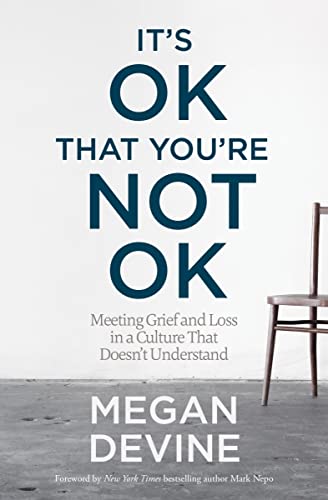

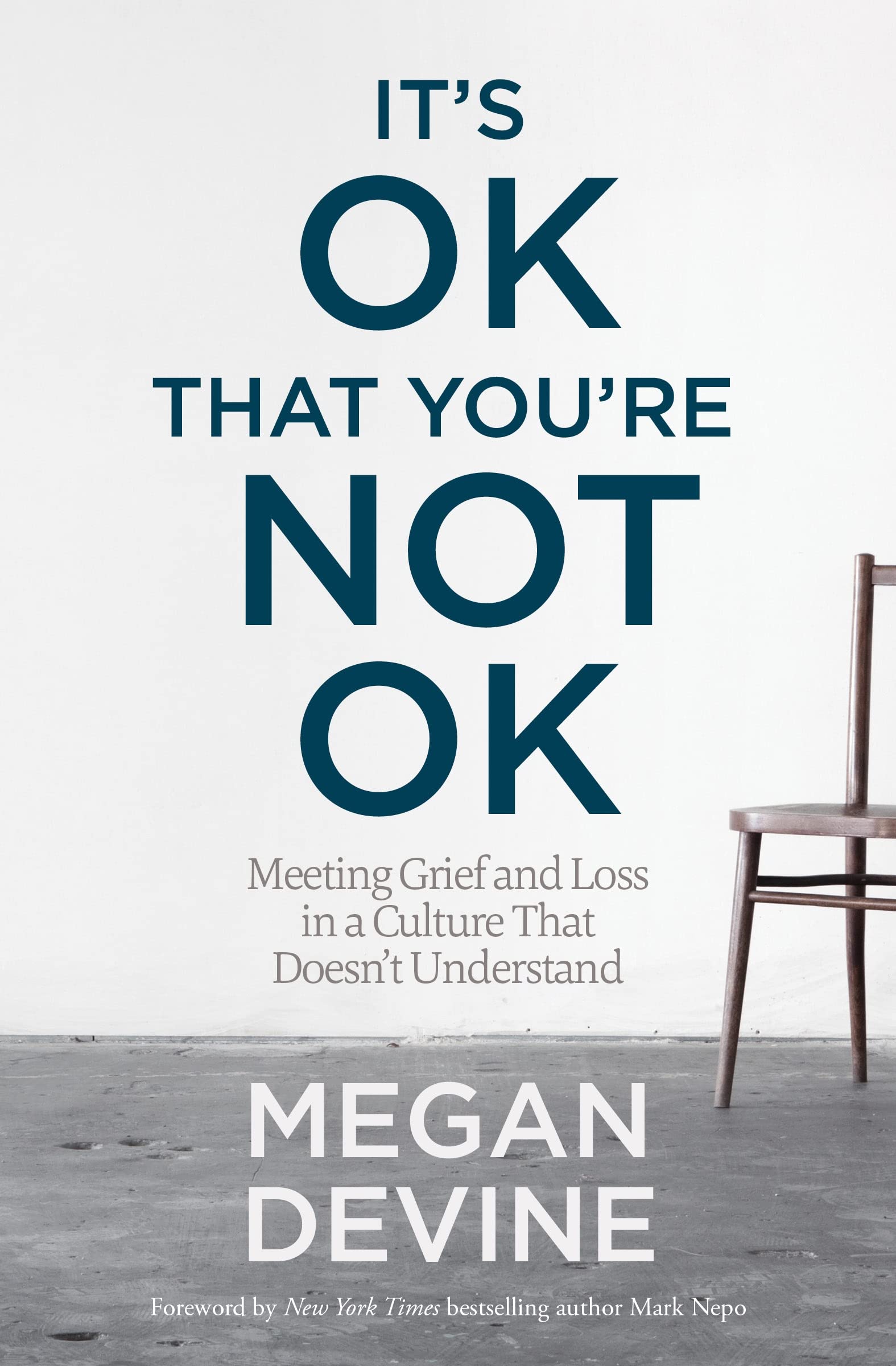
Review: Validating & companionship - Megan articulates much of what I've felt and thought over the past 19 years since losing my first husband. I felt shame & guilt for my revulsion of people's kind words yet deeply hurtful platitudes and toxic positivity. Now I'm reconciled to my emotions & no longer feel alone, ungrateful and so miserable. Megan is a very talented writer tackling the most difficult and taboo of topics with directness, frankness yet compassionately, sensitively and inclusively. Her words bond with the reader and her talent is making difficult writing become easy reading. I'm so sorry if you've come by this book because you're grieving and so heartened if you are supporting someone who is grieving. Megan explores and explains strategies for dealing with life, death, grief - the whole damn gamut of emotions, our inner selves and people, especially dealing with people trying to fix the utterly unfixable. I finished this book feeling less lonely than when I started reading it. I feel validated, hugged and loved by Megan's words. Grief is something we need to make space for, however ugly and uncomfortable. It can't be rubbed out, forgotten or got over with. Thank you Megan & thanks for how to carry what can't be fixed. Review: The Grief I'm In Really Doesn't Have To Pass - I truly adored Megan Devine's book - I listened to it on Audible & narrated by herself too immersed in the heartbreaking grief process over the tragic death of her partner Matt. I found this extremely moving and a very connecting book when I myself have been surrounded by certain people who have never really suffered trying to offer me consolation and then end up wrongly judging and terribly hurting/torturing me and like Megan says - you really don't need these type of people anymore - my life is not an aberration outside of there so-called 'perfect' lives of happiness. I live with mountainous traumatic grief levels of my whole life being blown to smithereens for decades - I've had people say "You should be getting to grips with your suffering now" - How on earth could I ever be that exactly !? Megan' truly lovely book knows that Grief isn't a problem to fix and it wasn't traumatic events we asked for and I wholeheartedly agree that myself living Complex-PTSD on a very profound level & Severe M.E that I may never ever be OK - Megan' book provides much-needed companionship when in an emotionally illiterate world of platitudes and wrong judgements. "Walking on the skins of ruins" because we must tragically be with our Grief and our traumatic loss we must live with continually and we mustn't be pathologised in our grief it isn't something to get over. Megan writes beautifully on humans showing actual kindness & compassion showing us Love in the Wildest Form in an obliterated universe outside of the Cult of Happiness and intimacy of the greatest kind embracing us within our disappearance. No Grief is empirically the same so finding companionship with other grief survivors who can offer the best of empathy articulation of our daily lives and that each of our collective paths can be divergent. I hate the phrase 'This Too Shall Pass' so it was refreshing when listening to Megan' very heartbreaking narrative of grief & loss that she herself is also a dislike of derisory positions on our lives. Fantastic narration by Megan Devine and a book to truly treasure because when someone like Megan truly provides a universal consideration of Grief so very poignant to listen to and one that I truly believe in then it stands out and it is a book I'll always cherish because it structures our lives when everything else has crumbled.






| Best Sellers Rank | 25,976 in Books ( See Top 100 in Books ) 168 in Death & Bereavement 321 in Specific Psychological Topics 1,334 in Health, Family & Lifestyle Self Help |
| Customer reviews | 4.6 4.6 out of 5 stars (11,644) |
| Dimensions | 13.21 x 1.91 x 20.19 cm |
| ISBN-10 | 1622039076 |
| ISBN-13 | 978-1622039074 |
| Item weight | 1.05 kg |
| Language | English |
| Print length | 280 pages |
| Publication date | 1 Oct. 2017 |
| Publisher | Sounds True |
S**E
Validating & companionship
Megan articulates much of what I've felt and thought over the past 19 years since losing my first husband. I felt shame & guilt for my revulsion of people's kind words yet deeply hurtful platitudes and toxic positivity. Now I'm reconciled to my emotions & no longer feel alone, ungrateful and so miserable. Megan is a very talented writer tackling the most difficult and taboo of topics with directness, frankness yet compassionately, sensitively and inclusively. Her words bond with the reader and her talent is making difficult writing become easy reading. I'm so sorry if you've come by this book because you're grieving and so heartened if you are supporting someone who is grieving. Megan explores and explains strategies for dealing with life, death, grief - the whole damn gamut of emotions, our inner selves and people, especially dealing with people trying to fix the utterly unfixable. I finished this book feeling less lonely than when I started reading it. I feel validated, hugged and loved by Megan's words. Grief is something we need to make space for, however ugly and uncomfortable. It can't be rubbed out, forgotten or got over with. Thank you Megan & thanks for how to carry what can't be fixed.
D**H
The Grief I'm In Really Doesn't Have To Pass
I truly adored Megan Devine's book - I listened to it on Audible & narrated by herself too immersed in the heartbreaking grief process over the tragic death of her partner Matt. I found this extremely moving and a very connecting book when I myself have been surrounded by certain people who have never really suffered trying to offer me consolation and then end up wrongly judging and terribly hurting/torturing me and like Megan says - you really don't need these type of people anymore - my life is not an aberration outside of there so-called 'perfect' lives of happiness. I live with mountainous traumatic grief levels of my whole life being blown to smithereens for decades - I've had people say "You should be getting to grips with your suffering now" - How on earth could I ever be that exactly !? Megan' truly lovely book knows that Grief isn't a problem to fix and it wasn't traumatic events we asked for and I wholeheartedly agree that myself living Complex-PTSD on a very profound level & Severe M.E that I may never ever be OK - Megan' book provides much-needed companionship when in an emotionally illiterate world of platitudes and wrong judgements. "Walking on the skins of ruins" because we must tragically be with our Grief and our traumatic loss we must live with continually and we mustn't be pathologised in our grief it isn't something to get over. Megan writes beautifully on humans showing actual kindness & compassion showing us Love in the Wildest Form in an obliterated universe outside of the Cult of Happiness and intimacy of the greatest kind embracing us within our disappearance. No Grief is empirically the same so finding companionship with other grief survivors who can offer the best of empathy articulation of our daily lives and that each of our collective paths can be divergent. I hate the phrase 'This Too Shall Pass' so it was refreshing when listening to Megan' very heartbreaking narrative of grief & loss that she herself is also a dislike of derisory positions on our lives. Fantastic narration by Megan Devine and a book to truly treasure because when someone like Megan truly provides a universal consideration of Grief so very poignant to listen to and one that I truly believe in then it stands out and it is a book I'll always cherish because it structures our lives when everything else has crumbled.
L**T
Not flawless and yet a must read
1 - I am grateful for this book: The book acknowledges that grief takes you over and carries you along like floodwaters and that there is little you can do about it, but it helps you do what little you can and gradually build up on these efforts to find a measure of peace. It is all about knowledge and empowerment and targets those who grieve and those who are willing, but often not so able, to help grieving people. The book's central message is that grieving people should show themselves kindness and care for their body and mind as much as they can, relying on as many people as can be to do so. It is articulate, thoughtful, and comprehensive. It informs and challenges in equal measures. It also perfectly evaluates what our western culture and medical establishment get wrong about grief. It is my favorite book on the subject, and I am very grateful for it. However, it is not without flaws, and I do not always agree with it. 2 - The book needs a better editor: Time and time again, the author hits the nail on the head when expressing what she wants to convey. Unfortunately, many of her points are partly lost in the background noise of the book, which could easily have shed a third of its content and be none the worse for it. That is why I have easily distilled it down from 250+ pages to ~40 pages of notes. The author does what most authors in her position do: she combines two books into one. On the one hand, she is writing a book about her experience of grief (her husband drowned). On the other, she is using her experience to write a book about grief (and her new career as a grief counselor / grief writing course organizer). This approach is perfectly sensible and quite common in many books on difficult subjects such as grief and cancer. However, if poorly managed, it can get out of hand. In this case, the author needed a better, more assertive editor to dial down her ‘been there, done that’ enthusiasm, reduce the number of redundancies in the book, and improve its structure. Too often, it is a case of ‘me, me, me (not just the author, but also a quote from a third party, including participants to her grief writing course),’ when a single ‘me’ would suffice to highlight the more generic points she wants to make. And too many of these points are repeated too often. 3 - The book does not shy away from hard truths: At one point, the book asserts that our mind and heart will eventually adapt because they are built that way, whether we like it or not. It also points out that our love for the deceased will evolve but not how we like or deserve it. I particularly like these two points, even though I find them very difficult to face. 4 - But it tries too hard to make you happy, eventually: The first meaning of the book is clear: when you are grieving, you are not OK, and that’s OK. Furthermore, you can be as much not OK as you want for as long as you need it. And, for that alone, it is a must-read. The second meaning is less clear and, at times, contradictory. The book asserts that grieving is a journey from a) not OK to OK, but you can stop anytime between the two extremes of ‘eternally broken” and ‘happily ever after,” where you feel most comfortable. Unfortunately, the author cannot help, despite her many protestations of the contrary, nudging her readers towards a “happily ever after” ending, although she tries to wriggle out of this inconsistency by trying to 'redefine' what it means to be happy. b) not OK to different, with this different state of being “OK” explicitly defined as “not better” to start with then, eventually but more implicitly, as “happy.” This is where the book and I part company as the ‘different, but not better’ message becomes ‘different and happy ever after”. Yes, I am different, but I have neither the willingness nor the ability to become happy ever after; however differently happiness may be redefined. Because of this lack of clarity, some have criticized the book as something that could end up getting grieving people stuck between OK and not OK. I do not share their point of view but acknowledge that it stems from the somewhat clumsy and ambiguous way the author expresses herself - but it is worth emphasizing that this clumsiness is rare in the book. It is rare but not limited to the meaning of the title. For example, while the book rightfully points out the dangers of ‘positive thinking,’ the alternative approach it promotes, which it calls ‘Wellness,’ sometimes stoops down to positive thinking territory. Positive thinking corners you into feeling guilty for not having the right thoughts. Wellness takes a more human, self-kindness centric ‘do what you can and don’t feel too bad if at first, or last, you don’t succeed’ perspective but the book kind of asserts that we will eventually be happy only if we live up to what grief/life ‘asks’ of us. I find the notion of having to live up to what grief and life ask of me rather irritating. I intend to only live up to what I ask of myself (which is admittedly also what the book asserts). 5 - The book is too ambitious about enlightenment: One of my (many) favorite quotes from the book is ‘Grief is not an enlightenment program.’ And yet the author is very keen not just on grieving people becoming happy but also enlightened. I agree with her basic point on the subject: that enlightenment in the face of grief is to look straight at it, staying emotionally open and bearing witness to the pain, knowing that it can’t be changed. But she gets carried away. At one point, she quotes a third party who asserts that our ‘only choice’ is to ‘become larger and more courageous and more compassionate.’ A couple of quotes from another third party go as far as to ascertain that some grieving people will end up ‘transfigured.’ While I definitively could use some of the funny herbs that this third party has no doubt smoked to reach this conclusion, I cannot agree with it. I have become different but neither enlightened nor transfigured. And I am OK with it. 6 - The book is too keen on beauty: I am not particularly convinced by the way the book keeps talking about ‘beauty’ at three levels: a) The beauty of the experience of grief: I agree that we need to redefine grief from a problem to solve (focusing on erasing pain, maintaining control) to an experience to tend (focusing on feeling pain, on the journey from not OK to OK). But I would not go as far as describing this experience as beautiful. b) The beauty of the life that a grieving person can eventually settle into, by integrating, rather than forgetting, the devastation experienced. I agree that beauty and devastation are both facets of life (in line with the book's attempt to redefine happiness). But, for me, the idea that devastation is part of the beauty of life is just that – an idea. Yes, beauty and happiness do exist beneath the fine layer of dust that grief has covered them with; but I cannot consider this dust ‘beautiful’ however hard the book tries to make me do so. c) The beauty of other grievers and the community/tribe they form: I have participated in discussions with other grieving people, have felt compassion for them, and learned from them. Within limits: all grieving process is unique (as the book rightly emphasizes). However, grieving people are just as regular as any other people, neither particularly transfigured nor especially beautiful. I certainly did not experience them as ‘true gifts of loss’ as the book puts it - a point that caused the lower part of my jaw to embed itself into my carpet when I read it. I understand the need for this section of the book, though, as the ‘grieving community as a silver lining to grief’ message is a way for the author to promote her you-are-not-alone ‘Writing Your Grief’ online workshops. 7 - It ignores the object of grief: If you think that loving a living person is difficult, wait until they are dead, and you’ll truly face how much of a challenge love can be. Unfortunately, like most books about grief, this one is too much about grieving people, not enough about the object of their grief – and how to relate to it. This should, perhaps, be a topic included in a second, more concise edition of the book. The book’s central message asserts that grieving people should love themselves. I agree with the sentiment, provided self-loving remains secondary to the love for the late significant other. Bottom line We are only human. So is this book. Read it if you can.
J**3
Great book
Very helpful book when undergoing grief. Aldo a good book for people helping someone cope with grief.
L**.
Very real and honest. So helpful.
This book saved my life. So real and honest, made me feel less alone.
M**.
I've been gifted, loaned and purchased many grief books in the two years since my son died. I can honestly say that none of those texts resonated with me and the truth of my grief experience more than Megan Devine's new book. She is a credible source of useful information, bringing not only her educational and occupational background to bear but more importantly her own life experience with deep loss and a broken culture. Above all, she is a truth teller and an advocate you'll want in your grief space. The beauty of this book is the universal insights it offers for EVERYONE who has experienced deep grief or desires to genuinely support another in their loss. The author outlines a refreshing take on grief for the reader's consideration, one where acknowledgment and a desire to love better are critical components in supporting ourselves and each other following a significant loss (ie. death, accident, illness, etc.) She adeptly explains the model's concepts in lay terms, provides numerous examples for better understanding, and recommends practical exercises that one can use to help identify and manage the impact of grief. The quotes from her writing students are especially relevant and poignant. I found Megan's work validating and thought-provoking, especially concepts such as her broader definition of "early grief", common platitudes (and why I feel their adverse affect), the critical distinction between pain and suffering (and how to minimize latter), grief as an experiment rather than a problem to be solved, and the vital role of acknowledgment and companionship in creating a way forward. One of my favorite sections is the appendix, an essay on helping a grieving friend, which offers carefully-crafted and readily shareable ground rules for supporting a loved one. I'd recommend reading this book if you or a loved one are in the midst of deep grief and looking for validation, guidance, and honesty in a post-loss world. This book, and especially the associated resources available at refugeingrief.com, are powerful tools for navigating your grief landscape with love and understanding. It's permission to grieve in your way and in your time ... and this has made all the difference in my own post-loss landscape.
A**R
Altamente recomendable.
Á**A
Da en el clavo. Recomiendo.
S**G
This is the best book you will ever read on the topic of grief. It’s non denominational, non judgemental and non preachy. Indeed Megan Devine, herself both a therapist and a grieving young widow, manages to provide the perfect words of support for those who are grieving and excellent tips for those want to better support a griever. When I lost my young adult son, I spiralled into a pit of depression but rather than finding a whole raft of support, I discovered there were very few people who jumped down into that hole and just sat with me; those who did have my heartfelt gratitude for their presence. I searched for books that understood the real experience of grief. Megan’s book was the perfect find; she debunks the social myth of returning to “normal” and invites us to build our lives alongside grief. It’s a powerful message, as so many of us grievers feel judged or dismissed. “It’s OK that you’re not ok” provides much needed comfort and understanding of the world of grief; Megan understands that some things in life cannot be fixed, that ‘grief no more needs a solution than love needs a solution”. If you have ever lost someone or find yourself wanting to support a friend, do yourself a favour and buy this book, the kindness and understanding you find in Megan’s work will touch your broken heart and make you feel heard.
M**A
a book not to be missed, which should be translated into all languages, a guide for grief unique in the world.
Trustpilot
2 months ago
2 weeks ago