
DOWNLOAD THE APP


Customer Services
Copyright © 2025 Desertcart Holdings Limited
DOWNLOAD THE APP
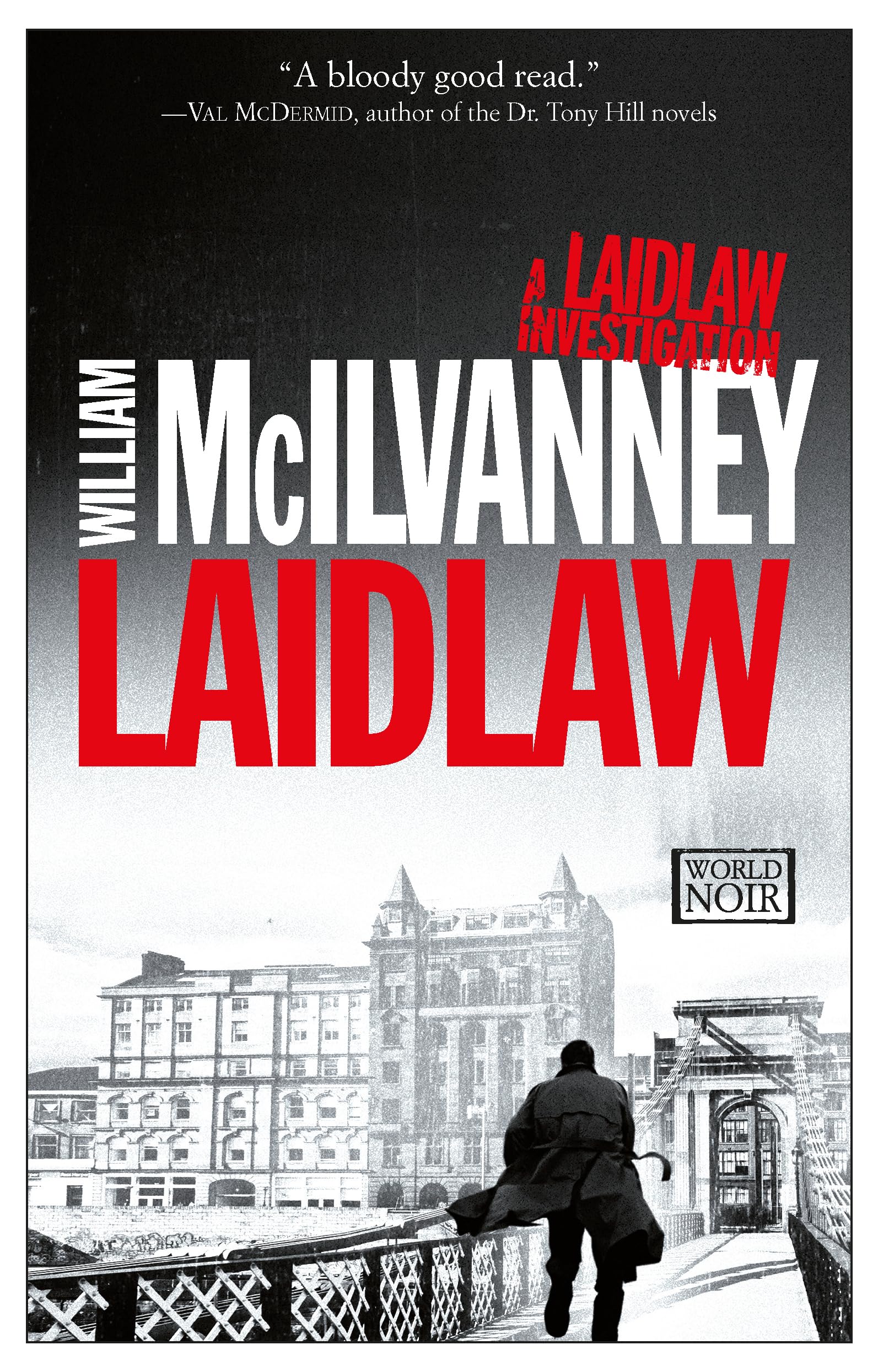
📖 Get hooked on the intrigue of Laidlaw!
Laidlaw is the first book in the Laidlaw Investigations series, offering readers a captivating blend of mystery and character-driven storytelling. Set against a backdrop of moral complexity, this novel invites you to join the protagonist on a thrilling journey through crime and justice.
| Best Sellers Rank | #1,102,822 in Books ( See Top 100 in Books ) #3,534 in International Mystery & Crime (Books) #7,649 in Police Procedurals (Books) #18,252 in Literary Fiction (Books) |
| Customer Reviews | 4.1 out of 5 stars 3,270 Reviews |
P**B
Who Thinks The Law Has Anything To Do With Justice
Every once in a while you come across a novel that sets you back. Such a novel has all the elements you are looking for. A superb story, characters with moral, ethical and philosophical viewpoints upon which you can relate. And intelligence, a character who can bring the story from A to B with such exquisite writing, you wonder where has this author been? The author I am talking about, William McIlvanney has been around for a long time, and a chance encounter on a book he wrote in 1977 is being renewed and given birth in the US. Laidlaw is a Scot through and through, lives in Glasgow, and is a Detective Inspector in the Glasgow police. He is a big man in stature, handsome and in his forties. He is married with three children. He is common and uncommon. "He loves philosophy and keeps 'Kierkegarrd, Camus and Unamuno' in a locked drawer of his desk. He is a potentially violent man who hates violence, a believer in fidelity who is unfaithful, and an active man who longs for understanding." He left his college years because they were trying to make him a uniform man without the thinking process he so reveres. He is at once a man who does not tolerate fools, and is looked upon as a strange man, but he is admired and respected and solves the crimes. In this story we know the murderer. We meet him in the first chapter. But it is up to Laidlaw and his colleague to give us the rest of the story. " A murder to his mind is often the consequence of a series of unrelated acts and uncertainties." He moves into a hotel during the investigation to immerse himself in the atmosphere of the murder. We meet the people of Glasgow, not the people the tourists meet, but the real characters. And, we meet Glasgow. Laidlaw loves Glasgow, and he knows most everything there is to know about Glasgow. Laidlaw knows who will give him some answers and who he needs to meet. He understands the biggest part of his job is to listen and learn. He tends to have empathy for the downtrodden and makes few judgements. Some of this story involves the Gay community and in that time there was little empathy for these kind of people. Except from Laidlaw, he knows them as people, his people to protect or to arrest depending upon the circumstances. The hate and violence in 1977 in this novel is the same as today. This books remains as fresh as the day it was written. "Hatred of others is to his mind a way of not having to engage with them, a denial of the sympathy that seeking understanding might arouse." Exquisite writing, as good as any I have read. Who thinks the law has anything to do with justice. Highly Recommended. prisrob 06-20-14
H**E
Good book - I'm Finishing the Third in the Series Today
I really enjoyed this first in the Laidlaw series by William McIlvanney. I really enjoyed it and am on the third book in the series now. I very much like the main character, although I don't always understand what he's on about. He is very philosophical and loses me sometimes. I also have had trouble with keeping the characters straight, but it doesn't really matter because his writing is almost poetic, and he has not bored me once in any of the three books. I cannot forgive a writer for boring me. I recommend this book, which is very well edited, by the way, which is important to me.
N**N
Great reading but disappointing ending
If the ending had been a little different, I'd have awarded the book 5 stars. It is vividly and eloquently written, the characters and their milieu are wonderfully depicted and one could even say the book has a message beyond entertainment, a message that is important and oftentimes not well liked: criminals are not so different from the rest; they are not monsters but humans, often very wounded humans. Still, I would have liked to know why the poor guy killed the girl. Nothing's offered to explain that and that makes the ending of the book disappointing.
R**E
Hard Men / Sensitive Author
I lived in Glasgow in the sixties, a decade before McIlvanney published the first in his LAIDLAW series, now being reissued by Europa. But reading it makes me think I hardly knew the place. Even physically, in those large stretches East of the City Centre where I, West-Ender that I was, never set foot. But mostly in the attitudes: those hard men who meet in narrow bars to conduct the clandestine business of the city, and the bigotry, spiritual poverty, and occasional streak of twisted nobility that propels them. Yes, I have heard echoes of the endemic violence and glimpsed the moral shrapnel; you could not live in Glasgow at the time and avoid it. I recognize it much as I recognize the thick dialect in which most of the dialogue in this novel is written. But it was not my language. McIlvanney is like another Virgil taking Dante to the underworld; his book is a passport to Hell, horrible and fascinating at the same time. The book opens with a murderer, a teenage boy, fleeing the scene of his crime. It takes us longer to discover who he is and what he has done, and longer still to find out why. Meanwhile, several other groups are trying to find him: the dead girl's father, a hard man in his own right; a crime boss who runs his part of the city from an upscale home in the suburbs; an even more terrifying figure who lives right there among the people he controls; and two separate arms of the Glasgow police (or "po-lis" as they are called, with the emphasis on the first syllable). One of these is a conventional investigation conducted by the equally conventional Inspector Milligan; the other is an independent enquiry run by his antithesis and nemesis, Jack Laidlaw, who goes his own way. For this purpose, Laidlaw is teamed with a younger and better-educated policeman named Harkness. Much of the pleasure of the book comes in seeing Laidlaw through Harkness' slowly widening eyes. Yes, the maverick cop and his ill-matched side-kick have become a staple of crime fiction. In English TV alone, you see it in MORSE, INSPECTOR LEWIS, ENDEAVOUR, INSPECTOR GENTLY, and DCI BANKS. But McIlvanney was one of the pioneers, virtually creating the genre known as "tartan noir"; the book jacket bears tributes from such Scottish writers as Ian Rankin, Denise Mina, and others, all acknowledging McIlvanney as their literary parent. Yet it is not for his noir elements that I most admire him, but for the sheer brilliance of his writing. As, for instance, the opening of one of the early chapters: "Sunday in the park -- it was a nice day. A Glasgow sun was out, dully luminous, an eye with cataract. Some people were in the park pretending it was warm, exercising that necessary Scottish thrift with weather which hoards every good day in the hope of some year amassing a summer." The novel is full of wonderful phrases such as the couple at table "passing clichés back and forth like condiments." Or the pub blowhard who "stepped into the middle of the floor to make room for his sense of himself." Chapter 34, too long to quote, is one of those feats that many writers attempt but few bring off: an extended bed scene. But let me close with McIlvanney's description of a late-night Glasgow sight that I know only too well, a drunk man "beyond the pint of no return": "His impetus carried him into the middle of the road, where a solitary car braked and honked. He waved with an air of preoccupied royalty and proceeded to negotiate the rest of the roadway with total concentration and in a zig-zag pattern of immense complication. The road, it seemed, was a river and he was the only one who knew the stepping-stones. The car drove on slowly, the three women in it looking out to watch the small man threading himself through the station entrance."
D**E
Tartan Noir
LAIDLAW. The Laidlaw Investigation Book 1 is written by William McIlvanney. The title is Book 1 of 3 of The Laidlaw Investigations. The Laidlaw Trilogy is a groundbreaking book; considered to be one of, if not THE founding book of the Tartan Noir movement. In Laidlaw, the first book of the trilogy, we meet Jack Laidlaw, a “hard-drinking philosopher-detective whose tough exterior cloaks a rich humanity and keen intelligence.” An excellent read. Gritty. Rough. Violent. Classic Noir. Classic Tartan Noir. ****
G**E
Eclipses all crime writers who preceeded him!
Reading Laidlaw is like being thrust head first into a hogshead of ice water on a cold winter day in Glasgow. This first novel in the trilogy will leave you gasping for breath, your heart pounding. It will also leave you wanting more. Do yourself a favor. Satisfy that desire. You won’t be disappointed. Jack Laidlaw is the most complex, nuanced and driven fictional detective in the history of the genre. His influence on those currently writing Scottish crime fiction is obvious, but there are other links. Anyone familiar with the work of the marvelous American author James Lee Burke will see a straight line from Jack Laidlaw to Dave Robicheaux. Both William McIlvanney and James Lee Burke have created compelling, driven main characters perplexed and haunted by the human condition. Both Laidlaw and Robicheaux are drawn into worlds of violence and brutality and do not emerge unscathed. But they manage to maintain their humanity in the face of overwhelming odds. Gary George / author of The Smoke Tree Mystery Series
A**Y
Exciting, thoughtful, realistic detective
Mcllvannery' use of language was wonderful - his analogies were great! I thought this was an engaging, gripping mystery. Highly recommend.
M**.
William McIlvanney was a brilliant writer. He is missed. This is one of his best.
The first of this great Glaswegian novelist’s Laidlaw trilogy. Here he introduces us to his failing marriage, his lover Jan, his sidekick Brian Harkness and multiple other characters both bad, sweet tempered and just plain damaged who appear in one form or another in both of the next two Laidlaw books. While McIlvanney chooses to package his literary inflection in the form of noir fiction his works also comprise a discourse on the many discontents of love and the variability of justice. And it’s some beautiful writing McIlvanney puts on the page, oh it is. Laidlaw, his often tortured anti-hero, serves as a metaphor for modern man searching for meaning and existential footing in a changing landscape. But I’d be remiss to leave out that this is a noir novel, there’s violence and beatings, a chase and some considerable excitement too. Great stuff from a master.
Trustpilot
2 weeks ago
3 weeks ago