Some deliveries may take a little longer than usual due to regional shipping conditions.

DOWNLOAD THE APP


Customer Services
Copyright © 2025 Desertcart Holdings Limited
DOWNLOAD THE APP


⚡ Power Your Adventures with Confidence!
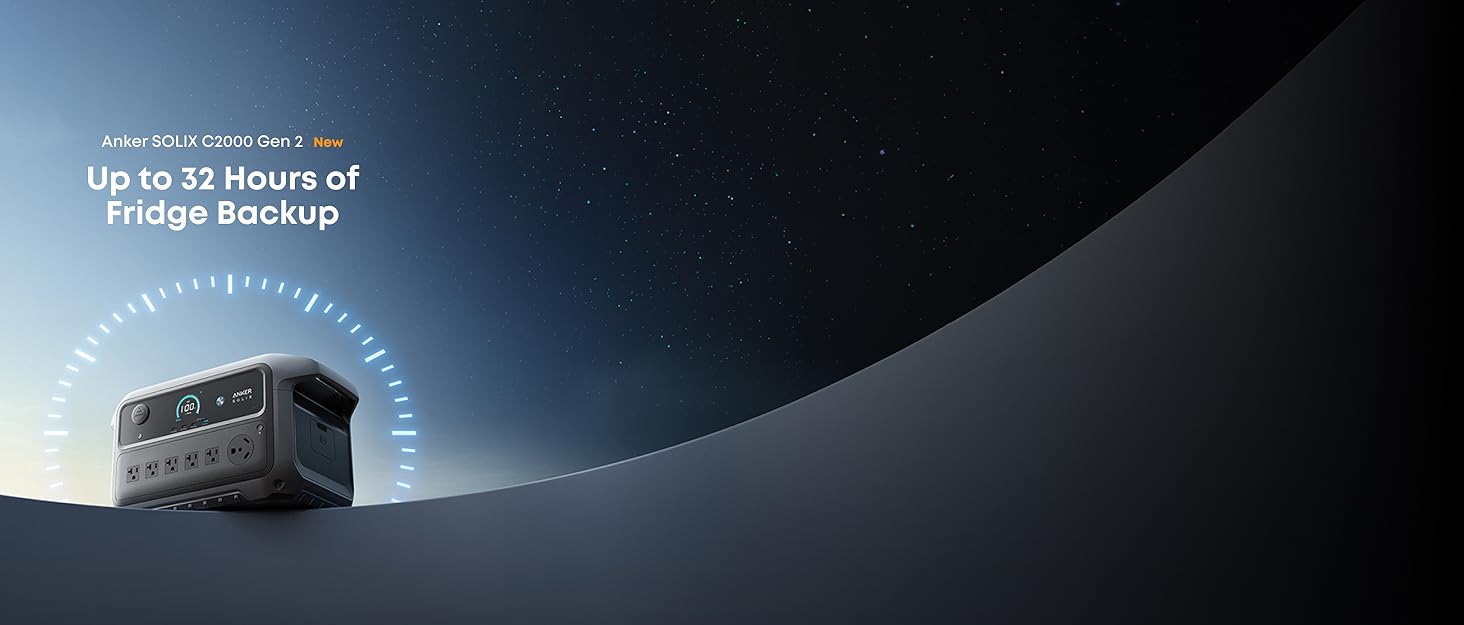
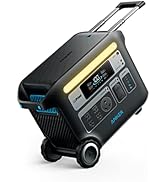
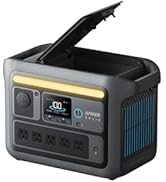
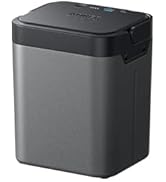
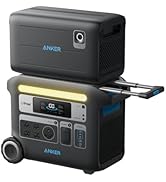
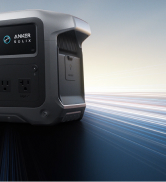
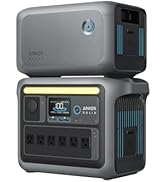
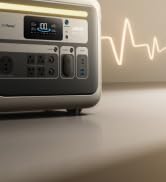
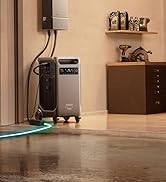
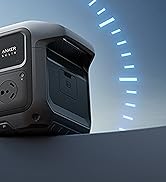
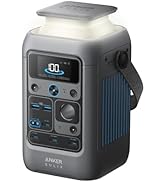
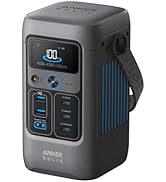
The AnkerSOLIX F1500 Portable Power Station is a high-capacity solar generator featuring a 1536Wh battery, 200W solar panel, and the ability to power up to 13 devices simultaneously. Built with durable LiFePO4 batteries and an IP67 waterproof rating, it’s designed for both home use and outdoor adventures, backed by a 5-year warranty for ultimate reliability.




























| ASIN | B0CC1DKGZ5 |
| Additional Features | Portable |
| Best Sellers Rank | #185,023 in Patio, Lawn & Garden ( See Top 100 in Patio, Lawn & Garden ) #551 in Outdoor Generators |
| Brand | Anker |
| Brand Name | Anker |
| Color | Black |
| Customer Reviews | 4.4 out of 5 stars 445 Reviews |
| Engine Power Maximum | 1800 Watts |
| Engine Type | 4 Stroke |
| Frequency | 60 Hz |
| Fuel Type | Electric |
| Included Components | Charging Cable |
| Is Electric | Yes |
| Item Weight | 43.87 Pounds |
| Manufacturer | Anker |
| Material Type | EV-Class LFP Batteries |
| Model Name | SOLIX F1500 Portable Power Station |
| Model Number | A1772 |
| Output Wattage | 1800 |
| Power Source | Battery Powered |
| Recommended Uses For Product | Camping, Residential |
| Running Wattage | 1800 Watts |
| Runtime | 1 hour |
| Starting Wattage | 2400 Watts |
| Total Power Outlets | 1 |
| UPC | 194644151775 |
| Wattage | 1800 watts |
N**E
This beast is near-Perfect
I have tested every port and charged it twice. All worked flawlessly. Of all my Lithium-related portable power stations, this is by far my favorite. I have used the AC to power a small George Foreman grill, a wafflemaker, a rice cooker, and an egg cooker. On DC it has powered my Resmed CPAP all night without a whimper, as well as using a 12v portable air pump. Next up will be to see exactly how long it can run my 45qt 12v fridge/freezer, but I would be surprised if it is any less than two full days. The USB-A and C ports all charge phones quickly. The 757 charges in less than two hours from the wall outlet! What I have not done yet is charge it via solar, because we have had thunderstorms nearly every day for weeks. Just be sure whatever panels you use, you'll need the actual connector to be XT60. Pros: -Impeccable craftsmanship. It's built like a tank. -LiFePO4 batteries will give years of quality and safe power. -1229WH of power, with 1,500 watt inverter. -Plenty of ports -pass through and the ability to use it as a basic UPS (...in a pinch. For sensitive things like expensive electronics or computers, you would be better served getting a dedicated UPS). -Fantastic information screen that is just about the best in the business. I first had the Anker Powerhouse II 400 a couple years ago, and it was the best information screen around. This one is smaller in size but still provides more info than any of my others be they Bluetti, Jackery, Swarey, or GoLabs. Cons: -Maybe that it is heavy? That's the price for all this power, so not really a con for me, but may be for others. -Constantly needing to hit the display button because it fades out to save power. I understand the reason though. I recommend this for blackouts or post-disaster use to provide some of your power needs. In combination with either solar panels or a regular generator to run long enough to keep it charged after a hurricane, this and a few others can handle most of your needs, even running a 5,000 BTU window unit a couple hours if you absolutely needed it. Altogether this is a 5-star win for me.
C**N
Fantastic!
So I initially bought this to go with a camp fridge that I bought so I could keep stuff in my car cold for road trips and it worked great! It charges quickly and the battery lasts a really long time depending on what you are powering. According to the estimate on the power bank, it could keep that decently large camp fridge/ freezer charged for almost a week once it gets to the chosen temperature! As a secondary use, I have a motorcycle in a storage unit and I use this with a battery tender to keep it charged for a couple days since there is no power in the unit. You definitely need to consider the wattage of what you are powering when picking a size though. The fridge I bought it for doesn't use much but I chose this size because it has 1800W of continuous power output. In case I ever wanted or needed to run a electric cook pan or something high power like that. I tested it on a small 1200W electric camp skillet and it was easily able to run it at full power and it estimated about 2 hours with that kind of load so that is pretty impressive! Overall, its great! very well built, quiet, holds a charge forever when not in use, and surprisingly useful to just have around if you need to power something away from an outlet for whatever reason.
M**I
I got a new version - with Bluetooth
I ordered it on 2023-11-29. I've received a newer version of this product!!! It has these improvements over the previous version: > It has Bluetooth and connects to Anker mobile app > Newer Display (like C-1000) > Improved solar charging (600W/60V instead of 300W/32V) The Anker phone apps seems should take care of several common complaints: > You can update the firmware of the unit. > You can control the display timeout, input wattage (100-1000W) and other settings I ordered the PowerHouse 757 to provide power to the gas furnace and fridge during small power outages. I have a gas generator for longer power outages. I also wanted to pair it with the gas generator to charge the PowerHouse, so I would not have to run gas generator continuously. I've bought it because of good reviews and my trust in Anker. It has 1200Wh capacity and cost $800 - which is what I would pay for Jackery 880 Wh with lower capacity (bought at Costco and returned). It also has very fast charge from AC (1.5 hr in my testing) vs Jackery 880 that requires 6 hrs recharging through brick p/s. After buying it, I was alarmed by reading 1 and 2 stars reviews for it here. They are mainly about solar charging and using it as UPS. I think the newer model addressed solar charging complaints. As far as UPS functionality - it is a nice bonus, and it works as long you understand two limitations: 1. it has 20ms transfer time - wich is too long for sensitive devices like computers (that need < 8ms). But for household appliances (like heaters and fridges) - it works just fine. 2. Once the unit runs out of battery during outage - it will shut down. I.e. after power comes back - it will stay turned off. You would need to press power button(s) on the unit to turn it back on. So it is not suitable for using as UPS say for furnace or sum pump - if you are away. But even my APC brand UPS for computer - once it runs out of battery during outage - will shot down and stays off. I would have to manually turn it on after power comes back. I am very pleased with the unit and hope it will serve me long time - based on Anker reputation for quality engineering and product.s
A**R
Great bang for the buck when discounted.
Excellent device for dealing with power outages that last up to a day. Possibly longer with a solar panel. Here are some things I would have liked to know before purchasing... Inverter: Must be toggled on to use and toggled off when not in use. In my experience so far this has enough juice to run a 1800 watt rated refrigerator for about 12 hours. USB ports: No toggle switch for USB so its always on, charges up smaller devices quicker and more efficiently than using inverter and wall charger. However, USB only charges in one direction, meaning this device cannot itself be charged via USB or USBC. Also, Don't leave fully charged devices in the usb port. Some will slowly drain the battery. Car charger: Must be toggled on for use and off when not in use. Cables: Comes with XT60 to car charger wire. Comes with XT60 to XT60 wire for solar panels. Comes with wire for charging via AC plug. App: The mobile app is not needed for normal operation, but it is convenient for changing some internal settings like AC charging speed (in wattage) from the wall. Weight: Device is HEAVY. Put it on a cart with wheels if you need some mobility indoors. Solar: The recommended panels are Anker brand and use the XT60 connection, however other panels may work if you find and purchase a proper adapter. This device will not charge with solar and AC at the same time, if both are plugged in it will charge via AC only. Battery: When storing for a long time, battery should be kept at least around 50% for the best longevity. Instructions say to fully charge every 3 months. Grounding: All devices using a grounded plug will not truly be grounded devices unless the power station is plugged into a grounded wall outlet. Good luck, hope this helps. Edit: It may be possible to use a USB-C to XT60 cable or adapter to charge from a USB-C source but I haven't tried this.
A**L
Long term Testing/using the Anker 757 power station
10/20/22 - it took almost a month to receive the unit from Fedx. The box had some damage, but nothing major. Opened it to be sure it's working, and to see what comes with it. I was disappointed to see the MC4 charging cable is not provided. So I'll be ordering one. The unit arrived with %0 charge. I have used the provided electrical cable to charge it (plugs to the back of the unit). Within few min. it was at %25, and using 600+ watt for charging. I was impressed with the speed of charging the unit at the beginning. Once it got to %80 the fan kicked on, and it was sucking 800 watt for charging. It reached %99 within 37 min. fan still on and the power consumption dropped to 422 watt. It took few hours for it to reach the %100. I proceeded with testing all 6 outlets and the USB ports and they're all in working conditions. I'll be running more testing in the future and update my review once I receive my solar adapter. I have a (100,130,200,250, & 300) watt single panel. 10/21/22 update: I have fully charged the unit and plugged in a 200w heater. The heater was showing 127-144 watt. it only lasted for 6:38 min. I have fully charged the unit again. This time I tested a 1500w heater only. It showed 1211 usage and lasted for 48 min. I took the overall rating to 4 star, because IMHO it should have lasted longer running just the 200w heater. However, I noticed now the unit charged faster on the 2nd. time and then faster on the 3rd. time. it takes now about 1:30 hour to fully charge. 10/23/22 update: Unit is fully charged. This time I tested brand new efficient heater 600 W. It showed 605w usage and lasted for 3:22min. and the unit fan didn't kick on. All of the testing so far was inside with a temp of 65. 10/24/22 update: I have received the cable and started to test the unit with solar charging. First, the 100w panel in full sun on my Fluke showed 95w, on the unit was showing 45w. So I decided to add another 100w panel. it went up to 95. Added 2 more panels (total of 400W) and the unit showed only 158-170w charging. I have used a Renogy 100W. panels for the testing. 10/25/22 update: With 2-150w panel I was getting 5w charge this morning. In full sun I'm getting between 160-170 charge. So far, I have tested and was able to run a circular saw, sander, vacuum cleaner and was able to charge the batteries for my DeWalt, Craftsman, Black & Decker, and my 80-volt Cobalt battery. 10/27/22 update: I have decided to stick with the 2-150w ea. panels = 300w for the rest of my tests, since this is what is recommended. I have plugged in the unit to charge this morning 7:30am. Cloudy day, temp outside 45, inside 65. I was getting %1 charge. 8:30 am, charge went up to %6. 9:30am, charge up to %12. 10:30am, charging at %17 and the unit shows %2 charged only. At 11:30am the unit shows %11 charged. In conclusion, on a cloudy day, it took 5 hours to get %20 charge from the 300w 2 panels. 7/1/23 - 7/19/23 update: We had to use the power station on a summer trip. It was %100 charged. put it inside the camper and had the solar panels on the roof. Everything was working fine, but suddenly it won't charge. It reached %40 and still no charge, checked everything and still no charge. I reset it, and it started to charge. I have used it to run a small fan and 2 lights (130 watt) total. left everything connected overnight. In the morning it wasn't charging again, and I had to reset it again for it to start charging. That continue to happen daily, I had to reset it for it to start charging. I have tried new connections, tried 1 panel, tried unplugging everything from it. No matter what I did, I had to reset it.
L**H
Awesome power station.
For the reviewer who says this is a 10AH battery, your math is off. Its a 12 volt lithium iron phosphate battery. Wattage is volts x amps = watts. To calculate AH, you divide watt hours by the voltage. ~100 Amp hours. Also, this is not using a standard lithium ion battery. It uses LFP, which is a much more stable chemistry and lasts a lot longer. Anker says 3000 charging cycles to 80%. That means if I discharge and recharge my 757 every single day, it would take 8 years for the battery to degrade to 80% capacity on me. Not only that, Anker stands by the 757 for 5 years. That being said, the 757 is an awesome design. Arguably the best in its class. It has all the outlets anyone would need in a portable power situation, charges on A/C power extremely fast, weighs about the same as the competition and has all the power you would need for almost any situation. The controls are intuitive and the display gives you all the information you need about what is running, how much power is going in and out and exactly how much time is estimated left before it is completely discharged. My only complaint might be that the MPPT solar charge controller has a 10A and 30V limit which is not much to work with. Particularly the input voltage limit. Amps are what matter in the end with charging, but difficult to find panel options to put in a full 300W of charging power. Wiring in series (using 18v panels) over volts the MPPT controller (which is bad), and wiring in parallel easily exceeds the 10A input max. Using say a Dokio 300W panel, the charge controller will only draw a maximum of 10A at 18V (180W). Very satisfied with the 757 and recommend it to anyone that needs portable power.
B**L
I kept it, despite some flaws, now I regret my use case (UPS) and the money
UPDATE Sept 4 2023 As an ups, when it goes catch a power outage, my device turns off well before 70% while carrying about a 500w load. Basically it seems like being plugged in all the time in the hopes of being an UPS, loses all battery calibrations? Just another reason not to like this thing. I seriously regret the money I spent. I don't even trust it anymore. UPDATE after three months: It's not good as an ups. Or backup power when connected to mains. This won't be addressed as there are no firmwares or anything to update. After a few month's, and a few power outages, and after already realizing it doesn't automatically turn back on, I kept it. However the UPS function has more flaws. It fails under a typical brownout. So any short brownout or surge, may not reliably keep power going. It may turn off. I just don't think it's correct to market any UPS functionality. Yes, it can "work". In a lab maybe. But under real world conditions it does not. Examples: Long power outage: AC loss, Battery drains completely, that's fine, but when AC recovers, the inverter will not restore power. So you'd have to be there to turn it back on once it reaches 2% charge. Medium clean power outage: If AC power is removed, the anker will carry the load, and when AC cleanly recovers, it'll passthrough and charge. My computers handle this fine. This is the only scenario that works how an ups should work. Brownouts: Apparently under these conditions, there is no hysteresis, and the anker will just turn off. If power comes back on too quickly?, it'll turn off. A brownout happened while you were gone? Better make sure your fridge isn't off. You had a brownout while sleeping? I guess your CPAP will just stay off because the power blipped :/ So for my real world conditions, it's just as likely to interrupt power than provide it. I've just never had issues like this, with any ups I've ever owned. Execution is 90%, and anker agreed to take it back for a 90% refund after 3 months. I dunno. ===================== Initial review It's very expensive. The manual is incomplete. Lot of sales/marketing cruft can be misleading. Anker support is pretty responsive. They don't get sick of answering questions. They comprehend them and generally give complete answers. I have faith in their 5 year warranty. It's a good product. I don't need a device like this all the time. But I figured it could be a decent computer UPS when not needed elsewhere. It's a very powerful UPS but falls short in a couple areas. UPS stuff: 1. It does not restore power like a normal ups can. This means if you run it down completely, once AC is restored, you need to press the on button again :/ I wouldn't trust it to run a freezer, without human intervention/monitoring, and in fact, I wouldn't leave it inline all the time, in case it got turned off. 2. It does not present any warnings before turning off. I don't think there is anything that can beep on the device. It powers off at 1%, and won't allow you to power it back on (passthrough) until 2% (which it reaches quickly). The display will be off because the timeout is short. 3. It seems more likely to accidentally NOT run your load. If it trips, it won't try again. If it dies, it'll not be on anymore, until you turn it on. It should always be on when AC is connected, and you just cannot be guaranteed that it'll be inverting when the is AC power available. Perhaps I'm being too hard, but no, I wouldn't keep something I wasn't monitoring, connected full time, whereas I WOULD keep my old APC ups inline. Those are just facts. Something I didn't find in the manual, or the marketing crap.... is how to calculate inverter run time. Device run time = 1229Wh*0.8/(<device watts> +30W). So 80% efficient, and 30w consumed in non eco mode, if the inverter is on. This is all reasonable. Run times: The inverter uses 30w (on battery) just to be "on". This means the longest it can run with no load is around 48-50 hours. Just keep that in mind. Don't run small loads on the inverter. Run them on DC. There you are limited to 120w + whatever usb can do (which is a lot). So if you are running a 12w load That's 23.4 hours on inverter. inverter runtime = 1229Wh*0.8/(12w +30W) If you run it on DC That's 80 hours'ish on DC dc runtime = 1229Wh*0.9/ 12W+(1~2W) So if you need a fan, probably get a dc fan. Same with lights. Same with most light loads, because you'll be limited otherwise and it's not intuitive, if you are basing things on their marketing/cruff. It's not lies, it's just, I dislike marketing crap on websites that give vague statements that are partly true. If you are already having to run a load on the inverter, then running smaller loads in addition, will affect runtime less. Perhaps this is common knowledge to people, but I just wanted to drive it home. The marketing page might have you believe you can run your 12w lightbulb for 80 hours though..... That's partly true, just not on AC. DC input. The dc input is limited to 30v and also 10amps?. This is a confusing and somewhat limiting voltage. It's right on the cusp of a 60cell solar panel. Technically, you can charge on a 60cell panel, but you may have to shade it, or wait for clouds, to bring the open voltage low enough, to start charging, then the current will bring the voltage down. The good news is, it doesn't explode seeing 40v on the input, but it also doesn't allow any current to flow. So for solar, It's basically a mess. I'm still not certain how the DC input is "supposed" to function. There are no useful docs about it's behavior. For me, that meant a 240w 60cell panel, once coerced below 30v, and charging, did around 170w at best. YMMV. Now lets talk about 12v charging. It'll only pull 120w. This makes sense as perhaps it's a car, and it shouldn't just melt your wires :) So it appears to me, that the DC input, is current limited to 10amps. Basically, the DC input, is both confusing, and less useful. But hey, it seems to protect itself from overvoltage, and CAN charge from solar. But there is nothing specific in the docs about how it actually functions, and I'm completely guessing only under ideal conditions, of 30v, will it ever actually do 300w..... I assume the panels they sell, in reality are 12v panels, in parallel, which will still only yield 120w best case. But may still yield 120w under not ideal conditions.... But I don't actually know, because there are no docs on this stuff. Anker, wasn't so forthcoming about the DC input, other than it's ok to hook up a 60cell panel, and "it just does not work when the voltage is over 30V." My guess is 10 amps limited. I have not viewed sign waves, or tested for interference.... The AC charger/inverter is fast. It makes up for all the things I don't like. It's the right size, the right build quality, and has enough power. The reasons I kept this expensive device. 1. I think anker will stand behind it, for 5 years. They have chat, and email support. I've talked to both. 2. It charges exceptionally fast. 1000w is no joke. It's great for someone like me, that only remembers I need it, in an hour from now :) It's just convenient. It also cannot be throttled, but I've yet to pop a circuit breaker. 3. It's quiet. Save for the inverter getting a little "ringy" running a 1450w microwave, the fans and inverter are quiet. It's quiet. It really stays pretty quiet :) 4. It's the biggest I want to carry, or be mobile with. It's the right size and still moveable :) 5. usb charges things at 90w no problem. It's pretty legit. 6. Even though the ups stuff is flawed, it can back two workstations and monitors, and doesn't break a sweat running 900w+ on battery. That far exceeds my 1400va ups, which would start screaming at 700w. It's also more predictable displaying the projected runtime, so even though it doesn't yell, I can tell when I need to turn off my computers if I remember to look and click the display button...... Other things I don't like: 1. it's actually really hard to see the sockets :) It sounds dumb, but in the dark it's hard to see that stuff. 2. It's not a real ups :/ It's so close that it makes me a little upset with anker. They shouldn't call it an USP. 3. I've pressed the inverter button many times by accident, when attempting to press the display button :/ It's so bad that I'm going to put a cover on that inverter button. I'd have preferred a switch! 4. The display timeout is not adjustable, and is usually way too short. See number 3. 5. The dc input..... It's limited. 6. The lack of a high powered dc output. That's my review. And I kept it, but unfortunately, I'm still not done testing it. Which is a testament to the lack of technical information available.
B**K
Think twice before using as a UPS
The unit mostly works great. Quiet, excellent capacity, nice assortment of outlets, good options for recharging, clear and easily understood display. No complaints at all for use as a big power bank. However, considering it is advertised for use as a UPS, and considering the price point, I don't think it's adequate for that use case. The copy here on Amazon explicitly mentions not worrying about your CPAP shutting off, but (at least for my AirSense 11) the switching delay is just a bit too long, so when the power goes out in the middle of the night, my CPAP shuts off and I'm waking up (struggling to breathe) as a result. I am using it with power saving mode disabled (as the manual suggests for UPS usage), so this just seems to be a limitation of the device. Perhaps the ResMed unit's power supply is also unusually sensitive to tiny disruptions, but the bottom line is that the Anker isn't quite doing the job I bought it for.
Trustpilot
1 week ago
1 month ago